Free Haunted Places In Chicago To Visit Without A Ticket
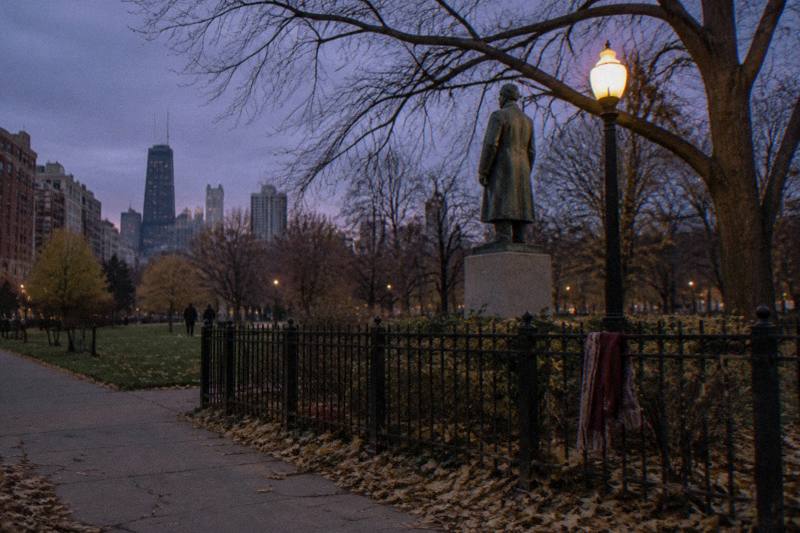
Chicago's darkest stories sit on public sidewalks and in open cemeteries, and almost all of the exteriors are free to stand in front of. This route strings them together, then tells you honestly where a paid tour earns its price.
Short answer
You can visit a dozen genuinely dark Chicago sites for free: the Eastland disaster plaque at LaSalle and Wacker, the Couch mausoleum in Lincoln Park, Graceland Cemetery, the Biograph Theater and the Valentine's Day Massacre block. Guided tours run $26 to $60 per person and add stories, access and equipment the free route cannot.
Chicago prices almost none of its ghosts. The Eastland disaster memorial is a plaque on a public riverbank. The Couch mausoleum sits behind the Chicago History Museum in an open park. Graceland Cemetery, 121 acres established in 1860, opens its Clark Street gates daily. A visitor with comfortable shoes and a transit card can spend two full days in front of the sites that the paid tours talk about, without buying anything. The Lincoln Park ghost walk covers ground that is free to walk alone, and the ghost bus passes exterior after exterior you can photograph yourself.
The honest catch is that a free visit buys you the wall, not the story. That is the trade this guide lays out. First the free route, site by site, with verified history and current access rules. Then a straight comparison with the 16 guided walks, buses and ghost hunts this site tracks, from $26 per person for the one-hour Lincoln Park ghost walk to $60 per person for the gangster minibus, so you can decide where a guide is worth paying for.
Free Haunted Places In Chicago To Visit On A Self-Guided Walk
The strongest free haunted itinerary in Chicago clusters around five zones: the Loop riverfront, Lincoln Park, Graceland Cemetery in Uptown, the Lincoln Park gangster sites, and the hotel lobbies along Michigan Avenue. Every one of them is a public exterior or an open-to-all lobby, and together they cover the Eastland disaster, the Iroquois Theatre fire, the Valentine's Day Massacre and the city's most reported hotel hauntings. No ticket exists for any of it.
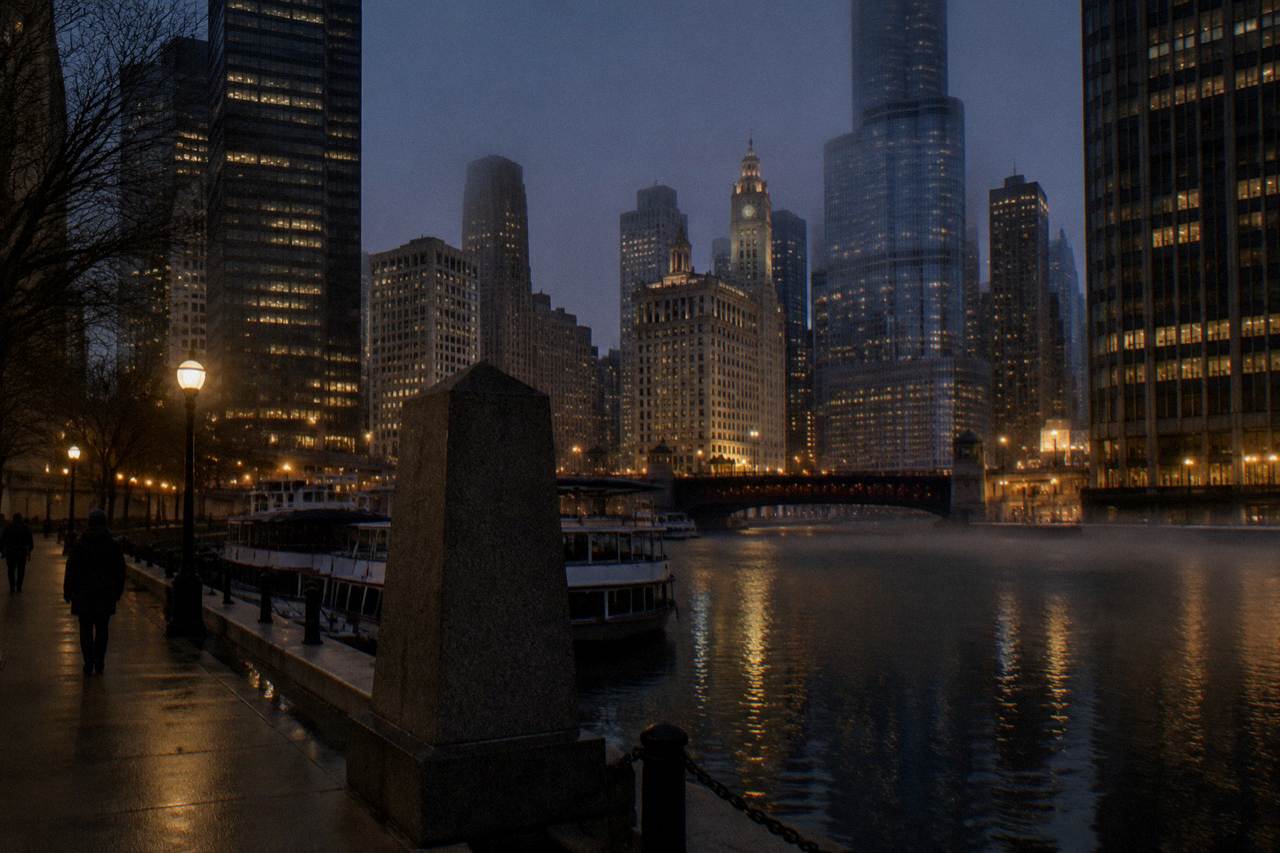
The organizing principle is simple: Chicago's dark history happened on ordinary streets, so ordinary streets are where you find it. The Loop riverwalk between Clark and LaSalle carries a polished granite plaque marking where the SS Eastland capsized on 24 July 1915, killing 844 passengers and crew while the ship sat tied to a dock. The plaque stands at the southeast corner of LaSalle Street and Wacker Drive. Cross the LaSalle Street bridge to reach the Reid Murdoch Building at 325 N. LaSalle, which served as a makeshift morgue after the disaster, a fact a seasonal river cruise has also highlighted. Nothing here requires a ticket, and the riverbank is public at all hours the Riverwalk is open.
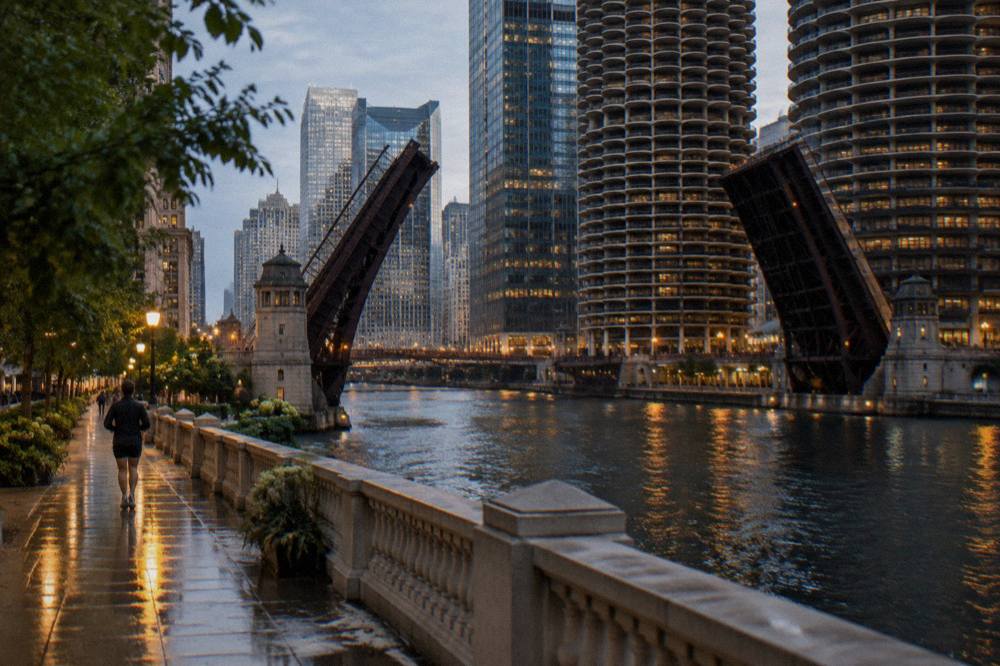
Here is the full free route in one table, ordered roughly south to north. Each entry lists what you actually see and the access situation, because several of these are exteriors only.
| Free site | Area | What you see | Access |
|---|---|---|---|
| Eastland disaster plaque, LaSalle and Wacker | Loop riverfront | Granite memorial on the south riverbank | Public sidewalk, always viewable |
| Reid Murdoch Building | Loop riverfront | Former makeshift morgue building | Exterior; ground floor has businesses |
| Former Iroquois Theatre site, 26 W. Randolph | Loop | Former theater fire site | Exterior facade on a public street |
| Congress Plaza Hotel | South Loop | Lobby and facade of a hotel frequently claimed among Chicago's most haunted | Lobby walk-in; respect guests |
| Couch mausoleum, behind Chicago History Museum | Lincoln Park | The visible remnant of the old City Cemetery, from which an estimated 35,000 burials were relocated | Park, open daily |
| St. Valentine's Day Massacre block, 2122 N. Clark | Lincoln Park | Vacant lawn and parking area behind a wrought-iron fence, no marker | View from sidewalk only |
| Biograph Theater, 2433 N. Lincoln | Lincoln Park | Exterior where John Dillinger was shot on 22 July 1934 | Public street; it is an active theater |
| Holy Name Cathedral, 735 N. State | Near North | Bronze doors still showing bullet damage from the 1926 killing of Hymie Weiss | Active parish, open to the public |
| Graceland Cemetery | Uptown | 121 acres, graves of Chicago's famous dead | Gates open daily, seasonal hours |
| Drake Hotel and Palmer House lobbies | Gold Coast, Loop | Interiors with long-reported ghost stories | Lobbies are walk-in |
Two limits shape the whole route. The Iroquois Theatre fire of 30 December 1903, the worst theater fire in US history, left no standing haunted theater to tour: the site at 26 W. Randolph St is a rebuilt commercial block, and the free visitor gets a facade and a memory. And the Great Chicago Fire of 8 to 10 October 1871, which killed approximately 300 people and left over 100,000 homeless, is mostly a story of what vanished; the Water Tower is among the surviving structures and costs nothing to view, but its haunting is a matter of reputation rather than documented reports.
The Chicago River Route: Eastland Plaque To The Loop's Dark Corners
The Chicago River's south bank between Clark and LaSalle Streets is the single densest free dark-history zone in the city: the Eastland memorial plaque, the former morgue building and the Loop's theater-fire site all sit within a 15 minute walk. The plaque at the southeast corner of LaSalle and Wacker is the anchor, and everything else on this stretch is public sidewalk. Start there.
The Eastland story deserves its weight. On 24 July 1915 the passenger ship rolled over at its dock, and 844 passengers and crew died, many of them Western Electric employees and their families heading to a company picnic. The Eastland Disaster Historical Society, founded in 1998 by descendants of a survivor, maintains the histories of victims and survivors and runs a quarterly online program series, so the free plaque visit can be paired with serious reading afterward through the society's own archive.
Cross the LaSalle Street bridge and the stories keep pace with you. The Reid Murdoch Building, the seven-story warehouse at 325 N. LaSalle that took the bodies in 1915, is today a functioning building with a colonnade you can walk through. Heading south into the Loop proper brings you to the Iroquois site on Randolph Street, where 602 people died in the fire of 30 December 1903. The garages and alleys the paid Loop walks reference, including the stop the listings call Death Alley, are ordinary service passages; the gangsters and ghosts walk that runs from the riverfront covers them with a guide's narration, but nothing physically bars you from looking at the street yourself.
If you would rather have the river version narrated, options exist on this same water. The evening ghost bus listed here, a three-hour route from $59 per person rated 3.8 across 152 reviews, crosses river territory the free walker reaches only on foot. For most budgets the free river walk plus one guided experience elsewhere is the better split.
Lincoln Park Haunted Sights: The Mausoleum And The Massacre Block
Lincoln Park hides its dead in plain sight. The park was built over the old City Cemetery, from which an estimated 35,000 burials were relocated, and the Couch mausoleum behind the Chicago History Museum is the visible reminder, free to walk up to any day. About half a mile north, the 2122 N. Clark St block where seven men died in the St. Valentine's Day Massacre is a fenced lawn with no marker at all.
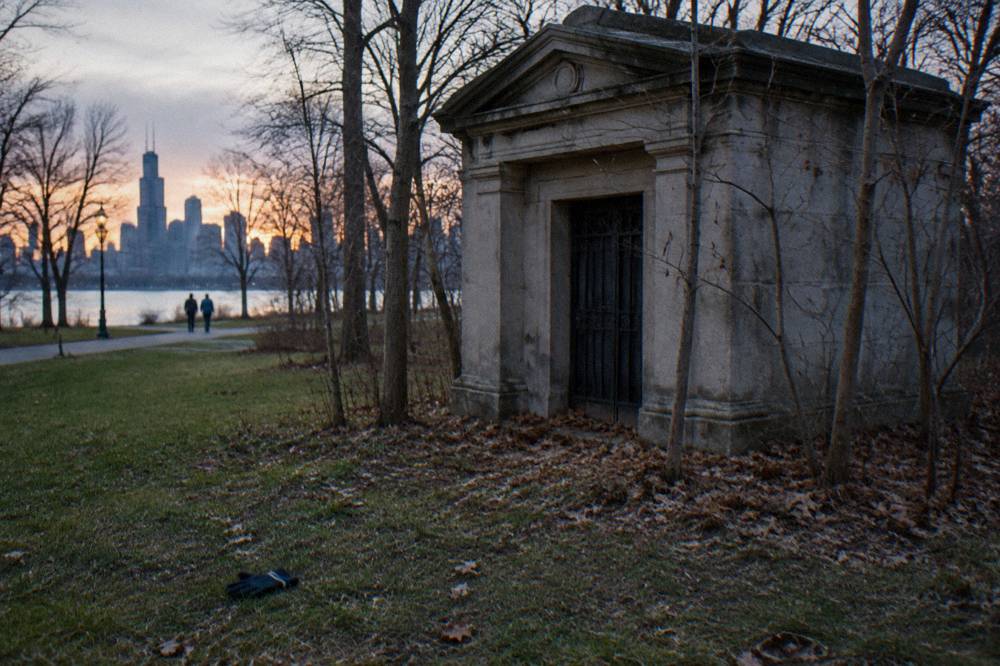
The Couch mausoleum is the closest thing Chicago has to a free crypt. It stands behind the Chicago History Museum near Clark Street, a single stone structure left from the cemetery the park replaced, and the park around it is open to everyone. The guide-led alternative is the Lincoln Park Hauntings Ghost Investigation Tour, a 2 hour 15 minute ghost hunt from $40 per person that meets at the museum's Clark Street doors and hands participants investigation equipment; its listing shows 4.9 across 47 reviews. Meeting at the same doors costs you nothing if you only want the mausoleum, but the equipment and the guide's stories are what the $40 buys.
The massacre block is quieter than you expect. On 14 February 1929, seven North Side Gang members and associates were killed at the S-M-C Cartage Company garage at 2122 N. Clark St. The garage was demolished in 1967, and today the site is a vacant lawn and parking area behind a wrought-iron fence beside a senior housing building, with no plaque, marker or memorial of any kind. You stand on the sidewalk, look at grass, and supply the history yourself. The documented account of the massacre is the reference to read before or after.
Two more free Lincoln Park exteriors finish the set. The Biograph Theater at 2433 N. Lincoln Ave, where John Dillinger was shot by federal agents on 22 July 1934, is an active theater; the facade is public, the marquee unmistakable. And the zoo's seasonal Haunted History Tours, which ran Tuesday and Wednesday October evenings in 2026 and sold out with no gate sales, show how much demand there is for the park's dark side even at an institutional price.
The paid overlay here is thick. The one-hour Embers ghost walk ($26 per person, 4.4 across 129 reviews) and the family-friendly Lincoln Park ghost walk ($29.99 per person, no reviews yet) both cover this turf. A free walker pairing the mausoleum, the massacre block and the Biograph covers the same geography in one afternoon on the CTA.
Graceland Cemetery And The North Side's Free Haunted Exteriors
Graceland Cemetery in Uptown is the best free haunted-adjacent destination in Chicago: 121 acres established in 1860, entered at Clark Street and Irving Park Road, open daily year-round with seasonal gate hours. Its ghost stories are famous in city lore, though specific legends like the Inez Clarke story are unverified, so treat what you hear as legend. What is certain is that the grounds are free, calm and open to the public.
The hours matter here more than anywhere else on the route, because a cemetery visit is the one place where being present after closing is not just frowned on but against the rules. Current posted hours: in spring and summer, gates run 8am to 6pm Monday to Friday and 9am to 4pm on weekends; in fall and winter, 8am to 4pm on weekdays and 9am to 4pm on weekends. The cemetery's own hours page is the source to check before any visit, and photography for personal use is generally permitted with respect for the grounds.
| Cemetery | Area | Gate hours (seasonal) | Notes |
|---|---|---|---|
| Graceland | Uptown, Clark and Irving Park | Weekdays 8am to 6pm, weekends 9am to 4pm (spring and summer) | Free entry, 121 acres |
| Graceland | Uptown | Weekdays 8am to 4pm, weekends 9am to 4pm (fall and winter) | Office closed on major holidays |
| Resurrection | Justice, IL | 8am to 7pm March 1 to October 15; 8am to 5pm October 16 to February 28 | Tied to the Resurrection Mary legend |
| Bachelor's Grove | Rubio Woods Forest Preserve | Sunrise to sunset only | Entry outside hours risks fines or arrest |
| Rosehill | Far North Side | Generally about 8am to 5pm Monday to Saturday; confirm on site | Occasional guided walking tours |
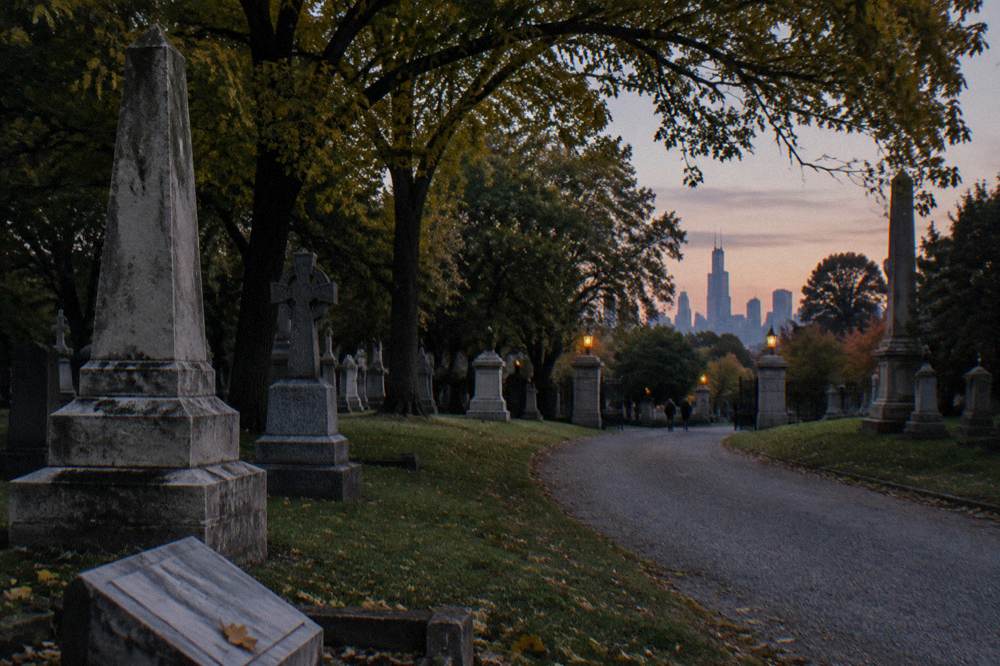
Two warnings belong in bold on any free-cemetery itinerary. Resurrection Cemetery on Archer Road, tied in legend to Resurrection Mary, has explicit ground rules: no picnics, no alcohol, no photographing people or the names and dates on markers without contacting the office. Bachelor's Grove in Rubio Woods is open only sunrise to sunset, and entering outside those hours risks fines or arrest, a rule frequently stated by the preservation group that watches the site. Never climb stones or leave candles. Free access survives only as long as visitors behave, which is also why no responsible operator will take you over a fence after dark.
Prairie Avenue offers the guided version of the same impulse. The 2-hour Prairie Avenue Ghost Hunt, $37.50 per person with no reviews yet, meets at Glessner House on a street of preserved historic homes; the surrounding blocks are free to walk, and its details are on the Prairie Avenue Ghost Hunt page. A seasonal Haunted Tours of Historic Prairie Avenue event also ran on October 30 and 31 in 2026, evidence the neighborhood's draw is institutional, not just commercial.
Gangster Chicago For Free: Hotels, Theaters And Streets
Most of Chicago's gangster landmarks are private buildings you view from public streets, and that is genuinely how the paid tours see them too. The Green Mill, the Drake, the Palmer House, Holy Name Cathedral and Capone's former two-flat on South Prairie Avenue are all free exteriors or walk-in lobbies. The only site with no public presence at all is the old Murder Castle footprint in Englewood, now a post office with no historical marker.
Start with Holy Name Cathedral on North State Street. The bronze doors still show damage from the 1926 gangland shooting of Hymie Weiss, and it is an active parish open to the public. The Green Mill Cocktail Lounge on North Broadway, with its Prohibition-era ties to Al Capone including his reputed favorite booth, operates as a normal bar with hours running to 1am on weeknights and later on weekends; a drink is the only entry fee, which makes it one of the cheapest haunted stops in the city.
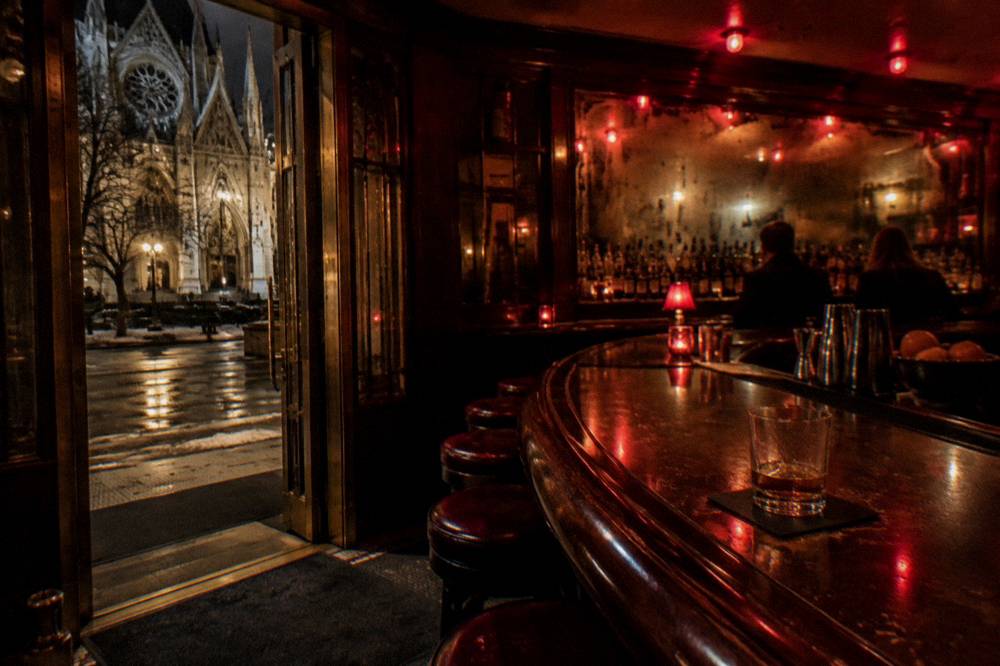
The hotel lobbies are free and famous. The Congress Plaza Hotel, opened just before the 1893 World's Fair as the Auditorium Annex, is frequently claimed to be one of the most haunted buildings in Chicago; that is a reputation, not a verified fact, and room 441 is the room most cited in guest accounts. The Palmer House has accumulated reports of phantom footsteps and a woman in period clothing in public areas. The Drake's Lady in Red legend places a 1920s-era apparition on the 10th floor hallway and in the Palm Court. All three hotels are working hotels: walk in quietly, look around, do not join the ghost-hunt folklore by disturbing guests.
| Gangster or haunted landmark | Location | Free view | The verified fact |
|---|---|---|---|
| Holy Name Cathedral | 735 N. State St | Open parish | Bullet damage from 1926 visible on the doors |
| Biograph Theater | 2433 N. Lincoln Ave | Public street | Dillinger shot outside, 22 July 1934 |
| Massacre site | 2122 N. Clark St | Sidewalk only | Seven killed 14 February 1929; site unmarked |
| Capone's residence | 7244 S. Prairie Ave | Street view only | Private two-flat, not open to visitors |
| Green Mill | 4802 N. Broadway | Open as a bar | Prohibition-era Capone ties, reputed booth |
| Murder Castle footprint | 611 W. 63rd St | Post office exterior | 1930s building, no marker on site |
The paid comparison is instructive here, because the gangster tours sell the same streets with narration. The Crime and Mob coach tour, 4.6 across 3,603 reviews at $49 per person, and its night edition, 4.8 across 521 reviews at $55 per person, cover this ground from a bus. The gangsters and ghosts minibus does the same for $60 per person but has only 3 reviews, too few for a star claim. Al Capone's house is the case in point for the whole free-versus-paid question: tours point it out from public streets only, exactly as a free visitor would see it, so what you buy is the story, not the access.
Is There A Free Guided Walk In Chicago?
Yes. GuruWalk lists two free, pay-what-you-want walking tours of the Loop in Chicago, both led by independent local guides who work for tips. They are architecture and history walks, not ghost tours. If you want a genuinely free, no-ticket way to see downtown Chicago on foot with a guide, these two walks are the honest answer.
GuruWalk, an independent free-walking-tour platform, pays guides by tips at the end; each person gives what they think fair. Bruce's tour, 4.79 across 126 reviews, runs 2 hours 15 minutes in English. It meets under the Chicago Theatre marquee at 175 N State St, passes the Palmer House lobby and Daley Plaza, ends at Cloud Gate in Millennium Park. Peter's tour, 4.98 across 43 reviews, runs 2 hours 30 minutes in English. It meets outside the Starbucks on the west side of Willis Tower at 233 S Wacker Dr, about 2 miles on foot, covering the Great Chicago Fire, public art and architecture. Neither is a ghost tour, neither is run by this site; the ratings belong to GuruWalk.
The honest gap is simple, so it gets said once, plainly. A free Loop history walk gives you the setting and nothing more. The ghost and gangster stories on this site's paid walks are the part it does not tell. That is the whole difference.
What A Paid Chicago Ghost Tour Actually Adds
A paid tour adds three things the free route cannot: narration with verified sourcing, group access to storytelling a plaque never carries, and in the case of ghost hunts, investigation equipment and structured time after dark. It does not add entry to closed buildings, and it does not add ghosts; hauntings on every listing are legends and guide stories, never sightings promised. Prices across the 16 tours listed here run $26 to $60 per person, and every one comes with free cancellation.
The honest ledger matters because free-route readers are exactly one step from becoming tour buyers. Narration is the real product. Standing at the massacre lawn, you know seven men died; a guide tells you who, why and what the block looked like, and answers questions. The 2-hour Gangsters and Ghosts walk, 4.7 across 1,878 reviews at $31 per person with an 8pm daily departure, even includes time inside the Palmer House, a lobby you can enter free but with none of the story attached.
Equipment is the second difference. The two ghost hunts on this site, the Lincoln Park investigation at $40 per person and the Prairie Avenue hunt at $37.50 per person, put tools in your hands for two-plus hours after sunset, something no free visit replicates. Format is the third: for $59 per person the three-hour evening ghost bus covers the city's scattered sites in one night, useful when cold or distance makes a walking day impossible.
| Guided tour | Format | Price per person | Duration | Rating and reviews |
|---|---|---|---|---|
| Embers of the Windy City ghost walk | Lincoln Park walk | $26 | 1 hour | 4.4 across 129 reviews |
| Gangsters and Ghosts walk | Loop walk | $31 | 2 hours | 4.7 across 1,878 reviews |
| Mob Alleys and Haunts walk | South Loop walk | $34 | 1.5 to 2 hours | 4.7 across 469 reviews |
| Lincoln Park Hauntings ghost hunt | Investigation | $40 | 2 hours 15 minutes | 4.9 across 47 reviews |
| Evening ghost bus | Bus tour | $59 | 3 hours | 3.8 across 152 reviews |
| Crime and Mob coach tour | Bus tour | $49 | 1.5 to 2 hours | 4.6 across 3,603 reviews |

Balance says this plainly: for a first visit on a budget, walk the river, Lincoln Park and Graceland free, then buy one guided experience that matches your interest. Families lean toward the family-friendly walk at $29.99 per person; adults-only groups toward the 90-minute Loop ghost walk at $34.99 per person; true-crime readers toward the small-group Dark Side walk at $35 per person, 4.9 across 80 reviews. Depth on those choices is in the haunted walking tours guide, and cost breakdowns live in how much Chicago haunted tours cost.
Planning The Free Chicago Route: Season, Light And Rules
The free route works year-round, but October is the peak and the calendar matters: Halloween 2026 falls on Saturday 31 October, and daylight saving time ends the next day, so late-October walkers lose evening light fast. Cemeteries close by 4pm in the fall season, riverbank plaques are best in daylight, and hotel lobbies are the only stops that keep evening hours. Plan the outdoor sites first, the lobbies last.
Seasonality shapes the day. October brings the special events catalog, from the zoo's Haunted History Tours to the Hull-House ghost evenings and the Prairie Avenue haunted tours of October 30 and 31, but it also brings the year's biggest crowds to every free exterior on this list. Winter walkers get empty sidewalks and early sunsets; the practical questions are covered in the October events guide and the winter ghost walk discussion. Rain or shine is the operator norm for the paid walks, and it can be yours too.
Three rules keep the free route ethical and legal. Never enter a cemetery outside posted hours; Resurrection and Bachelor's Grove both enforce this, and Bachelor's Grove explicitly warns of fines or arrest after sunset. Never approach a private home, including Capone's two-flat on Prairie Avenue, beyond the public sidewalk. And treat every haunting as a story: the Congress Plaza's fame, the Drake's Lady in Red and the Palmer House's footsteps are reputations and reports, not verified facts, and no tour on this site, free or paid, will show you a ghost. If you want the structured after-dark version instead, Chicago Ghost Tours tracks all 16 of them.
Common Questions About Free Haunted Places In Chicago
Are There Free Haunted Places In Chicago To Visit?
Yes. The Eastland plaque at LaSalle and Wacker, the Couch mausoleum in Lincoln Park, the massacre block at 2122 N. Clark, the Biograph Theater, Holy Name Cathedral's doors and Graceland Cemetery are all free public sites, and hotel lobbies like the Palmer House and Drake can be visited quietly.
Can You Visit Graceland Cemetery For Free?
Yes, entry is free and gates open daily year-round. Seasonal hours apply: roughly 8am to 6pm on spring and summer weekdays, 9am to 4pm on weekends, and 8am to 4pm on fall and winter weekdays. Check the cemetery's own hours page before you go.
Is The St. Valentine's Day Massacre Site Marked?
No. The site at 2122 N. Clark St is a vacant lawn and parking area behind a wrought-iron fence next to senior housing, with no plaque or memorial. You view it from the sidewalk and carry the history yourself.
Can You See Al Capone's House In Chicago For Free?
The exterior of his former residence at 7244 S. Prairie Ave is visible from the public street, and that is exactly how paid tours show it. The two-flat is privately owned and not open to visitors.
Do Free Haunted Walks Replace A Paid Chicago Ghost Tour?
Not quite. The free route gives you the exteriors and the research; a paid tour from $26 to $60 per person adds a guide's narration, group storytelling and, on the ghost hunts, investigation equipment after dark. Most visitors do the free route plus one guided tour.