Is Chicago Haunted?
A direct answer to whether Chicago is haunted, the most reported haunted sites in the Loop, Lincoln Park and the riverfront, and the tours that tell those stories.
Chicago earns its haunted reputation honestly: the city is dense with documented catastrophe, and its dark history is unusually visible. The Chicago Ghost Tours site alone lists 16 live walks, buses and ghost hunts priced from $26 to $60 per person, working the Loop, Lincoln Park, River North, Streeterville and Prairie Avenue every week of the year. Nobody can prove a ghost. But few American cities offer so much well-documented sorrow for a storyteller to stand next to.
No verifiable evidence proves Chicago is haunted, and no honest guide will claim otherwise. What Chicago has is a documented record of disaster and violence, an unusually large folklore built on top of it, and a steady stream of guest reports from buildings like the Congress Plaza Hotel and the Palmer House. The fair answer is that Chicago is haunted in reputation, richly and repeatedly reported, and that reputation is what the tours sell.
That distinction matters, and it is worth getting right before booking anything. When a listing says a site "is said to be haunted," it is describing a story with a history, not a testable claim. The city's most famous ghost lore grows directly out of real events: the SS Eastland capsizing on the Chicago River in 1915, the Iroquois Theatre fire of 1903, the St. Valentine's Day Massacre of 1929, the shooting of John Dillinger outside the Biograph Theater in 1934. The facts are verifiable. The ghosts attached to them are stories, and the tours that tell them are upfront about the difference in tone if not always in wording.
Chicagoans themselves keep the folklore alive. Hotel staff repeat the room 441 stories at the Congress Plaza Hotel. Local news outlets run haunted-hotel features every October. The Eastland Disaster Historical Society, founded in 1998 by descendants of a survivor, still holds an anniversary commemoration on the Riverwalk, scattering flower petals into the river, most recently on 24 July 2026 for the 111th anniversary. That is a city actively maintaining the memory its ghost stories feed on.
If the question behind your question is "should I take a tour," the short version is yes, and the choice is wide. The Lincoln Park ghost walk, the adults-only Loop walk and the Gangsters and Ghosts walk below cover the three most reported corners of the city between them.
Where Do The Most Haunted Places In The Loop Sit?
The Loop's most reported haunted addresses cluster in a walkable strip: the Congress Plaza Hotel at 520 S Michigan Ave, the Palmer House on Wabash, the historic theatre district around Randolph Street, and the riverfront docks where the Eastland disaster plaque sits at LaSalle and Wacker. A two-hour walk covers nearly all of them, which is exactly how the Loop tours are built.
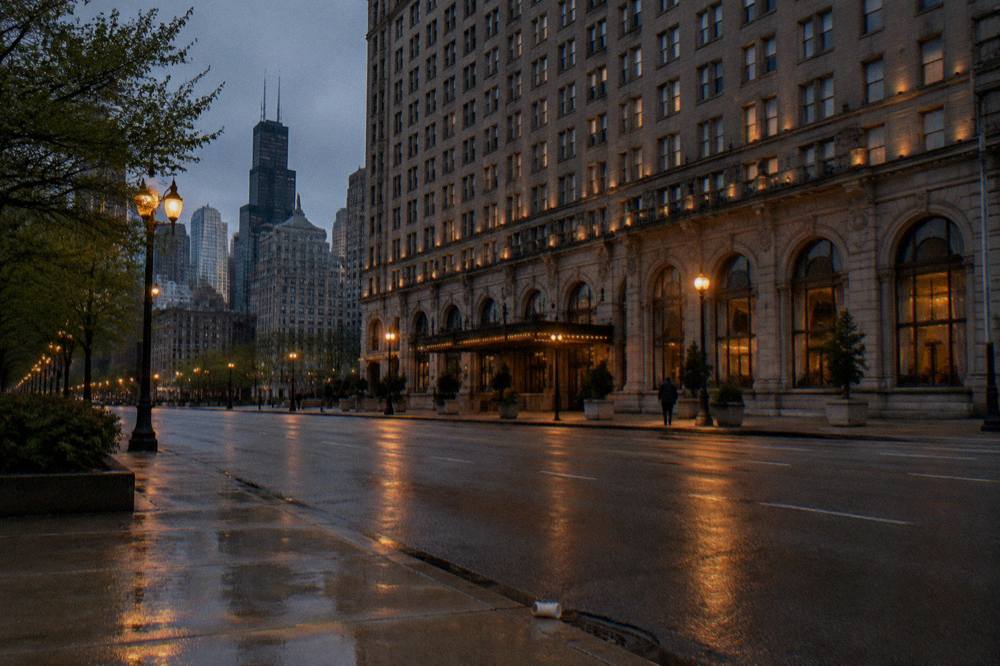
The Congress Plaza Hotel, opened just before the 1893 World's Fair as the Auditorium Annex, is frequently claimed to be one of the most haunted buildings in Chicago. That phrase, "frequently claimed," is doing honest work: it is a reputation, not a finding. Reports collected over the years single out room 441, where guests have described seeing a shadow woman standing over the bed. The hotel is also a working hotel and a tour meeting point: the 3-hour evening ghost bus meets inside its bar, and two South Loop walks start in front of the building.
The Palmer House adds phantom footsteps in its corridors and sightings of an unidentified woman in period clothing in public areas, according to accumulated hotel reports. The Wabash Street entrance of the Palmer House serves as the pickup point for the Gangsters and Ghosts minibus tour, while the walk itself takes guests inside the hotel, one of the few tours that puts you in the lobby of a reported haunt rather than describing it from the sidewalk.
The table below maps the Loop's most reported sites to the tours that stop at or depart from them.
| Reported site | Area | What is said | Tours connected to it |
|---|---|---|---|
| Congress Plaza Hotel | South Loop | Shadow woman in room 441; "most haunted" reputation | Ghost bus; Crime, Mobsters walk and Mob Alleys walk start out front |
| Palmer House | Loop | Phantom footsteps; woman in period dress | Gangsters and Ghosts walk goes inside |
| Chicago Theatre | Loop | Meeting point for the adults-only walk, itself a storied venue | Adults-only Loop ghost walk |
| State and Wacker | Loop riverfront | Departure point for the Capone and ghosts walk | 90-minute Capone walk |
| Randolph Street theatre district | Loop | Site of the 1903 Iroquois Theatre fire, 602 deaths | Covered in Loop ghost walk storytelling |
Worth knowing before you pick: several Loop tours overlap in route but not in tone. The Wind and Souls adults-only walk, $34.99 per person for 90 minutes and rated 4.2 across 46 reviews, keeps the stories adult. The Haunted Chicago Capone walk, $35 per person, carries a 5.0 across 446 reviews and reviewers report bringing children aged 6, 13 and 16, so it skews family-tolerant. Same streets, different register.
Why Is Lincoln Park Considered Haunted Ground?
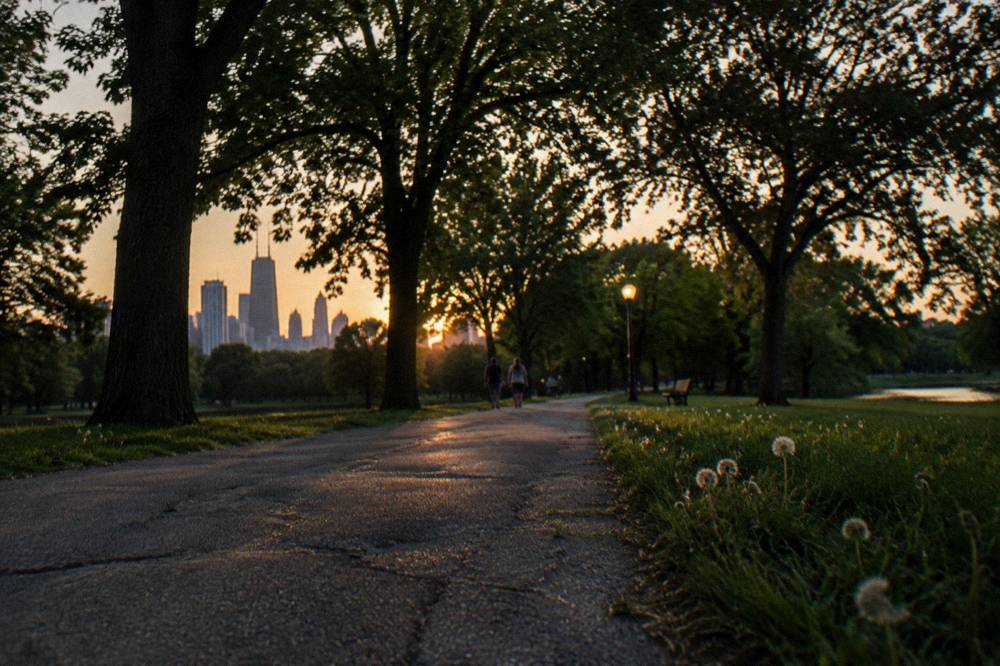
Lincoln Park sits on the site of the old City Cemetery, an estimated 35,000 burials that were relocated as the park was built, and the Couch mausoleum still stands behind the Chicago History Museum as the visible reminder. Tours treat the whole park as haunted ground, and the ghost hunts bring equipment to it.
This is the single most load-bearing fact in Chicago ghost lore, and it is genuinely verifiable. Before Lincoln Park was a park it was the city's burial ground. When the land was converted to park use in the 1860s and later, burials were moved, an estimated 35,000 of them, but relocation on that scale was never complete or clean, and every so often construction in the neighborhood still turns up remains. The Couch mausoleum, sitting in plain view behind the Chicago History Museum, is the physical proof that the dead were here. It is also a literal meeting landmark: the Lincoln Park ghost hunt departs from the museum's Clark Street doors. Lincoln Park is only one contender for that title, and our breakdown of Chicago's most haunted cemetery covers the other burial grounds where the ghost stories run deepest.
The park's stories layer on top of that foundation. The Lincoln Park zoo area, the pond, the old sand dunes: guides narrate all of it as layered ground. None of these tours promises a sighting, and the honest ones frame everything as "the story goes." What the Lincoln Park products sell is standing on the spot, at night, while someone tells you what used to be under your feet.
Four tours here work Lincoln Park directly, at a range of intensities. The Embers of the Windy City walk is the gentle entry point, one hour from $26 per person, rated 4.4 across 129 reviews, group max 15, meeting at the Tin Man statue in Oz Park. The family-friendly ghost walk, $29.99 per person for 1.5 hours from the benches across from Cafe Brauer, has no reviews yet, so judge it on its description alone. The Lincoln Park Hauntings ghost investigation is the deep end: 2 hours 15 minutes with investigation equipment, $40 per person, rated 4.9 across 47 reviews, group max 30.
| Lincoln Park tour | Duration | Price per person | Rating and reviews | Group max |
|---|---|---|---|---|
| Embers of the Windy City ghost walk | 1 hour | $26 per person | 4.4 across 129 reviews | 15 |
| Family-friendly ghost walk | 1.5 hours | $29.99 per person | No reviews yet | Not stated |
| Lincoln Park Hauntings ghost hunt | 2 hours 15 minutes | $40 per person | 4.9 across 47 reviews | 30 |
| Costumed haunted pub walk | 2 hours 30 minutes | $35.87 per person | 4.9 across 338 reviews | 12 |
For a fuller map of the city's reported sites beyond the park, the guide to haunted places in Chicago walks through them neighborhood by neighborhood.
What Happened At The Chicago River's Eastland Site?
The SS Eastland capsized on 24 July 1915 while tied to a dock on the Chicago River's south bank between Clark and LaSalle Streets, killing 844 passengers and crew. A granite plaque at the corner of Wacker Drive and LaSalle Street marks the site today, and river tours point it out on nearly every haunted departure.
It remains Chicago's deadliest single disaster, and it happened in about 20 feet of water, in public view, to a boat full of picnic-goers. The Reid Murdoch Building at 325 N LaSalle Street served as a makeshift morgue afterward, a detail the seasonal river cruises still highlight. The Eastland Disaster Historical Society preserves the victim and survivor stories and runs a quarterly webinar series on the tragedy, and families scattered petals from the Riverwalk at the 111th anniversary commemoration in July 2026.
For tour purposes, the Eastland site is the emotional anchor of riverfront ghost storytelling. The river-adjacent walks listed here handle it from the bridges above; the plaque is freely viewable from the public Riverwalk during open hours. The tone on the good tours is factual and respectful rather than lurid, which is the right register for 844 deaths.
The Loop riverfront also carries the gangster layer: the 90-minute Capone walk departs at State and Wacker, steps from the river, and the Gangsters and Ghosts walk starts outside Hoyt's Tavern on the riverfront. If you want the Eastland story specifically, the walking tours that work the river bridges are the ones whose guides tell it best.
Which Disasters Shaped Chicago's Ghost Stories?
Four documented events supply most of Chicago's haunted storytelling: the Great Chicago Fire of 8 to 10 October 1871, which killed approximately 300 people and left over 100,000 homeless; the Iroquois Theatre fire of 30 December 1903, which killed 602 in the worst theater fire in US history; the Eastland disaster of 1915; and the gangland killings of the 1920s and 1930s. Every Loop ghost tour draws on at least two of them.
The Iroquois Theatre fire deserves its own paragraph, because the building's aftermath is what Loop guides lean on. The theatre stood at 26 W Randolph Street between State and Dearborn, in what is still the theatre district. A 1903 matinee audience, largely women and children, was trapped by locked exits and a jammed fire curtain; 602 died and 250 more were injured. The site today carries no intact original building, but the street does not forget, and the walking tours that work Randolph Street tell it as the Loop's defining tragedy.
The Great Chicago Fire contributes a different kind of lore: the Water Tower is among the surviving structures, and its endurance in a fire that destroyed a vast swath of the city has fed decades of ghost stories that the Lincoln Park and downtown walks retell as legend, not record. The verified figures, approximately 300 deaths and more than 100,000 left homeless, are stark enough on their own.
Then there is the violence layer. The St. Valentine's Day Massacre killed seven on 14 February 1929 at a garage at 2122 N Clark Street. The site today is a vacant lawn and parking area behind a wrought-iron fence beside a senior housing building, with no plaque or marker of any kind, which makes a guide the only way to find it. John Dillinger was shot outside the Biograph Theater at 2433 N Lincoln Avenue on 22 July 1934; the theater is active again, hosting a resident theater company's season, so the story is told on the sidewalk outside before a working show. The Chicago History Museum's own writing on Dillinger's complicated legacy is good background reading before a gangster tour.
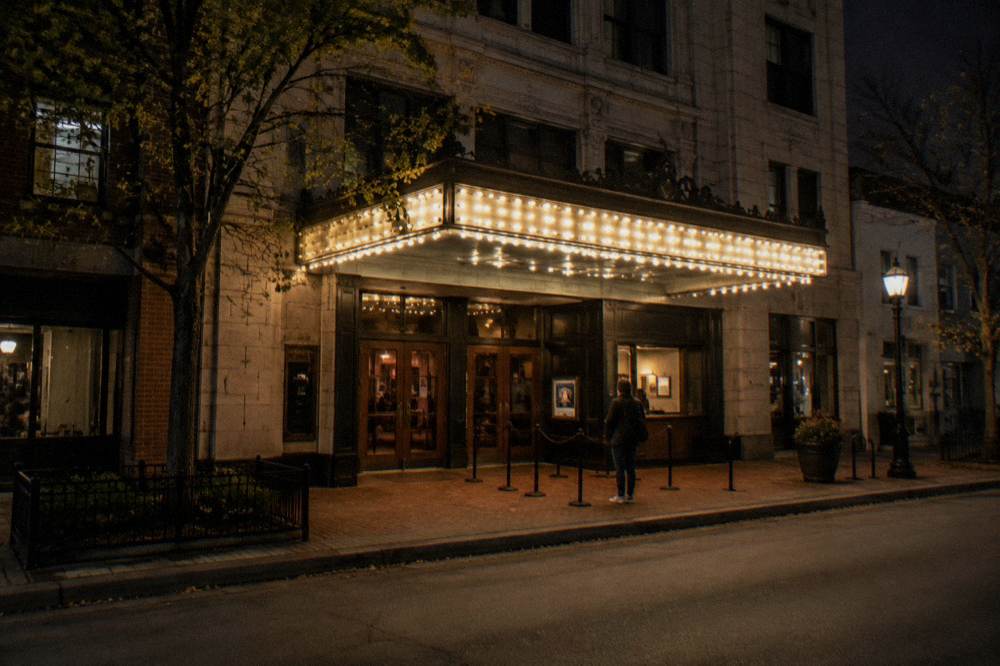
How these stories reach a tour group is its own craft. If you are curious how much walking is involved, the guide to haunted walking tour lengths breaks down these tours' durations mile by mile.
Are Chicago's Hotels Actually Haunted?
Three Chicago hotels carry the deepest haunted reputations, the Congress Plaza, the Palmer House and the Drake, and all three are working hotels you can walk into. The reports are real as reports, repeated by guests and staff over decades, and none of them constitute proof. What a tour adds is the storytelling and the history underneath the legends.
The Drake's contribution is the "Lady in Red," linked to a 1920s-era legend and reported on the 10th-floor hallway and in the Palm Court. The Palmer House contributes footsteps and a woman in period clothing. The Congress Plaza contributes room 441 and a whole catalog. Hotel haunting folklore tends to be self-reinforcing: once a building has the reputation, every unexplained noise gets filed under it, and each October the local press refreshes the cycle.
The practical angle for a visitor is that two of the three are on tour routes. The Gangsters and Ghosts walk enters the Palmer House, and the Congress Plaza is a meeting point for the ghost bus and two South Loop walks. The Drake sits a mile north on Michigan Avenue, outside the standard Loop routes, so its story reaches tours mainly through the guides' tellings. For a deeper look at staying in one, the haunted hotels in Chicago guide covers what each property actually says about its own lore.
A note on expectations: no tour on this site promises a sighting, and the listings phrase hauntings as reputations and stories. If a night in room 441 is the goal, that is a hotel booking, not a tour ticket, and the hotel treats it accordingly.
What About Chicago's Haunted Cemeteries?
Chicago's famous haunted cemeteries are real places with real visiting rules: Graceland Cemetery's gates are open daily year-round with seasonal hours, and Bachelor's Grove in Rubio Woods is open sunrise to sunset only, with entry outside those hours risking fines or arrest. No tour on this site enters a cemetery after hours, and none should.
Graceland, established in 1860 on 121 acres at Clark Street and Irving Park Road, is the great civic cemetery, and its ghost stories are best treated the same way as the hotels': reputations, told and retold. Its gates are open daily, with spring and summer hours of 8:00 AM to 6:00 PM on weekdays and 9:00 AM to 4:00 PM on weekends, shifting to 8:00 AM to 4:00 PM on weekdays in fall and winter, per the cemetery's own hours page. Photography for personal use is generally permitted with respect for the grounds.
Bachelor's Grove, the small abandoned cemetery inside Rubio Woods Forest Preserve, is the one with the national ghost-hunting reputation, and it is also the one with enforcement: the preserve is open sunrise to sunset, standing or climbing on tombstones is prohibited, and lighting candles on headstones is prohibited. The rules exist because the site is fragile and frequently visited. A daytime visit inside legal hours is entirely possible and is the responsible way to see it.
The ghost stories of Graceland Cemetery guide covers that ground's legends in full.
| Cemetery | Location | Access facts | Notes for visitors |
|---|---|---|---|
| Graceland | Clark St and Irving Park Rd | Gates open daily, seasonal hours | Personal photography generally permitted |
| Bachelor's Grove | Rubio Woods Forest Preserve | Sunrise to sunset only | After-hours entry risks fines or arrest |
| Resurrection | 7201 Archer Road, Justice | Grounds 8 AM to 7 PM, 1 Mar to 15 Oct | Pets must not roam free; no alcohol |
| Rosehill | 5800 N Ravenswood Ave | Generally 8 AM to 5 PM weekdays | Seasonal guided walking tours offered |
When Is The Best Time To Chase Chicago's Ghost Stories?
Halloween is the peak: it falls on Saturday 31 October 2026, with daylight saving time ending the very next day, and the city stacks special haunted events across October. But the core tours listed here run year-round, with evening departures as the standard, so the honest answer is October for atmosphere and any evening the rest of the year for smaller groups.
The October calendar is genuinely crowded. Lincoln Park Zoo runs its Haunted History Tours on Tuesday and Wednesday October evenings. Seasonal river cruises highlight the Eastland site and the Reid Murdoch Building's morgue history through late fall. One-night events like the Ghosts of Streeterville evening on 24 October 2026 and the Prairie Avenue haunted tours on 30 and 31 October add to the pile, and ticketed attractions sell out in advance. The seasonal inventory means October dates book early, a pattern covered in more depth in the October haunted tours guide. Once your date is booked, knowing how long a Chicago haunted walking tour typically lasts makes it easier to plan the rest of your evening.
Off-season has its own advantages, and winter ghost walks are a real thing in Chicago, not a compromise. The Gangsters and Ghosts walk runs daily year-round with departures including an 8 p.m. slot, so a January evening tour is a normal booking, and cold, quiet streets arguably suit the material. Dress for it: the what to wear on an evening ghost walk guide handles layering.
Whenever you go, the booking mechanics are simple: every tour listed here comes with free cancellation, most commonly up to 24 hours before departure, and the live listing shows the exact date and meeting point. Prices here are per person and printed exactly as listed; check the listing for anything marked "not stated."
So, is Chicago haunted? The evidence is stories, the stories are excellent, and the buildings they attach to are standing within walking distance of each other. Pick a neighborhood, pick a format, and let a guide tell you what the city remembers.
Common Questions About Chicago Hauntings
Is Chicago Haunted?
There is no verifiable evidence that Chicago is haunted. What the city has is a deeply documented history of disaster and violence, a large and active folklore built on it, and decades of guest reports from sites like the Congress Plaza Hotel and the Palmer House. Haunted Chicago means reputation and storytelling, and 16 live tours deliver both.
What Is The Most Haunted Place In Chicago?
The Congress Plaza Hotel carries the loudest single reputation, with room 441 the most cited room in guest reports. Lincoln Park as a whole is the most haunted ground by area, since the park was built over the old City Cemetery's relocated burials.
Can You Stay In A Haunted Hotel Room In Chicago?
Yes, in the ordinary way: the Congress Plaza, Palmer House and Drake are all working hotels taking regular bookings. No tour sells room access, and the hotels treat their lore as color rather than a product.
Do Any Chicago Ghost Tours Promise A Ghost?
No. The tours listed here frame hauntings as legends, reputations and guide stories. What they promise is a route, a storyteller and access to places like the Palmer House lobby that you would not otherwise get at night.
How Much Do Chicago Ghost Tours Cost?
Prices here run from $26 to $60 per person. Walking tours cluster between $26 and $40, the pub walk is $35.87, and the bus tours run $48 to $60, all per person with free cancellation listed.
Are Chicago Haunted Tours Good For Kids?
Some are. The family-friendly ghost walk at $29.99 per person is built for it, the Gangsters and Ghosts walk takes children aged 6 and under free, and Capone walk reviewers report bringing children aged 6, 13 and 16. The adults-only Loop walk excludes children entirely.