What Is The Most Haunted Cemetery In Chicago?
No Chicago cemetery holds a verified haunted title, but Bachelor's Grove, Resurrection Cemetery and the ground under Lincoln Park carry the city's strongest ghostly reputations. Here is what is legend, what is fact, and which tours cover the lore.
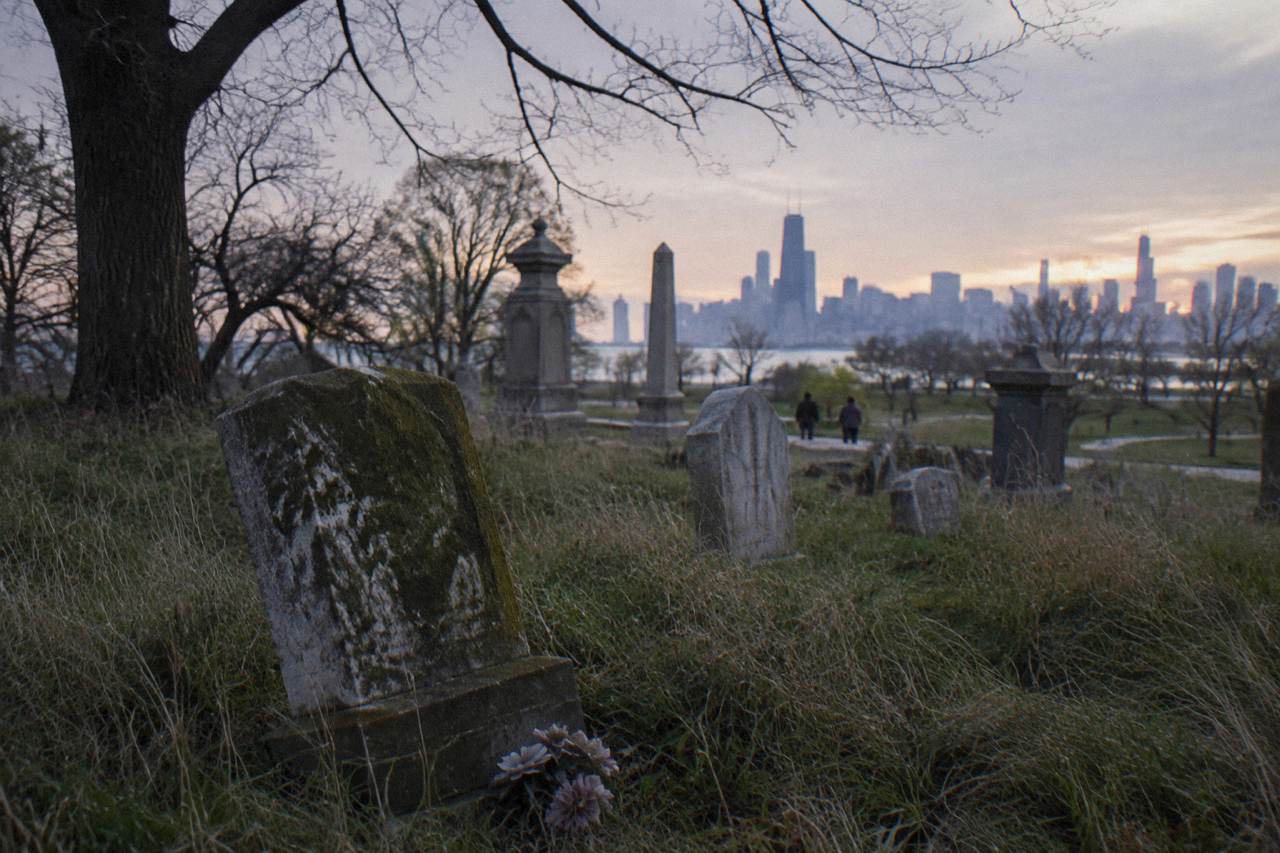
No single cemetery holds a verified title, because hauntings cannot be verified at all. In reputation, though, two names dominate Chicago ghost lore: Bachelor's Grove Cemetery in the Rubio Woods Forest Preserve, tied to decades of reported apparitions, and Resurrection Cemetery in Justice, Illinois, home of the Resurrection Mary legend. The most surprising candidate is not a cemetery anymore, it is Lincoln Park, built over the former City Cemetery, from which an estimated 35,000 burials were relocated. For a closer look at the ghost said to flag down rides along Archer Avenue, the guide to Chicago's Resurrection Mary legend walks through the sightings and the taverns she reportedly visits.
Reputation is the only currency a haunted cemetery has, and Chicago's reputations are unusually well distributed. Bachelor's Grove, a small abandoned graveyard inside a forest preserve near the suburb of Midlothian, has been called one of the most haunted places in America by generations of ghost hunters and folklore writers. Its fame grew over many decades as stories of a phantom farmhouse, a disappearing lake and a mysterious "white lady" spread through Chicago tabloids and paranormal circles. If Bachelor's Grove whets your appetite for the city's darker lore, this roundup of haunted Chicago spots you can visit without spending a dime points you toward more eerie locations that cost nothing to see.
Resurrection Cemetery, a large Catholic cemetery southwest of the Loop, earned its reputation from a single enduring legend. Resurrection Mary, the story goes, was a young woman killed on Archer Avenue in the 1930s who has been seen hitchhiking near the cemetery gates ever since. The story is told as a story, and it has been retold in books, newspapers and television segments for decades. Our companion piece on the Resurrection Mary legend and its origins traces it in more detail.
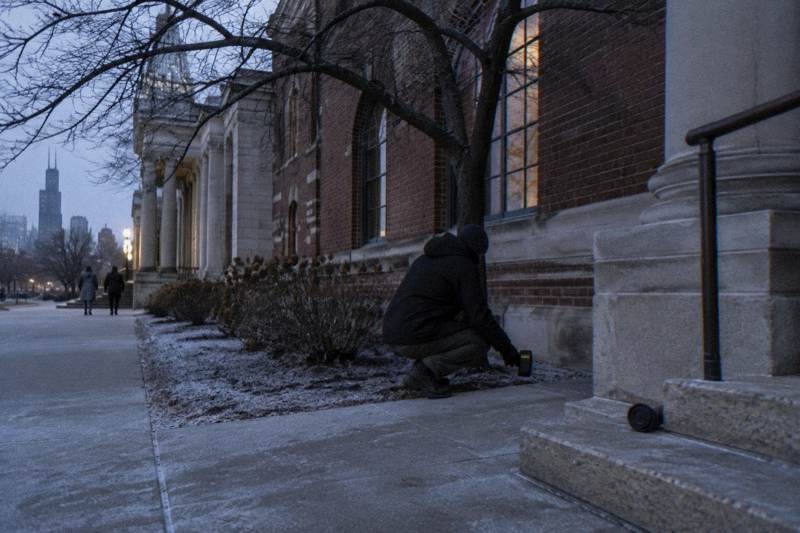
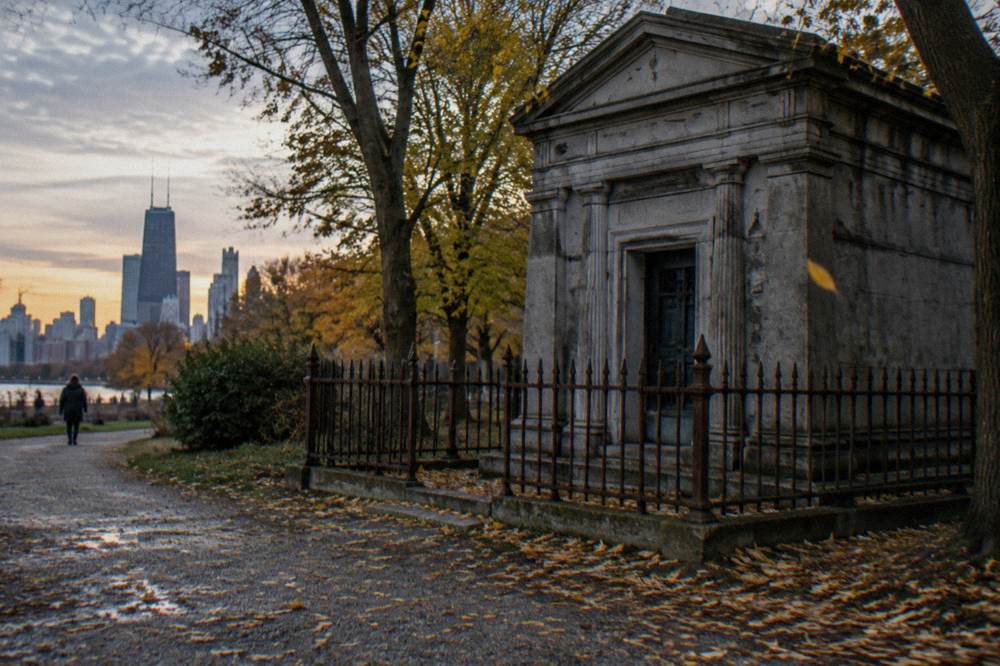
Then there is the cemetery most visitors walk through without knowing it exists. Lincoln Park, today a lakefront park with a zoo and museums, was Chicago's City Cemetery in the city's earlier era. An estimated 35,000 burials were relocated as the park took shape, and the Couch mausoleum, still standing behind the Chicago History Museum, is the visible reminder of what lies beneath. Several of the site's guided products lean on this history, including the Lincoln Park ghost walk that starts at Oz Park and the Lincoln Park Hauntings ghost investigation, which meets at the Chicago History Museum's Clark Street doors.
If your interest in cemetery ghosts is more active than curious, two of the site's tours go beyond storytelling into investigation territory.
Which Chicago Cemeteries Carry Haunted Reputations?
Four places carry the weight of Chicago's cemetery ghost lore: Bachelor's Grove, with the most famous apparition stories; Resurrection Cemetery, home of the Resurrection Mary legend; Graceland Cemetery on the North Side, with its Victorian atmosphere and noted permanent residents; and the former City Cemetery ground under Lincoln Park, where thousands of burials were moved but not all traces erased. Each reputation is a matter of storytelling and report, not established fact.
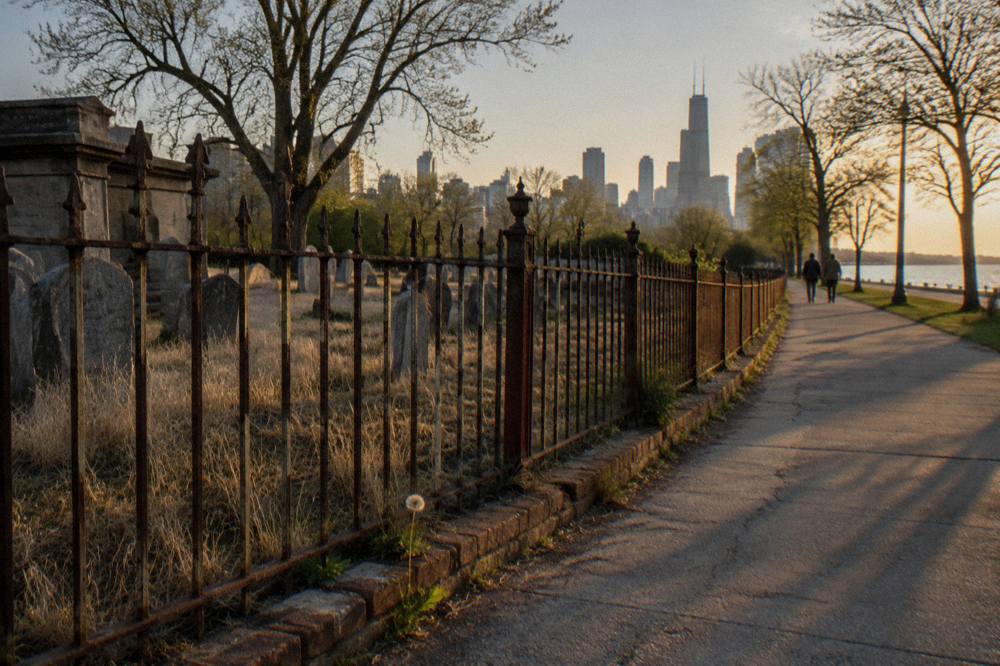
Graceland Cemetery, established in 1860 at Clark Street and Irving Park Road across 121 acres, is the most visitable of the four. It is a landscaped arboretum as much as a graveyard, and its gates are open daily year-round. People come for the architecture of the monuments and the graves of figures whose names still define the city. Ghost stories attach to it more gently than to Bachelor's Grove; the mood is gothic rather than frightening, and a legend sometimes told about a glass-covered grave there is not verified, so this site does not repeat it as history.
Rosehill Cemetery, on the Far North Side, adds another layer. It is one of the city's oldest large cemeteries, and it offers seasonal guided walking tours, with documented dates such as October 17, 2026, meeting inside the gates off 5800 N. Ravenswood Avenue. Its haunted reputation is quieter, carried more by Civil War-era history than by apparition tales.
The comparison below holds each site to the same honest standard: what the reputation is, and what a visitor can actually do there.
| Cemetery | Haunted reputation | What you can verify on a visit |
|---|---|---|
| Bachelor's Grove (Rubio Woods Forest Preserve) | The city's most famous apparition stories, decades of reported sightings | An abandoned small graveyard, open sunrise to sunset, no facilities |
| Resurrection Cemetery (Justice, IL) | The Resurrection Mary hitchhiker legend on Archer Avenue | An active, well-kept Catholic cemetery with daily visiting hours |
| Graceland Cemetery (Uptown) | Victorian atmosphere, noted residents, gentle ghost lore | Gates open daily year-round, 121 landscaped acres |
| Lincoln Park (former City Cemetery) | Burials relocated, ground still associated with the forgotten dead | A public park; the Couch mausoleum stands behind the Chicago History Museum |
A useful habit when weighing these reputations: ask what kind of claim is being made. A legend like Resurrection Mary is folklore with a long paper trail. A place like Bachelor's Grove is an abandoned site where decades of visitor stories have layered onto genuine neglect. And Lincoln Park is simply a documented fact, a park built over a relocated burial ground, that legends have grown around. All three make good ghost stories, and only the third is a matter of record.
Can You Visit Bachelor's Grove Cemetery Today?
Yes, Bachelor's Grove is open to the public during regular Forest Preserve hours, from sunrise to sunset, and entry outside those hours risks fines or arrest. The cemetery sits inside Rubio Woods Forest Preserve, and visitors must not stand or climb on tombstones or light candles within the cemetery or place them on headstones. There is no staffed gate, no tour desk and no evening access of any kind.
That last point matters more than any legend. Bachelor's Grove's reputation was built partly on night visits, and night visits are simply not permitted. The rules are published by the group that maintains the site's stewardship information, and the Forest Preserve District's sunrise-to-sunset hours are the boundary every respectful visitor works inside. Anyone promising you a nighttime walk through Bachelor's Grove is promising something the rules do not allow, and no tour on this site offers one.
What you will find in daylight is a small, heavily disturbed graveyard. Many of the original markers were vandalized or stolen over the decades, and the site's isolation inside the preserve is part of why the stories took hold. For the lore itself, the reported sightings and the folklore history, you are better served by a guided dark-history product in the city, where a storyteller can cover the Bachelor's Grove legends legally and in context.
This is the practical split that defines cemetery ghost tourism in Chicago: the famous graveyard itself is a daytime, self-guided, rule-bound visit, while the ghost stories travel well and show up all over the city's guided tours. The Gangsters and Ghosts guided walking tour, for instance, covers Loop riverfront hauntings and gangster history in one two hour walk, with an 8 p.m. daily departure and children aged 6 and under joining free. It is not a cemetery tour, but its after-dark storytelling scratches the same itch without breaking any access rule.
If you want the investigative version of that experience closer to the city, the Lincoln Park ghost hunt brings equipment and a guide to the park's haunted ground.
What Lies Under Lincoln Park?
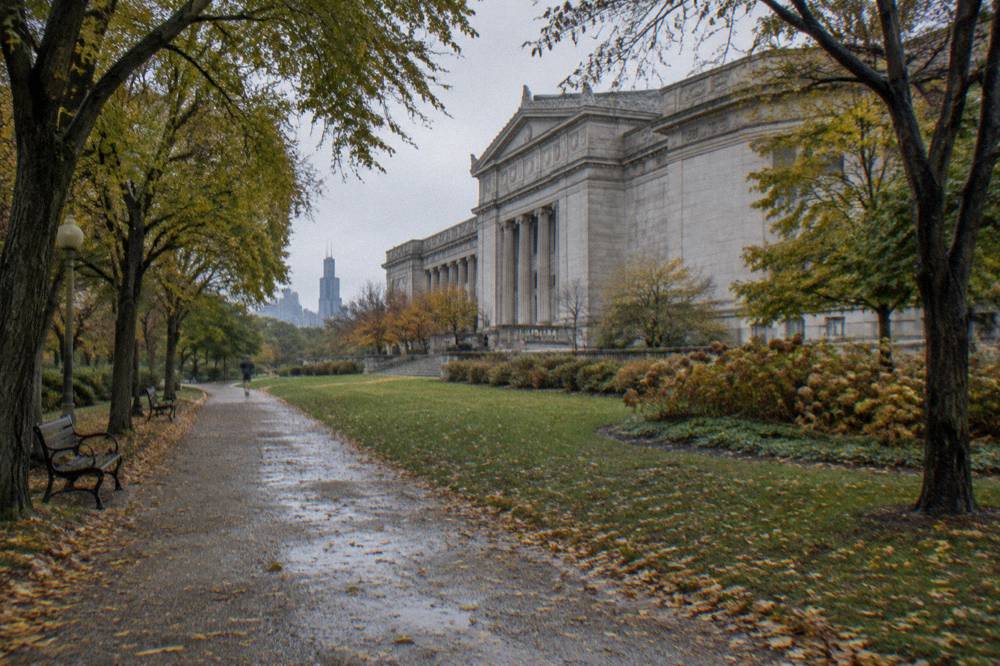
Lincoln Park occupies the site of Chicago's former City Cemetery, from which an estimated 35,000 burials were relocated as the land was converted to a park. The Couch mausoleum, standing behind the Chicago History Museum, is the visible remnant. The park's ghostly reputation grows directly from this documented history of moved graves and disputed remains.
This is the rare case where the facts are stranger than the legends. Chicago buried its dead on this lakefront ground in the city's early decades, then changed its mind as the city grew north. Removals stretched over many years, and the historical record, including the park's own documented history, acknowledges that the process was incomplete and contested. When a zoo, a museum and playing fields were layered on top, the ground underneath kept its reputation.
The tours that use this history are direct about it. The Lincoln Park Hauntings ghost investigation meets at the Chicago History Museum's Clark Street doors, the same building the Couch mausoleum sits behind, and runs about 2 hours 15 minutes with investigation equipment, capped at 30 guests, for $40 per person with free cancellation listed. The shorter Embers of the Windy City ghost walk, 4.4 across 129 reviews at $26 per person, starts at the Tin Man statue in Oz Park a few blocks north. The family-friendly ghost walk meets across from Cafe Brauer, deeper into the park itself.
For a comparison of how these Lincoln Park options differ in price, pace and format, the haunted walking tours compared guide lays out the full range side by side.
One honest note on expectations: no tour on this site or any other promises a sighting, and none should. What the Lincoln Park products offer is a guided walk over genuinely unusual ground with the history told properly, plus, on the investigation tours, the chance to use equipment and draw your own conclusions.
Is Resurrection Cemetery Really Haunted By Resurrection Mary?
Resurrection Cemetery is a real, active Catholic cemetery in Justice, Illinois, and the Resurrection Mary legend is exactly that, a legend, retold for decades and never substantiated. The cemetery itself is open to visitors daily, 8:00 AM to 7:00 PM from March 1 to October 15 and 8:00 AM to 5:00 PM from October 16 to February 28, and it enforces standard cemetery conduct rules.
The legend deserves respect as folklore even though it fails as fact. In its most common telling, a young woman in a white dress is picked up on Archer Avenue, dances with a driver, and asks to be dropped near the cemetery gates, where she vanishes. Versions date the story to the 1930s and pin it to a real 1930s traffic death, though no documented match has ever been confirmed. What is documented is decades of retelling, which is its own kind of Chicago history.
Visiting is straightforward and rules-bound. The Catholic Cemeteries of Chicago, which operates the site, prohibits picnics, alcoholic beverages, loud or live music, and pets roaming free, and asks visitors not to film or photograph people or identifying names and dates on markers without contacting the office for editorial or commercial requests. These are working grounds with active burials, and the operators treat ghost tourism accordingly. Archer Avenue itself, the legend's stage, is a public road you can drive any time.
If Mary's story is what draws you, the smarter route is a guided dark-history tour where the legend is told in full, alongside the city's other famous ghosts. For a wider survey of the city's spooky landmarks beyond the graveyards, see Chicago's most haunted spot, considered, which weighs the hotel and theater claims against the cemetery ones.
Which Guided Tours Cover Cemetery And Burial Ground Lore?
Three tour formats touch cemetery lore directly: the Lincoln Park Hauntings ghost investigation, which walks the former City Cemetery ground with equipment; the Prairie Avenue Ghost Hunt, a 2 hour investigation meeting at Glessner House in the Gilded Age mansion district of Prairie Avenue; and storytelling walks such as the Gangsters and Ghosts tour that retell graveyard legends in the Loop. No tour listed here enters any cemetery after hours.
The table below is the honest buying guide. Every figure comes straight from the live listings on this site.
| Tour | Format and meeting point | Duration | Price | Rating |
|---|---|---|---|---|
| Lincoln Park Hauntings Ghost Investigation | Investigation with equipment, meets at Chicago History Museum Clark Street doors | 2 hours 15 minutes | $40 per person | 4.9 across 47 reviews |
| Prairie Avenue Ghost Hunt | Investigation, meets at Glessner House | 2 hours | $37.50 per person | No reviews yet |
| Gangsters and Ghosts Guided Walking Tour | Storytelling walk, meets outside Hoyt's Tavern on the Loop riverfront | 2 hours | $31 per person | 4.7 across 1,878 reviews |
| Embers of the Windy City Ghost Walk | Storytelling walk, meets at the Tin Man statue, Oz Park | 1 hour | $26 per person | 4.4 across 129 reviews |
The Prairie Avenue Ghost Hunt deserves a longer look, because Prairie Avenue is Chicago's other great buried-history street. In its heyday it was the city's premier residential boulevard, and the Gilded Age mansions packed in around it saw fortunes and losses in equal measure. The ghost hunt meets at Glessner House, a surviving mansion from that same historic era, and runs 2 hours for $37.50 per person. It is a new enough listing that it has no reviews yet, which this site reports plainly rather than dressing up. Free cancellation is listed, and you can Check availability alongside the fuller Prairie Avenue ghost hunt listing page.
For visitors who want cemetery atmosphere without an investigation, Graceland is the practical daytime answer. Its gates are open daily, with spring and summer hours of 8:00 AM to 6:00 PM on weekdays and 9:00 AM to 4:00 PM on weekends, shifting to 8:00 AM to 4:00 PM on weekdays in fall and winter, per the cemetery's official hours page. The office closes on major holidays. Photography for personal use is generally permitted with respect for the grounds.
When Is The Best Time Of Year For Cemetery Ghost Lore In Chicago?
October is the peak season by every measure: Halloween 2026 falls on Saturday 31 October, the city's special haunted programming runs through the month, and the season's dusk arrives early enough that evening tours start in darkness. Cemetery visiting hours, however, are fixed by season, not by Halloween, and Resurrection's grounds already shift to their shorter winter schedule on October 16.
The calendar detail worth planning around is that daylight saving time ends Sunday 1 November 2026, the day after Halloween. That means late-October evenings stay light until around six, while early-November tours run in full darkness an hour earlier by the clock. Both moods work, they are just different.
Seasonal programming stacks up fast in October. Haunted Tours of Historic Prairie Avenue took place on October 30 and 31 in 2026, landing directly on the ghost hunt's home territory. Lincoln Park Zoo ran its Haunted History Tours on Tuesday and Wednesday October evenings, selling out with no gate sales. The site's own tours, the ghost walks and hunts above, run on their regular schedules, with the Gangsters and Ghosts walking tour departing daily year-round at 11 a.m., 1 p.m., 4 p.m. and 8 p.m.
Winter has its own case: shorter lines, bare trees and early nightfall. The trade-off is colder walking, and our piece on taking a ghost walk in a Chicago winter covers what to expect. Cemetery visits in winter mean the short end of the hours table, and Bachelor's Grove in particular is best saved for a milder day, since the walk in is unpaved.
However you time it, this Chicago Ghost Tours article closes where it started: the title of most haunted cemetery in Chicago is a matter of reputation, and the reputations live in the telling. A guided walk or investigation puts you with a storyteller who knows the difference between the record and the legend, which is exactly what cemetery lore deserves.
Common Questions About Haunted Cemeteries In Chicago
What Is The Most Haunted Cemetery In Chicago?
By reputation, Bachelor's Grove Cemetery in the Rubio Woods Forest Preserve and Resurrection Cemetery in Justice lead Chicago's cemetery ghost lore, with Lincoln Park's buried City Cemetery history close behind. No title is verified, because hauntings cannot be verified; each is a matter of legend and reported stories.
Can You Visit Bachelor's Grove Cemetery At Night?
No. Bachelor's Grove is open to the public only during regular Forest Preserve hours, sunrise to sunset, and entry outside those hours risks fines or arrest. Visitors must also not stand or climb on tombstones or light candles within the cemetery or place them on headstones.
Are There Burials Under Lincoln Park?
Yes, that part is documented history. Lincoln Park occupies the former City Cemetery, from which an estimated 35,000 burials were relocated, and the Couch mausoleum behind the Chicago History Museum remains as the visible reminder.
Do Any Chicago Tours Go Inside Haunted Cemeteries?
No tour on this site enters a cemetery after hours. The closest products are the Lincoln Park Hauntings ghost investigation over the former City Cemetery ground and the Prairie Avenue Ghost Hunt meeting at Glessner House; storytelling walks cover graveyard legends without cemetery entry.
When Is Graceland Cemetery Open?
Graceland's gates are open daily year-round. Spring and summer hours are 8:00 AM to 6:00 PM on weekdays and 9:00 AM to 4:00 PM on weekends, and fall and winter hours are 8:00 AM to 4:00 PM on weekdays and 9:00 AM to 4:00 PM on weekends. The office closes on major holidays.
Is Resurrection Mary A Real Person?
The legend of Resurrection Mary, a young woman said to vanish near Resurrection Cemetery's gates on Archer Avenue, has been retold for decades, but no documented death has ever been matched to her. She is best understood as enduring Chicago folklore rather than a verified historical figure.