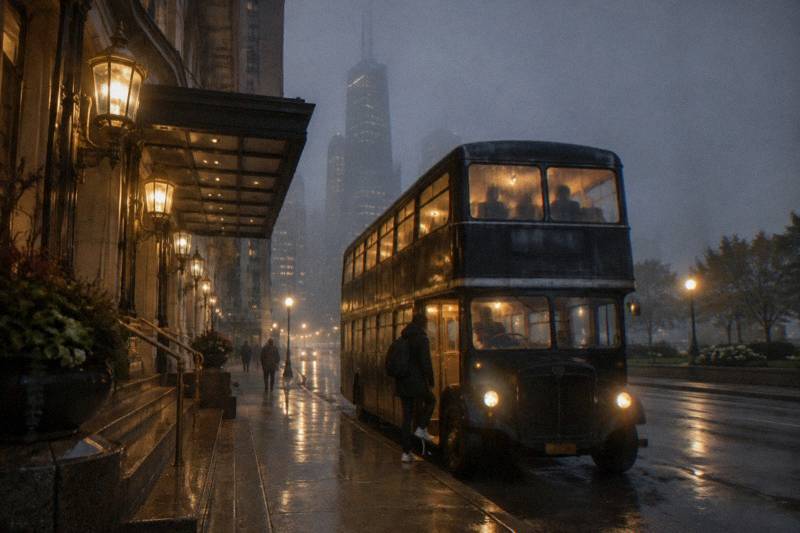
Is The Drake Hotel Haunted?
The Lady in Red legend at The Drake Hotel in Chicago, what the reports actually say, and which ghost and gangster tours pair with a stay on the Magnificent Mile.
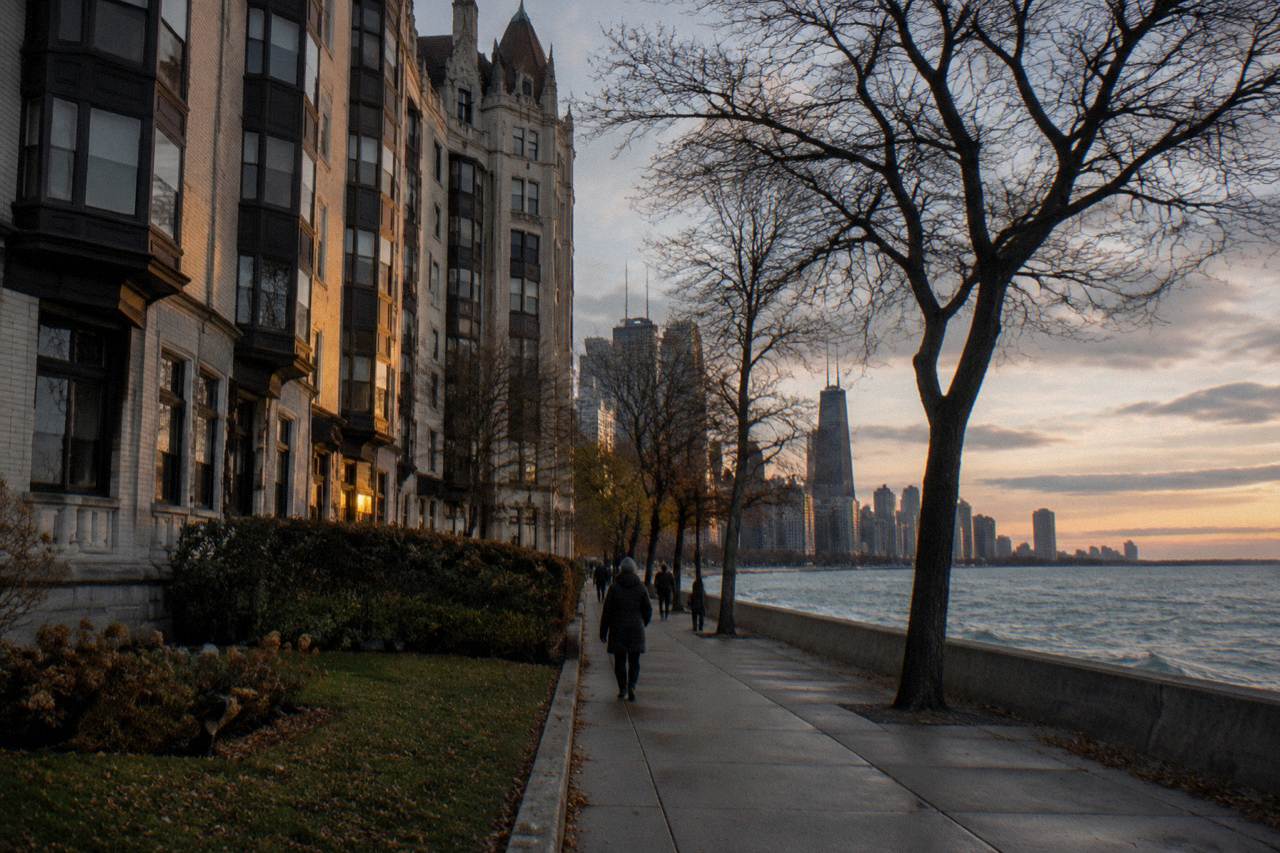
The Drake Hotel has stood at the top of the Magnificent Mile since 1920, and for roughly as long it has carried a ghost story. The best known version concerns a woman in a red dress, said to appear on the tenth floor and in the Palm Court, with the legend usually dated to the 1920s. Local reporting repeats the claims, guests repeat them in reviews, and tour guides repeat them on Loop walks. None of that makes the haunting a fact. It makes it a durable piece of Chicago folklore, and folklore is exactly what this site covers honestly.
This article separates the three layers. First, the legend itself: who the Lady in Red is said to be, and what people actually report. Second, the verified history within walking distance of the hotel, which is where the real, documented tragedy of the neighborhood lives. Third, the practical question for readers planning a visit: which of the 16 bookable walks, buses and ghost hunts on this site pair best with a Drake stay, from the Crime, Mobsters And Ghost Stories Walk to the Capone walk that leaves the Loop riverfront every evening.
The honest answer is that the Drake is famous for being haunted, which is not the same as being haunted. Chicago reporting describes longstanding local accounts of a ghostly "Lady in Red" seen on the 10th-floor hallway and in the Palm Court, linked to a 1920s-era legend. No claim of an apparition has ever been verified, and the hotel's own position, like most hotels, is not to promise one.
The word "haunted" does a lot of quiet work in that sentence. In the strict sense, a building is haunted if a ghost is present, and no person, investigation or document has ever established that about the Drake, the Congress Plaza Hotel or anywhere else. In the practical sense that most visitors use, a hotel is "haunted" if it has a famous ghost story, a long record of reported sightings, and a reputation that shows up in local news, and by that standard the Drake qualifies comfortably.
The earliest versions of the Lady in Red story are told a few different ways, which is itself a hallmark of legend rather than history. In the common telling, a young woman in a red dress died in the hotel in the 1920s, sometimes said to be a bride or a jilted socialite depending on who tells it, and she has been seen since in the tenth-floor corridor and near the Palm Court's famous afternoon tea service. Neighborhood reporting from Chicago's near north side repeated the sightings in October 2025, describing the Lady in Red as the hotel's signature ghost and tying her to that 1920s-era legend. Note the careful wording in every version you will read: "linked to a legend," "reported sightings," "described as." Nobody credible claims to know her name with documentation.
That matters for how you read the rest of this page. The Drake's haunting is a reputation, the same way the Congress Plaza Hotel is "frequently claimed to be one of the most haunted buildings in Chicago," as its verified history entry puts it, with room 441 cited as its most active room where guests have described a shadow woman standing over their bed. Both hotels have reputations built from repeated guest accounts. Neither reputation is a verified fact about the physical world, and a good ghost tour will present it that way too.
If your interest in the Drake is more than curiosity, if you actually want to buy a ticket for an evening of this material, one Loop-based walking tour fits the theme well:
It is a walking tour that treats hotel legends and gangster history the way this article does: as stories with sources, told at night, in the neighborhoods where they happened.
Who Is The Lady In Red At The Drake Hotel?
She is a figure of Chicago legend rather than documented history: a woman in a red dress whose death is placed in the hotel in the 1920s, and whose apparition is reported on the 10th-floor hallway and in the Palm Court. Local reporting describes the accounts as longstanding, but no contemporary record from the 1920s confirms any part of the story.
The details shift with the teller, which is what you would expect from a story passed around for a century. Some versions name her as a bride who died on her wedding night. Others say a woman who waited in the lobby for a man who never came. The reporting that circulated around Halloween 2025 sticks to what witnesses claim: apparitions in the tenth-floor corridor, glimpses in the Palm Court, and a figure described as the "Lady in Red" by staff and guests alike. The 1920s date attached to her origin is part of the legend, not a fact from a coroner's file.
It helps to place the legend in the hotel's real chronology. The Drake opened in 1920, financed in part by a syndicate that included members of the Drake family and, by many historical accounts, gangster money flowing through legitimate-looking Chicago investments of the Prohibition era. The hotel served royalty, presidents and film stars across the century, from its role as the city's grand lakefront host to the modern Hilton brand it carries today. A building with that much history accumulates stories the way a riverbank accumulates driftwood, and a 1920s death story attached to a 1920s hotel has a certain narrative tidiness that folklorists would flag immediately.
That does not make the story worthless. Legends are cultural artifacts, and the Lady in Red is a genuine piece of Chicago folklore, printed and repeated for decades. What it is not, is evidence. No photograph of the Palm Court has ever shown anything a skeptic and a believer agreed on, and this site will not claim otherwise. What we can say plainly is that the Drake's haunted reputation is real in the sense that people sincerely report experiences there, the accounts are old, and the hotel has never, to our knowledge, leaned on the story in official marketing the way some smaller inns do.
For readers who want to experience haunted-hotel lore directly rather than read about it, the practical path is a guided walk. The Crime, Mobsters And Ghost Stories Walk meets in front of the Congress Plaza Hotel, itself the subject of the room 441 shadow-woman accounts, and spends two hours on exactly this blend of legend and documented crime. It costs $34 per person, with free cancellation listed, and it is too new to have accumulated a rating worth quoting.
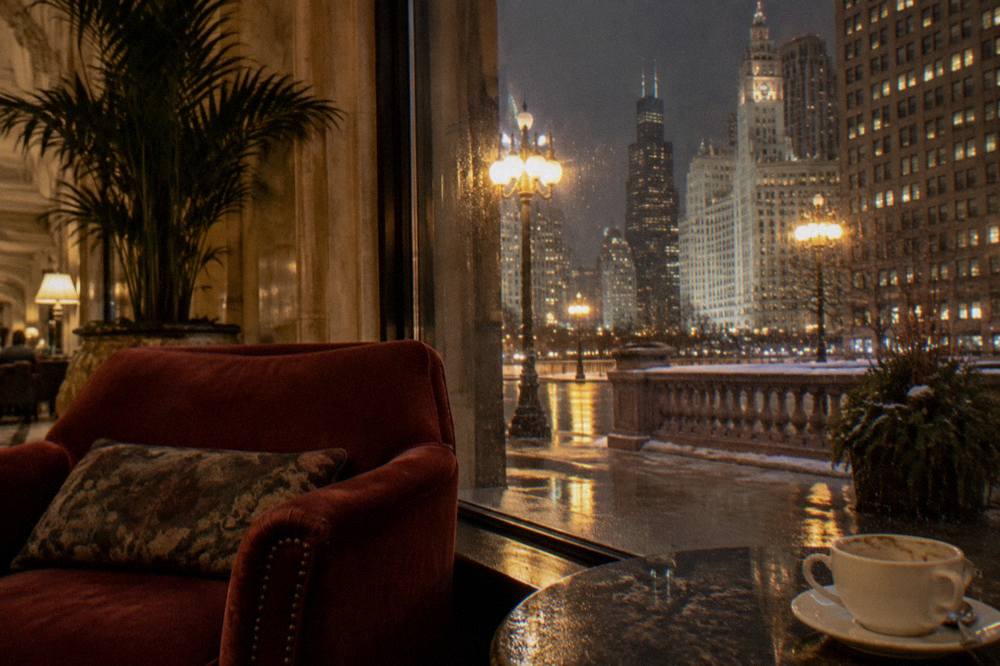
Do Any Chicago Tours Stop At The Drake Hotel?
No tour listed here names the Drake as a stop. The 16 bookable walks, buses and ghost hunts cluster in the Loop, Lincoln Park, River North, Streeterville and Prairie Avenue, and the guided hotel-legend material, including the Congress Plaza's room 441 stories, is told on the Loop walks that start a short ride or an honest walk south of the Magnificent Mile.
This surprises some visitors, and it is worth explaining why the geography works the way it does. The Drake sits at the top of Michigan Avenue, a mile and a half north of the river. The densest concentration of dark history in Chicago, the Eastland dock, the Iroquois Theatre site, the gangster-era Loop hotels, Death Alley as a stop named on several listings, sits south of the river, and that is where the walking tours base themselves. The tours here reflect it: the Capone walk meets at State and Wacker, the Gangsters and Ghosts walk meets outside Hoyt's Tavern on the riverfront, the adults-only Wind and Souls walk meets outside the Chicago Theatre, and the Crime, Mobsters And Ghost Stories Walk meets at the Congress Plaza on South Michigan Avenue. If you're weighing which of those walks suits you best, our guide to Chicago's gangster and ghost tours compares what each one actually covers.
Streeterville is the closest thing to a Drake-adjacent tour district. The Crime and Mob Coach Tour and the Night Crimes Coach Tour both pick up outside 163 E Pearson Street, a few blocks from the Drake, and both run by bus, which means the route can reach neighborhoods a walking tour cannot. The night version, $55 per person and rated 4.8 across 521 reviews, is the one that leans hardest into the after-dark material. The daytime coach version, $49 per person and 4.6 across 3,603 reviews, is the crowd favorite by volume.
The comparison below shows the options a Drake guest can reach most easily, using the published prices and ratings for each tour.
| Tour | Meeting point | Theme | Price | Duration | Rating |
|---|---|---|---|---|---|
| Crime, Mobsters And Ghost Stories Walk | Congress Plaza Hotel front | Ghosts and gangsters | $34 per person | 2 hours | Too few reviews for a star claim |
| Capone And Ghosts Walk | Chase Bank, State and Wacker | Capone era and ghosts | $35 per person | 1 hour 30 minutes | 5.0 across 446 reviews |
| Gangsters And Ghosts Walk | Outside Hoyt's Tavern, riverfront | Gangsters plus the Palmer House interior | $31 per person | 2 hours | 4.7 across 1,878 reviews |
| Night Crimes Coach Tour | 163 E Pearson St pickup | Night crime and haunts by bus | $55 per person | 2 to 2.5 hours | 4.8 across 521 reviews |
| Crime And Mob Coach Tour | 163 E Pearson St pickup | Mob history by coach | $49 per person | 1.5 to 2 hours | 4.6 across 3,603 reviews |
The two coach tours are the fastest answer to a reader staying at the Drake who does not want to walk downtown first. The walking tours are the better answer to a reader who wants the stories told slowly, on the sidewalk, at night. Both work; they are different products, not competing versions of the same one.
One scheduling note before you commit to a night: every walk and bus on this page lists free cancellation, so the cheapest way to plan is to book the tour that fits your dates and keep the alternatives in mind if the weather turns. October and the Halloween weekend fill first, and the 8 p.m. slots on the popular Loop walks are the ones that go earliest.
What Other Haunted Hotels Does Chicago Claim?
Chicago's haunted-hotel canon includes at least three famous names: the Drake with its Lady in Red, the Congress Plaza Hotel with room 441's shadow woman, and the Palmer House Hilton with phantom footsteps and a woman in period clothing reported in public areas. All three are reputations built on guest accounts, not verified events, and two of them serve as actual tour meeting points.
The Congress Plaza is the most tour-connected of the three. Opened just before the 1893 World's Fair as the Auditorium Annex, it is, per its verified history, "frequently claimed to be one of the most haunted buildings in Chicago." The room 441 accounts, a shadow woman standing over the bed, are the ones guests repeat most, and reporting in 2026 continued to cite the hotel for reported paranormal activity. Two tours use the hotel as a doorstep: the Crime, Mobsters And Ghost Stories Walk meets at its front, and the three-hour evening ghost bus begins inside the hotel's bar, which tells you the operators know their audience.
The Palmer House Hilton carries reports of phantom footsteps in its corridors and sightings of an unidentified woman in period clothing in public areas, accounts that circulated again in January 2026. The Gangsters and Ghosts Walk, $31 per person and 4.7 across 1,878 reviews, is the one tour here that goes inside the Palmer House as part of its route, which makes it the only tour where haunted-hotel interior space is on the itinerary rather than just the sidewalk outside. Children aged 6 and under join free, per the listing.
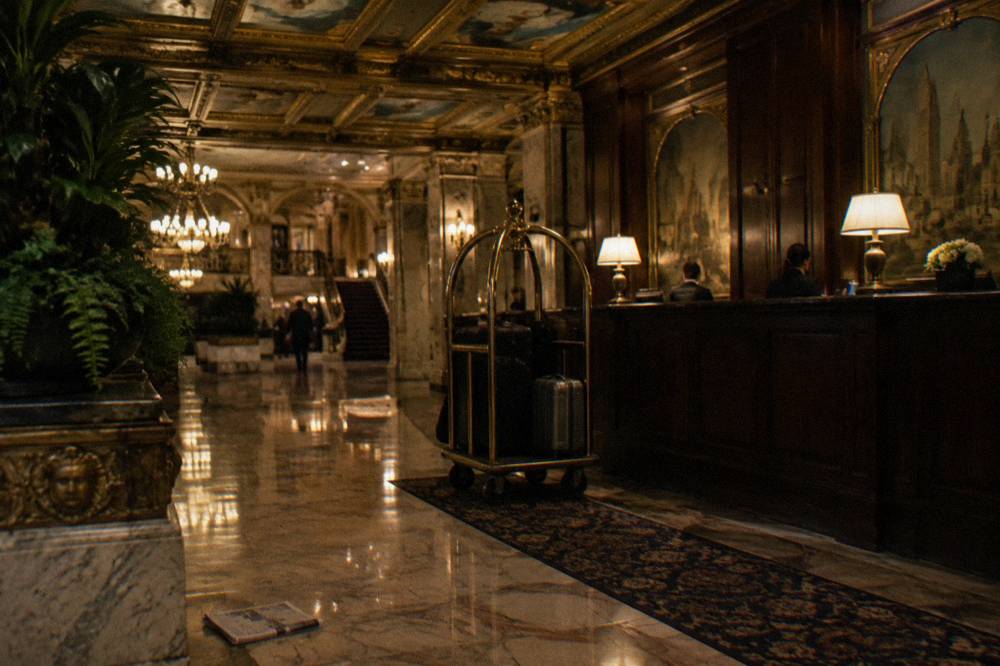
Set side by side, the three reputations look like this. Note that "reported phenomena" means what guests and staff describe, never a claim that anything supernatural occurred.
| Hotel | Signature account | First opened | Tour connection |
|---|---|---|---|
| The Drake | Lady in Red, 10th-floor hallway and Palm Court | 1920 | No tour stop; Streeterville coach pickups nearby |
| Congress Plaza Hotel | Shadow woman in room 441 | Just before the 1893 World's Fair | Meeting point for one walk and the ghost bus bar start |
| Palmer House Hilton | Phantom footsteps; woman in period clothing | Rebuilt after the 1871 fire era | Interior stop on the Gangsters and Ghosts Walk |
If you are choosing a hotel specifically for the haunted angle, the honest editorial note is this: the Congress Plaza and the Palmer House put you inside the stories, and the Drake puts you inside the prettiest building with the best-known legend and no tour traffic. All three are functioning full-service hotels, and none of them will promise you an apparition, and neither will we.
What Verified Dark History Sits Near The Drake?
The Drake's immediate neighborhood holds one verified tragedy site within a mile: the spot on the Chicago River where the SS Eastland capsized on 24 July 1915, killing 844 passengers and crew. Farther south in the Loop sit the Iroquois Theatre fire site, where 602 died on 30 December 1903, and the Biograph Theater, where John Dillinger was shot on 22 July 1934. These are documented, and tours stop at or near them.
This is the part of the article where the material stops being folklore and starts being history, and the difference in tone is deliberate. The Eastland disaster is the closest verified mass-death event to the Drake. The excursion steamer, tied to a dock on the Chicago River's south bank between Clark and LaSalle Streets, rolled over at its moorings while loaded with Western Electric employees and their families headed for a picnic. The verified count is 844 passengers and crew killed. A historical plaque marks the site at the southeast corner of LaSalle Street and Wacker Drive, and in July 2026 the Eastland Disaster Historical Society held its 111th anniversary commemoration on the Riverwalk between LaSalle and Clark, where families scattered flower petals into the river. The society, founded in 1998 by descendants of a survivor, still preserves victim and survivor stories through eastlanddisaster.org.
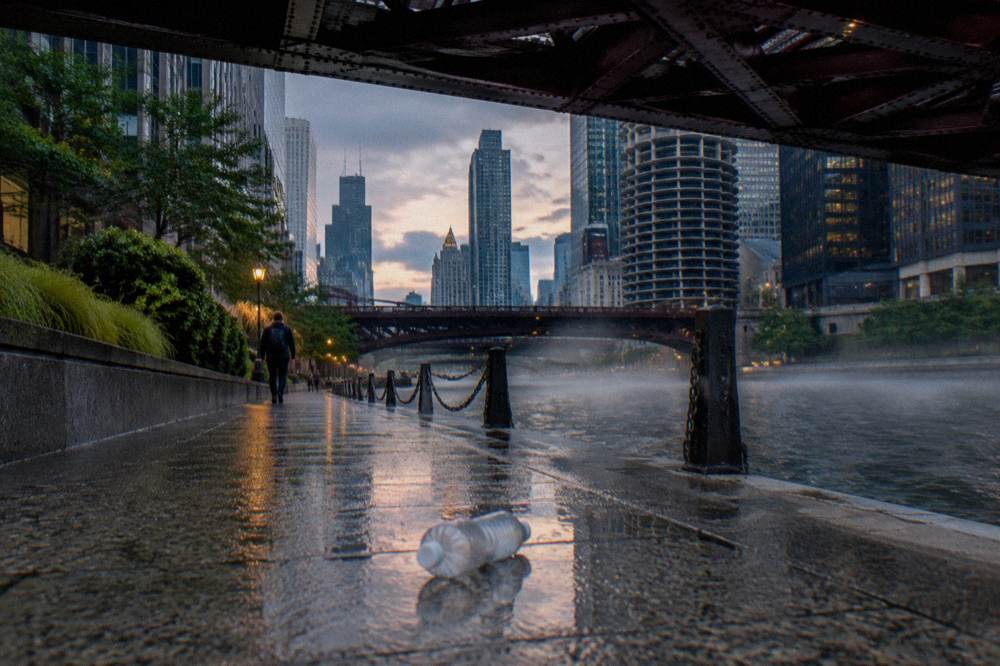
The Loop's sites are grimmer still. The Iroquois Theatre fire of 30 December 1903 killed 602 people, the worst theater fire in US history, at 26 West Randolph Street between State and Dearborn. The St. Valentine's Day Massacre killed seven on 14 February 1929 at a garage at 2122 North Clark Street; today the site is a lawn and parking area behind a wrought-iron fence beside senior housing, with no marker of any kind, so walkers who go looking for a monument find none. Dillinger was shot outside the Biograph Theater at 2433 North Lincoln Avenue on 22 July 1934, and the building survives as an active theater.
Tours handle these sites with more restraint than the hotel legends, and the better ones earn their ratings that way. The Capone walk, five stars across 446 reviews at $35 per person, works the Loop riverfront at State and Wacker, where the Eastland plaque and the gangster-era hotel blocks sit within its range. The Mob Alleys walk out of the South Loop, $34 per person and 4.7 across 469 reviews, covers the same documented material from the Congress Plaza side.
Which Tour Should You Book From A Drake Stay?
For a Drake guest who wants one evening of ghosts and gangsters, the practical pick is a Loop walk paired with the hotel's own legends read in advance: the Capone walk at $35 per person if you want the strongest-rated storytelling, or the Crime, Mobsters And Ghost Stories Walk at $34 per person if you want the tour that starts at the Congress Plaza, the city's other famous haunted hotel.
We compared the listings on the three criteria that matter most: rating with its review count, price, and duration. The Capone walk leads on quality, a perfect 5.0 across 446 reviews, and it is short enough at 90 minutes to leave energy for a late drink. Reviewers report bringing children aged 6, 13 and 16, so it skews more family-tolerant than you might expect from the subject. The Gangsters and Ghosts Walk is the volume leader, 4.7 across 1,878 reviews at $31 per person, two hours with a rest stop, and it goes inside the Palmer House, which no other walk listed here does.
The Crime, Mobsters And Ghost Stories Walk is the wildcard. Its listing notes it is not suitable for people with mobility issues or infants. It has three reviews, too few for any star claim, so book it for the route and the theme, not for a crowd-tested rating.
Can You Visit The Haunted Parts Of The Drake Yourself?
Yes, within the limits of any working luxury hotel: the public areas, the lobby and the Palm Court are open to guests and paying visitors, while the 10th-floor hallway is guest-access only and no tour or investigation has scheduled access. There is no official hotel ghost tour, no published haunted-room number to request, and no evidence anyone has ever booked the Lady in Red's room on purpose.
Practically, that means the Drake works as a self-guided stop rather than a tour stop. Walk into the lobby, look at the Palm Court where the tea service runs, and you have seen the two spaces the legend lives in. The tenth floor requires a room key or an invitation, and this site will not suggest anyone trespass to see a corridor. If a haunted-hotel overnight is the goal, the honest reading of the evidence is that the Congress Plaza, where the ghost bus literally starts inside the bar, and the Palmer House, interior stop on the Gangsters and Ghosts Walk, are the two hotels where the haunted angle and the bookable product actually connect.
For a fuller haunted-Chicago plan beyond hotels, our guide to haunted hotels in Chicago covers the overnight options in depth, and for the bigger question of who haunts this city at all, start with who is Chicago's most famous ghost. A night on one of these tours is also a night with Chicago Ghost Tours at its most honest: stories told as stories, history told as history.
The season matters more than most visitors expect. Halloween 2026 falls on a Saturday, 31 October, and daylight saving ends the next day, which means the final October weekend gives you a late-night city walk with early darkness and a Sunday to recover. October dates on the popular walks sell first; the Gangsters and Ghosts walk runs daily year-round with departures at 11 a.m., 1 p.m., 4 p.m. and 8 p.m. per its schedule, and the 8 p.m. slot is the one that pairs best with an evening at the Drake's own bar afterward. The site's October haunted tours planning guide breaks down the Halloween-week options in detail.
Common Questions About The Drake Hotel
Is The Drake Hotel Haunted?
It is famous for being haunted, which is not the same thing. Chicago reporting describes longstanding accounts of a "Lady in Red" on the 10th-floor hallway and in the Palm Court, linked to a 1920s-era legend, but no apparition has ever been verified. Treat the Drake as a hotel with a genuine, well-documented ghost reputation rather than a proven haunting.
Who Is The Lady In Red At The Drake Hotel?
She is a figure of legend: a woman in a red dress whose death is placed at the hotel in the 1920s, sometimes told as a bride, sometimes as a jilted guest. Sightings are reported in the tenth-floor corridor and the Palm Court. No contemporary 1920s record confirms any version of the story.
Can You Take A Ghost Tour Of The Drake Hotel?
No. No tour listed here names the Drake as a stop, and the hotel runs no official ghost tour. The closest tour connections are the Streeterville coach pickups at 163 E Pearson Street for the crime and mob bus tours, a few blocks from the hotel.
Which Chicago Hotels Do Tours Actually Visit?
The Congress Plaza Hotel, meeting point for the Crime, Mobsters And Ghost Stories Walk and the departure bar for the evening ghost bus, and the Palmer House Hilton, which the Gangsters and Ghosts Walk enters as part of its route. The Drake's legend is told on tours, but the building itself is not a stop on any of the tours listed here.
Can You Stay In The Haunted Room At The Drake?
The legend does not attach to a published room number the way the Congress Plaza's room 441 story does, so there is no specific room to request. The tenth floor, where the corridor sightings are reported, is accessible to registered guests only.
Is The Drake Area Good For A Haunted-Tour Evening?
Yes. The Drake sits within a short ride of the Loop's walking tours and a few blocks from the Streeterville bus pickups, and the riverfront Eastland memorial plaque is a self-guided stop on the way downtown. Halloween weekend, Saturday 31 October in 2026, is the busiest and darkest-served window of the year.