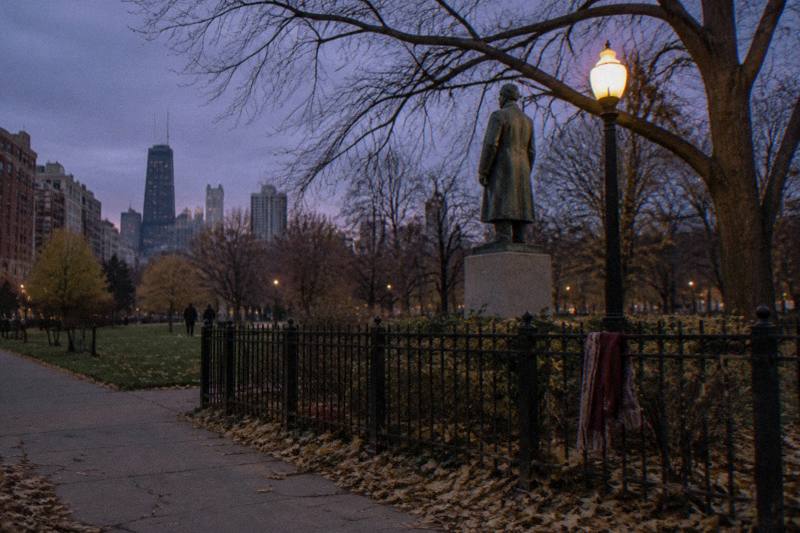
Who Is Chicago's Most Famous Ghost?
Chicago has a crowded field of famous ghosts, from Resurrection Mary to the shadow woman of the Congress Plaza. Here is who the stories name, and which tours tell each tale.
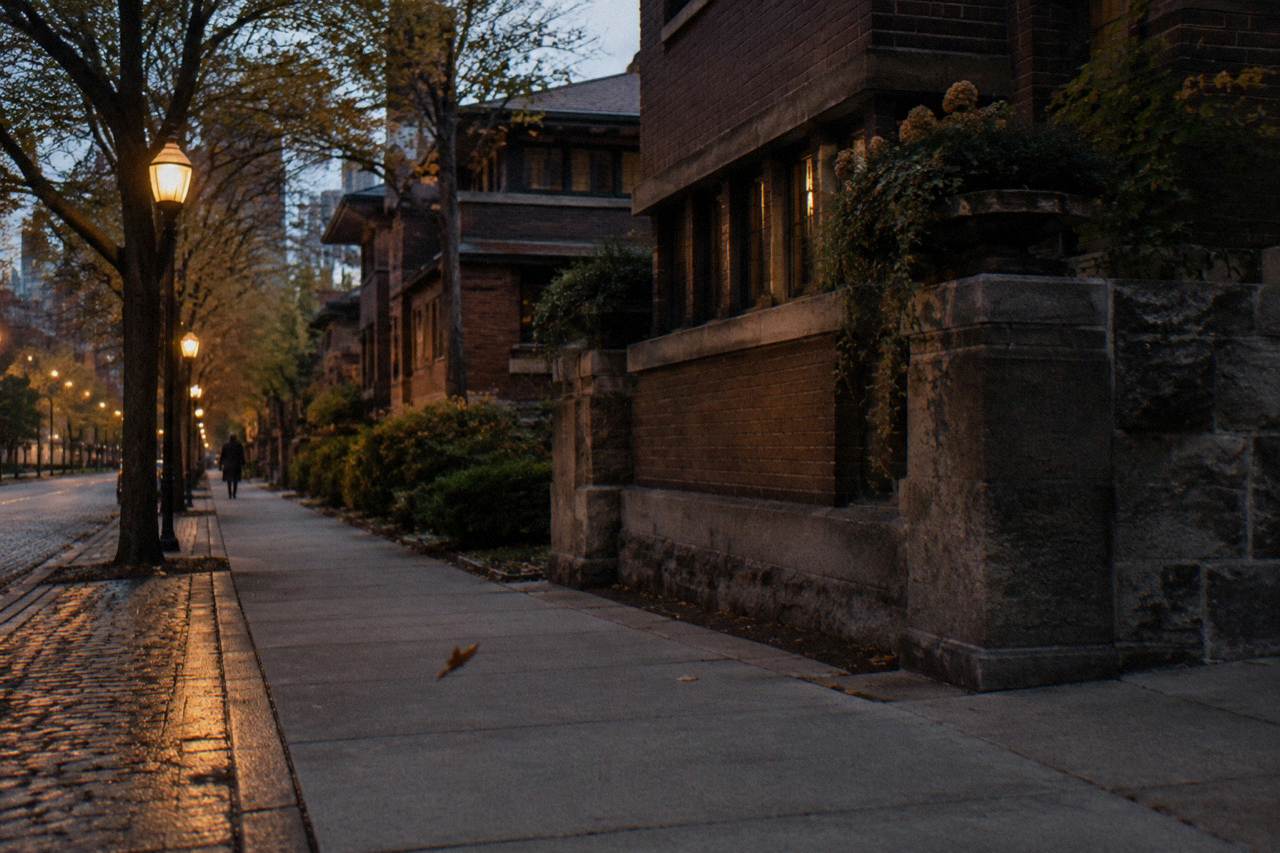
Chicago does not have one most famous ghost. It has a shortlist, and the answer depends on which neighborhood you are standing in when the question is asked. On the South Side, the name that comes up is Resurrection Mary, the hitchhiker of Archer Road. Downtown, hotel staff and guests talk about the shadow woman said to appear in room 441 of the Congress Plaza Hotel. On the Magnificent Mile, the Drake Hotel carries its own decades-old legend of a Lady in Red. That spread shows across the Chicago Ghost Tours site: 16 live walks, buses and ghost hunts run from $26 to $60 per person, and nearly every one of them is built around a named ghost or a named tragedy.
That is the honest starting point. Ghosts are not facts, and this site does not treat them as facts. What follows is a reporting of the legends, reputations and guide stories as they are actually told, alongside the documented disasters that anchor them. The SS Eastland capsized on 24 July 1915 with 844 passengers and crew killed, tied to a Chicago River dock between Clark and LaSalle Streets. The Iroquois Theatre fire of 30 December 1903 killed 602, the worst theater fire in US history. Those events are history. The hauntings attached to them are stories, and the fun of a Chicago ghost walk is hearing where the two meet. No Chicago ghost story stretches the line between documented crime and legend further than the one covered in our guide to the HH Holmes Murder Castle site.
Who Is Chicago's Most Famous Ghost?
If the question means a single named spirit with the longest paper trail, the usual answer is Resurrection Mary, the hitchhiker legend of Archer Road and Resurrection Cemetery. If it means the ghost most visitors actually encounter on a tour, it is whichever hotel or theater spirit the guide's route passes: the Congress Plaza's shadow woman, the Drake's Lady in Red, or the figures said to walk the Palmer House corridors. To understand why she outranks them all, the full guide to the Resurrection Mary legend and where to hear it traces her story from the first Archer Road sightings to the cemetery gates she is said to haunt.
The case for Mary is simple: she is Chicago's oldest and most widely retold individual ghost story, a young woman in a white dress who is said to be picked up on Archer Road, dances with her ride, and asks to be let out near Resurrection Cemetery, where she vanishes. No document proves any of it, and this site does not claim otherwise. What is documentable is the cemetery itself: Resurrection Cemetery sits at 7201 Archer Road in Justice, Illinois, and its grounds are open daily 8:00 AM to 7:00 PM from March 1 to October 15, and 8:00 AM to 5:00 PM from October 16 to February 28, per the Catholic Cemeteries of Chicago. The legend and the address are the two halves of the story, and a good guide keeps them separate. For another Chicago cemetery where the documented history and the ghost stories deserve to be kept apart, see the full account of Bachelor's Grove's past and its strict access rules.
The case for the downtown ghosts is different. The Congress Plaza Hotel, opened just before the 1893 World's Fair as the Auditorium Annex, is frequently claimed to be one of the most haunted buildings in Chicago, a reputation rather than a verified fact, and room 441 is the room most often named in guest accounts of a shadow woman standing over the bed. The Palmer House has accumulated reports of phantom footsteps in corridors and sightings of an unidentified woman in period clothing in public areas. The Drake carries longstanding local reports of a Lady in Red on the 10th-floor hallway and in the Palm Court, linked to a 1920s-era legend. None of these are proven. All of them are told nightly on Loop walking tours.
That division of territory is why the question has no clean answer, and it is also why choosing a tour matters. A reader who wants Mary's story should pick a route that works the South Side, and a reader who wants the hotel legends should be in the Loop at night. If you are already comparing options, these three are the natural starting points for a first-time buyer:
Each of those three tells a different slice of the city's ghost canon, and the rest of this article walks through the candidates ghost by ghost, so you can match the name that intrigues you to the tour that says it aloud.
Resurrection Mary, The Archer Road Hitchhiker Of Chicago's South Side
Resurrection Mary is the region's best-known individual ghost: a young woman who, in the story, is picked up on Archer Road after a dance, asks to be dropped near Resurrection Cemetery, and disappears at the gates. The cemetery is real and open daily; the hitchhiker is a legend, retold for decades with no verified sighting.
The story exists in dozens of versions, which is itself the mark of a genuine folk legend. In the common telling, a young woman in a white or pale dress is picked up by a driver on Archer Road, sometimes after being seen at the O. Henry Ballroom or a nearby dance hall. She is quiet, cold to the touch. She asks to be let out at the gates of Resurrection Cemetery. When the driver turns, the passenger seat is empty. The details shift with every retelling: the year, the dance hall, the dress. What stays constant is Archer Road, the cemetery gates, and the vanishing.
Resurrection Cemetery is a real, active Catholic cemetery, and the rules of the grounds matter more than the legend for anyone planning a visit. The Catholic Cemeteries of Chicago prohibit picnics, alcoholic beverages, coolers, grilling, tents and canopies, lawn games, loud or live music, firearms, unlicensed vehicles and pets roaming free, year-round. Photography of people, and of identifying names and dates on markers and monuments, is restricted without contacting the office for editorial or commercial requests. Visitors are guests on consecrated ground, and ghost-hunting is not a sanctioned activity there.
No tour listed here enters Resurrection Cemetery, and none should. Where Mary's story surfaces on bookable tours is as a told tale: the original ghost bus tour, a 3-hour evening route from $59 per person rated 3.8 across 152 reviews, is the format that carries far-South Side legends to passengers who could not otherwise reach Archer Road on foot. The Crime, Mobsters And Ghost Stories Walk from the Congress Plaza Hotel and the Mob Alleys And Haunts Walk, also from the Congress Plaza front, both work South Loop ground where the guide's storytelling covers the city's famous spirits. The stories are the product; the cemetery is only ever a name spoken aloud.
For readers who want to go deeper on the vanishing-hitchhiker tradition and the cemeteries that anchor it, the Resurrection Mary legend explained and the Graceland Cemetery ghost stories pages carry the fuller treatment of both sites.
The Eastland Disaster And The Ghost Stories Of The Chicago River
The SS Eastland capsized on 24 July 1915 while tied to a dock on the Chicago River between Clark and LaSalle Streets, killing 844 passengers and crew. It is one of the deadliest events in the city's history, and riverfront ghost walks tell it respectfully, with later stories of unquiet spirits attached to the site rather than claimed as fact.
The history needs no embellishment. The Eastland, loaded with Western Electric employees and their families heading to a company picnic, rolled over at its dock in the Chicago River. A historical plaque marks the disaster site on the south bank at the southeast corner of LaSalle Street and Wacker Drive, and the Eastland Disaster Historical Society, founded in 1998 by descendants of a survivor, continues to preserve victim and survivor stories through its website and a quarterly webinar series. In July 2026 the society held its 111th anniversary commemoration on the Riverwalk between LaSalle and Clark streets, where families scattered flower petals into the river.
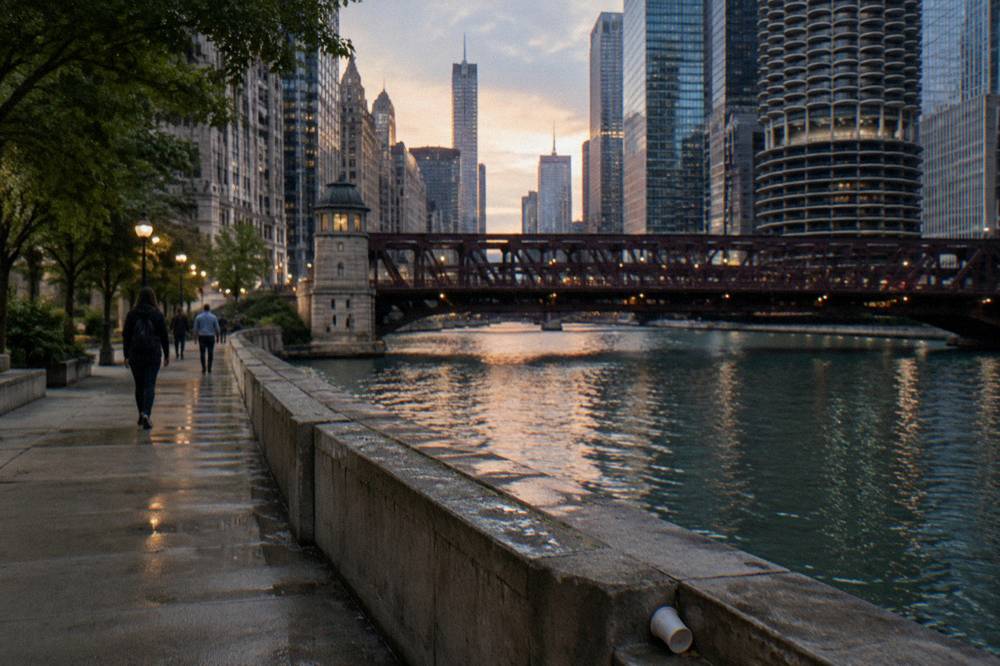
The ghost-story layer sits on top of that history, and reputable tours keep the two clearly separated. Guides on Loop routes point to the water and tell of voices or figures reported near the site over the decades; the Reid Murdoch Building at 325 N. LaSalle Street, a fall seasonal river cruise notes, served as a makeshift morgue after the disaster. That is the kind of detail that gives a ghost walk its weight: a real building, a real function, and then the story, clearly framed as a story. The Eastland Disaster Historical Society's own record at eastlanddisaster.org is the primary source for the history, and the Wikipedia entry at SS Eastland carries the full casualty accounting.
Which tours put you on this ground? The 90-Minute Capone And Ghosts Walk, $35 per person and rated 5.0 across 446 reviews, meets at State and Wacker, steps from the Eastland plaque. The Gangsters and Ghosts walk, $31 per person and rated 4.7 across 1,878 reviews, works the Loop riverfront where the disaster site sits. Both tell the river's darker history; neither promises a sighting, and this site never does either.
Is the river route the one for you? If the Eastland and its era are what draw you, this is the question worth answering before you book.
The Small-Group Ghosts And True Crime Walk covers River North rather than the riverfront, but its guide works the same seam of documented crime and attached legend in a group capped at 20.
Hotel Ghosts Of The Loop: The Congress Plaza, Palmer House And Drake
Chicago's hotel ghosts are the ones most visitors are likeliest to hear about on a tour: a shadow woman said to appear in room 441 of the Congress Plaza Hotel, phantom footsteps and a woman in period clothing reported at the Palmer House, and the Drake's Lady in Red on the 10th floor and in the Palm Court. All three are reputations and guest reports, not verified hauntings.
The Congress Plaza Hotel is the anchor. Opened just before the 1893 World's Fair as the Auditorium Annex, it is frequently claimed to be one of the most haunted buildings in Chicago, a reputation the building embraces. Room 441 is the room most often cited in guest accounts describing a shadow woman standing over the bed. The hotel is also a working venue: the original ghost bus tour meets inside the hotel's bar before its 3-hour evening run, and two South Loop walking tours, the Crime, Mobsters And Ghost Stories Walk and the Mob Alleys And Haunts Walk, both start in front of the Congress Plaza Hotel, so the building functions as a genuine hub for the city's ghost-tour economy.
The Palmer House carries reports of phantom footsteps in corridors and sightings of an unidentified woman in period clothing in public areas. It is also a stop you can step inside: the Gangsters and Ghosts walk, 2 hours at $31 per person, includes the Palmer House on its route, one of the few bookable tours that takes guests into a hotel long associated with these stories rather than past its doors. Children aged 6 and under join that tour free, which makes it a practical family option as well.
The Drake Hotel's Lady in Red is a Magnificent Mile legend, with local reports placing a ghostly woman in red on the 10th-floor hallway and in the Palm Court, linked to a 1920s-era story. The Drake sits well north of the usual ghost-walk territory, so it appears less in guided itineraries and more in the storytelling that guides carry with them. Readers who want the hotel angle in depth can go to the haunted hotels in Chicago guide, which treats each property and its reported activity in full.
| Hotel | Reported figure | Where it is said to appear | Tours that reference it |
|---|---|---|---|
| Congress Plaza Hotel | Shadow woman | Room 441 and public areas | Ghost bus (meets in the bar); two walks start out front |
| Palmer House | Woman in period clothing; phantom footsteps | Corridors and public areas | Gangsters and Ghosts walk enters the hotel |
| Drake Hotel | Lady in Red | 10th-floor hallway and Palm Court | Named in guide storytelling; off the standard routes |
The pattern worth noticing: none of these tours sell a haunting. They sell the telling, at a fixed meeting point, for a printed price, and the buildings do the atmosphere for free.
Theater And Alley Spirits: The Iroquois Fire And Lincoln Park's Buried Past
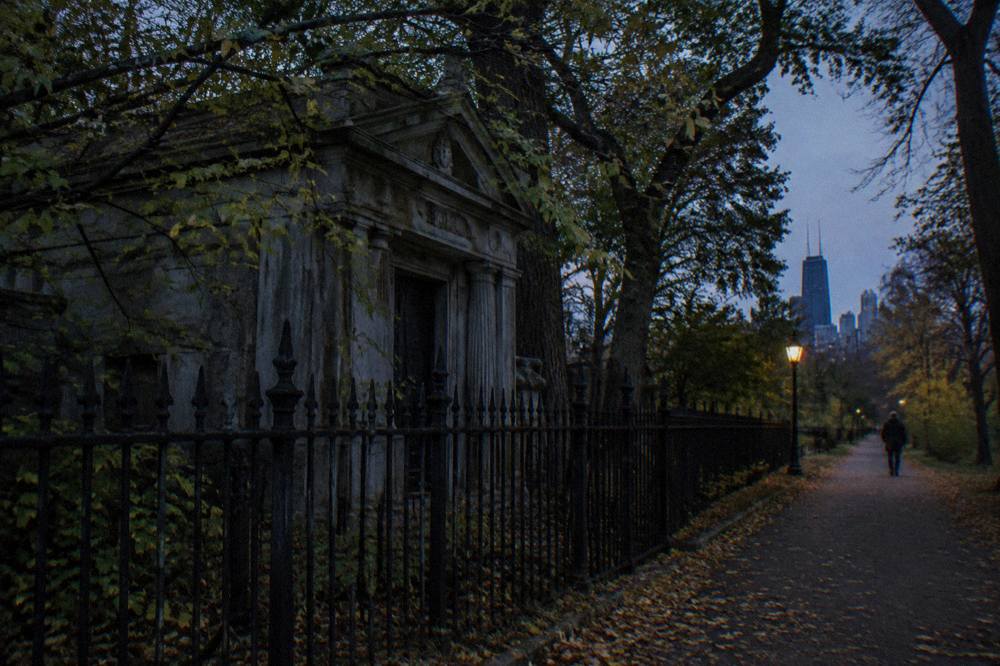
The Iroquois Theatre fire of 30 December 1903 killed 602 people at 26 W Randolph St, the worst theater fire in US history, and Loop walks stop at the site while telling the story soberly. In Lincoln Park, an estimated 35,000 burials from the old City Cemetery were relocated, and the Couch mausoleum behind the Chicago History Museum remains as the visible reminder that gives the park's ghost walks their setting.
The Iroquois fire is the Loop's gravest theater story. The theater stood at 26 W Randolph Street between State and Dearborn, and the fire on 30 December 1903 killed 602 with 250 non-fatal injuries. Walking tours that work Randolph Street pass the site and tell it as history first; any stories of footsteps or figures in the alley behind are framed as later additions, and this site repeats none of them as fact. The alley stop some listings name, Death Alley, is mentioned by listings as a stop, and nothing more is claimed about it here.
Lincoln Park's claim is stranger and older. Before the park was a park, it was the city's cemetery, and an estimated 35,000 burials were relocated as the land became parkland, with the Couch mausoleum, still standing behind the Chicago History Museum, as the visible reminder. That fact is the entire engine of Lincoln Park's ghost-walk scene: guides walk you over ground that was a burial ground, and let the landscape do the persuading. The Embers of the Windy City walk, 1 hour at $26 per person and rated 4.4 across 129 reviews, meets at the Tin Man statue in Oz Park and works this ground with a group capped at 15. The Lincoln Park Ghost Hunt With Equipment, 2 hours 15 minutes at $40 per person and rated 4.9 across 47 reviews, meets at the Chicago History Museum's Clark Street doors and hands guests investigation equipment, group max 30.
Graceland Cemetery, established in 1860 on 121 acres at Clark Street and Irving Park Road, carries its own layer of stories, though the famous Inez Clarke legend is unverified and this site does not state it as fact. The cemetery's own hours page lists daily seasonal gate times, spring and summer longer than fall and winter, which is what a visitor can actually plan around.
Between the fire site, the buried park and the cemetery gates, this is the layer of Chicago ghost lore that predates the hotels entirely, and the Lincoln Park routes are where it lives.
Which Chicago Tour Tells Each Ghost Story?
Match the ghost to the route: the Congress Plaza and Palmer House spirits belong to Loop walks and the gangster-ghost formats, the Eastland story to riverfront walks meeting at State and Wacker, Mary's legend to the South Loop walks and the ghost bus, and Lincoln Park's buried-ground stories to the Oz Park and Chicago History Museum walks. Price runs from $26 to $60 per person across the formats that tell these tales.
The table below pairs each candidate ghost with the bookable tours whose routes and storytelling cover it, using only the published prices, durations and ratings.
| Ghost or story | Neighborhood | Tours that tell it | Format and price |
|---|---|---|---|
| Resurrection Mary | South Side, told from the South Loop | Ghost bus; Crime, Mobsters And Ghost Stories Walk; Mob Alleys And Haunts Walk | Bus from $59; walks from $34 per person |
| Congress Plaza shadow woman | Loop | Ghost bus (meets in the hotel bar); two walks start at the hotel | Bus from $59; walks from $34 per person |
| Palmer House woman in period dress | State and Monroe, in the Loop | Gangsters and Ghosts walk, 2 hours, includes the hotel interior | $31 per person, 4.7 across 1,878 reviews |
| Eastland disaster site | Riverfront at LaSalle and Wacker | Capone And Ghosts walk, 90 minutes; Gangsters and Ghosts walk | Both $31 to $35 per person |
| Lincoln Park buried-ground stories | Lincoln Park | Embers of the Windy City walk; Lincoln Park Ghost Hunt | $26 and $40 per person |
First, evening departures are standard for most Chicago ghost walking tours, and the Gangsters and Ghosts walk runs daily year-round with an 8 p.m. option, so hotel-ghost stories are usually told after dark, which is when they land best. Second, every tour listed here includes free cancellation, and several walks note cancellation up to 24 hours before the experience, so the cost of picking the wrong ghost is low: rebook onto the route that tells the story you actually wanted.
The strongest match is the Small-Group Ghosts And True Crime Walk: 2 hours, $35 per person, rated 4.9 across 80 reviews, group max 20, meeting in River North. Its mix of ghosts and documented crime covers more of the shortlist above than any single walk its length. You can Check availability on the operator's live listing.
Whichever name you would crown, Chicago's ghost canon is big enough that one evening only samples it. The honest answer to the question is a ranked shortlist and a good pair of shoes.
Common Questions About Chicago's Most Famous Ghost
Who Is Chicago's Most Famous Ghost?
The strongest single-name answer is Resurrection Mary, the Archer Road hitchhiker of South Side legend. Downtown, the Congress Plaza Hotel's shadow woman in room 441, the Palmer House's woman in period clothing and the Drake's Lady in Red are the hotel spirits most often named on tours. All are legends and guest reports, not verified hauntings.
Is Resurrection Mary A Real Person?
No historical record verifies the legend. The story tells of a young woman picked up on Archer Road who vanishes at the gates of Resurrection Cemetery, which is a real, active cemetery at 7201 Archer Road in Justice, Illinois, open daily with seasonal hours. The hitchhiker herself is folklore, retold for decades without a documented sighting.
Can You Visit Resurrection Cemetery To Look For Mary?
You can visit the cemetery during its posted grounds hours, 8:00 AM to 7:00 PM from March 1 to October 15 and 8:00 AM to 5:00 PM from October 16 to February 28. It is an active Catholic cemetery with strict rules: no alcohol, no lawn games, no pets roaming free, and photography of markers restricted without office contact. No tour enters it, and ghost hunting is not a sanctioned activity there.
Which Chicago Ghost Tour Covers The Most Famous Ghosts?
For hotel spirits, the Gangsters and Ghosts walk ($31 per person, 4.7 across 1,878 reviews) enters the Palmer House and works the Loop riverfront. For the Congress Plaza stories, the ghost bus meets inside the hotel bar and two walks start out front. For Lincoln Park's buried-ground tales, the Embers of the Windy City walk ($26 per person) and the Lincoln Park Ghost Hunt ($40 per person) cover that ground.
Are Any Chicago Hauntings Proven?
No. This site reports hauntings as legends, reputations and guide stories. The documented events behind many of them are real: the Eastland disaster killed 844 in 1915, the Iroquois Theatre fire killed 602 in 1903, and an estimated 35,000 burials were moved from Lincoln Park's old City Cemetery. The ghosts attached to those events are stories, told nightly, and no tour promises a sighting.
When Is The Best Time Of Year For Chicago Ghost Stories?
Late October. Halloween 2026 falls on Saturday 31 October, with daylight saving time ending the next day, so the season peaks with an extra hour of darkness. Evening departures run year-round on the major walks, including a daily 8 p.m. option on the Gangsters and Ghosts route, so the stories are told in every season.