Where Did Al Capone Eat In Chicago?
The honest answer to where Al Capone ate and drank in Chicago: what the record verifies, which Capone-era venues still stand, and which gangster tours pass them today.
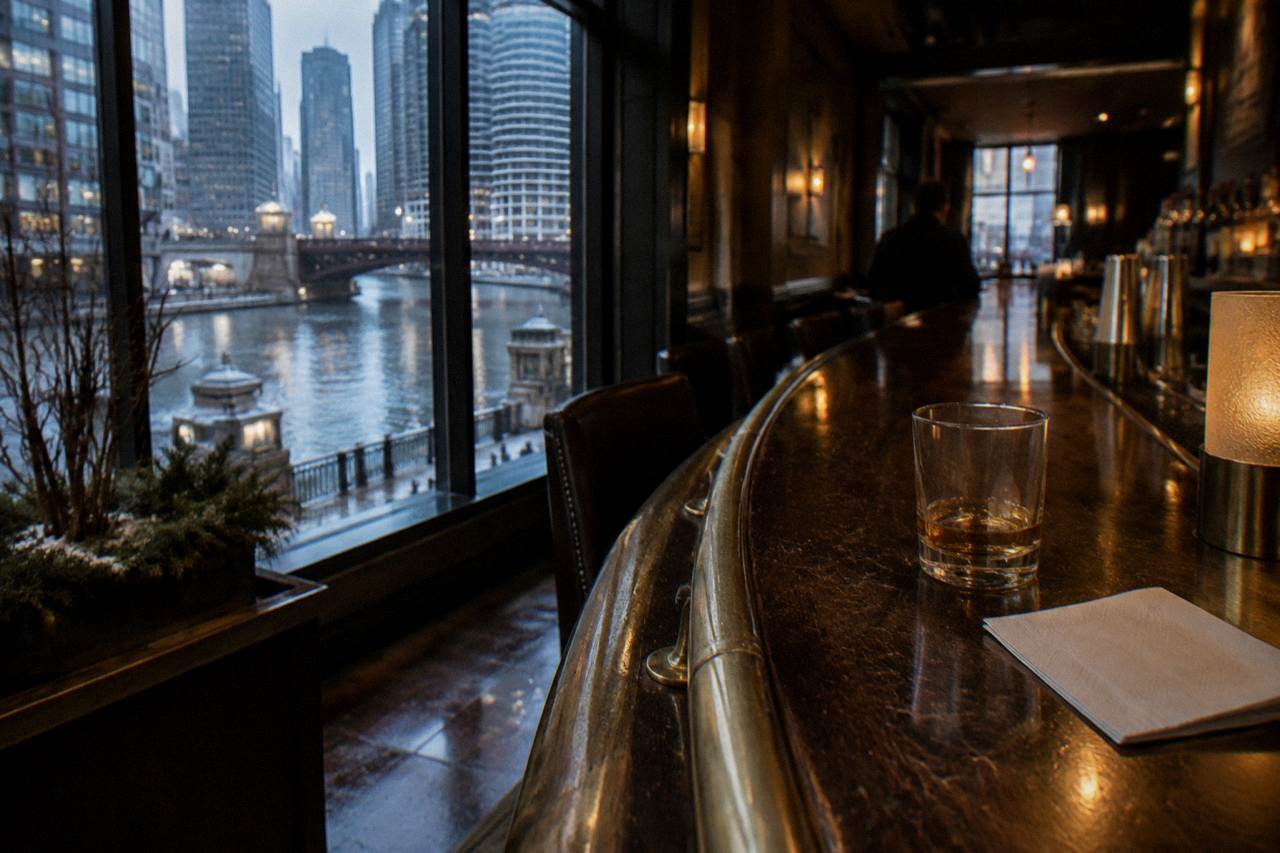
The honest answer is that almost nothing about where Al Capone ate is documented with any certainty, and a reader should be suspicious of any restaurant that claims him by name. The venue with the best-attested Capone connection still standing is the Green Mill Cocktail Lounge in Uptown, which retains Prohibition-era ties to Capone, including his reputed favorite booth. Everything beyond that is legend, and the gangster tours of today trade on exactly that fog.
That is a frustrating answer for a reader hoping for a neat list of dinner tables, but it is the truthful one, and it is worth understanding why the fog exists. Capone ran his organization during the late Prohibition years, an era when the businesses he controlled were illegal and the people who ran them did not keep receipts for posterity. A speakeasy owner had every reason not to write down the name of his most famous customer. Newspaper reporting of the period covered arrests, shootouts and trials, not restaurant habits, and the oral histories that did circulate were told and retold until each telling improved on the last. The result is a city full of bars that will hint at a Capone connection and very few that can point to a primary source.
What can be said with confidence comes down to categories rather than restaurant names. Capone-era Chicago drinking happened in speakeasies, the disguised saloons of Prohibition, and a small number of them survived the end of Prohibition and kept their rooms. The Green Mill is the clearest survivor, and its current operating schedule is documented: Monday to Thursday 4pm to 1am, Friday 4pm to 4am, Saturday 1pm to 5am, and Sunday 2pm to 1am. For readers planning a night around Capone lore rather than a dinner reservation, the practical question is less "where did he eat" and more "which rooms from his era can I still stand in, and which tour will walk or drive me past them."
That is where the tours on this site earn their place in the conversation. The 16 bookable walks, buses and ghost hunts on this site run from $26 to $60 per person, and the gangster-facing ones, the Untouchable Mob Minibus, the Crime and Mob Coach, the Gangsters and Ghosts walk, and the Capone-themed walking tour in the Loop, are built almost entirely on the geography of Capone's Chicago. They cannot tell you what he ordered for dinner, because nobody can, but they can put you in the rooms and on the corners where the era happened, with a guide separating the documented record from the bar-stool version.
The Green Mill Cocktail Lounge And Its Capone Ties
The Green Mill Cocktail Lounge at 4802 N. Broadway is the one Chicago venue whose Capone connection is stated as more than bar gossip, with Prohibition-era ties to Al Capone that include his reputed favorite booth. It operates today as a live jazz club, opening at 4pm on weekdays and running as late as 5am on Saturdays. Nothing documented says Capone ate there, only that he is reputed to have drunk there.
The distinction between eating and drinking matters more in this story than in most. Prohibition, the national ban on alcohol that ended in the early thirties, outlawed the manufacture and sale of alcohol, not food, and the speakeasies that flourished were drinking rooms first. Some served food because serving food gave a legal front to an illegal back room, but the mythology that survived, and the mythology the tours trade on, is the drink. When a modern reader asks where Capone ate, the era they are really reaching for is the speakeasy, and the Green Mill is its most intact Chicago expression (see Best Chicago Speakeasy). Current reporting on the venue notes it "retains its Prohibition-era ties to Al Capone (including his reputed favorite booth)," which is a carefully hedged sentence, and it is the level of confidence a reader should demand everywhere else too. You can read the venue's current profile and hours at Time Out Chicago's Green Mill listing.
The booth itself has become the artifact. Tour groups and jazz audiences come to look at a curved banquette because a story attaches to it, and the story is told in the conditional tense by everyone who tells it well. That is the honest register, and it is the register this site's better guides keep: the story goes that Capone liked the booth because it gave a view of both doors. Whether that is survival wisdom passed down or a detail invented for tourists is unknowable now, and a guide who pretends otherwise is decorating.
For a reader planning an evening, the practical shape of a Green Mill visit pairs naturally with a tour. The club is in Uptown, well north of the Loop where most tours start, so the sequence that works is a Loop or River North gangster tour in the early evening followed by the ride north for the late set. The Gangsters and Ghosts walking tour runs an 8pm daily departure in the Loop, about 1.5 miles of walking with a rest stop, per its listing, which puts a visitor back on Michigan Avenue with time to reach Uptown before a weekend midnight set.
| Venue | Connection as stated | Status today |
|---|---|---|
| Green Mill Cocktail Lounge, 4802 N. Broadway | Prohibition-era ties to Capone, including his reputed favorite booth | Open, live jazz, hours published |
| Capone residence, 7244 S. Prairie Ave. | Former residence; exterior visible from the public street | Privately owned, not open to visitors |
| Biograph Theater, 2433 N. Lincoln Ave. | Site of John Dillinger's shooting, 22 July 1934 | Standing theater, active programming |
| 2122 N. Clark St. | St. Valentine's Day Massacre site, 14 February 1929 | Vacant lawn and parking area behind a fence, no marker |
Capone's Prairie Avenue House And What You Can Actually See
Al Capone's former residence at 7244 S. Prairie Avenue still stands, and its exterior remains visible from the public street, but the two-flat is privately owned and not open to visitors. That single sentence is all the public record supports: you can look at it, you cannot enter it, and no tour listed here claims otherwise. Prairie Avenue is also where one of the site's ghost hunts runs, meeting at Glessner House.
The house deserves its own honest framing because it is the Capone site people most often get wrong. He lived there during the years of his greatest prominence, and the building survived when so much of the era's architecture did not. But it is a private home with a private owner, and December 2025 reporting on the address is explicit that the property is "not open to visitors." The correct etiquette, and the only one a responsible tour operator uses, is the drive-by or walk-by from public streets. Crime-tour writing on the address confirms the exterior is viewable this way; see the reporting at Chicago Crime Tours' piece on where Capone lived for the street-view-only framing.
Prairie Avenue rewards the visit beyond the Capone stop, which is worth knowing if you are deciding whether the trip south is worth your evening. It is one of Chicago's oldest residential streets, lined with historic houses that predate Capone by generations, and it carries ghost stories of its own. The tours listed here include the Prairie Avenue Ghost Hunt, a 2 hour paranormal investigation meeting at Glessner House at $37.50 per person, though it has no reviews yet, so there is no star rating to quote. The nearby haunted-history events are real too: haunted tours of Historic Prairie Avenue ran on October 30 and 31 in the 2026 Halloween season per Choose Chicago's roundup. If paranormal walks are not your thing, our gangster tour value breakdown weighs whether the better-known crime tours earn their price.
The pairing logic for a Capone-minded reader is straightforward. If your interest is documentary, the Untouchable Mob Minibus Tour, which starts at Gangster Guides at 600 N. Clark St in River North and runs about 1 hour 45 minutes at $48 per person with a group cap of just 10, covers the era's geography from a seat rather than on foot, and small-coach format suits a route that reaches residential streets. Its listing rates it 4.6 across 185 reviews. If your interest drifts toward the spooky end, the 90-minute Capone and ghosts walk in the Loop, 5.0 across 446 reviews at $35 per person, blends the same history with the haunted-hotel reputations of the downtown stretch.
Why The Eating Question Has No Real Answer
No primary source documents where Al Capone ate in any Chicago restaurant, and the absence is structural rather than accidental: Prohibition-era speakeasies were illegal businesses whose owners had no incentive to record their famous customers, and the newspaper record covered crime and politics rather than dinner. Any modern venue claiming "Capone ate here" is offering folklore, not history, and the best guides say so out loud.
It helps to picture the incentives. A restaurateur in the Prohibition years who served a beer runner knew that a paper trail, a photograph, a signed photograph above the bar, was evidence in a federal case, not decoration. The venues that survived into the legal-drinking era after Prohibition ended had a new incentive in the opposite direction: a famous ghost pays rent. A bar that can hint at Capone fills booths in a way a bar with an honest founding date on the wall cannot. So the claims multiplied, each one unfalsifiable, and by the time local historians began checking, the people who might have known were gone and the stories had hardened into marketing. The scholar's term is invented tradition, and Chicago's gangster-tour economy runs on a modest, mostly harmless amount of it.
The pattern extends past food. The same fog covers Capone's reputed presence at hotels, his favorite table at this club, the tunnel under that one. Some tunnels are real, dug for beer; their association with any particular name usually is not. The Congress Plaza Hotel is frequently claimed to be one of the most haunted buildings in Chicago. That is a reputation, and it stays one here: reported, not endorsed. The Chicago Ghost Tours listed here feature guides who hold to that same register, which is why the strongest offerings describe what the record shows and let the atmosphere do the rest.
For a reader, the practical defense against Capone folklore is a simple test: ask what the claim is attached to. "Capone reputedly liked this booth" is a story attached to a real, dated building, and it can be enjoyed as such. "Capone's favorite dish was the chicken Vesuvio" is a story attached to nothing, and it should be enjoyed as fiction over dinner, which is, admittedly, a very Chicago way to consume it. If the deeper Capone-and-speakeasy mythology is what drew you here, the companion piece on Capone's favorite Chicago bar takes the drinking side of the question further.
How Gangster Tours Cover The Capone Era Today
The tours that carry the Capone story today split into three formats: walking tours in the Loop and River North from $31 to $35 per person, coach and minibus tours from $48 to $60 per person, and hybrid ghosts-and-gangsters walks that blend the crime record with haunted reputations. All 16 listings on this site offer free cancellation, and the group caps range from 10 on the Untouchable Mob Minibus to 50 on the evening ghost bus.
Because the eating question cannot be answered, the tours answer the adjacent one instead: where did the Capone era happen, and what does it feel like to stand there. The Gangsters and Ghosts guided walking tour is the volume leader, 4.7 across 1,878 reviews at $31 per person, running 2 hours with daily departures at 11am, 1pm, 4pm and 8pm, and it includes a stop inside the Palmer House, the hotel whose corridors are the subject of phantom-footstep reports in current haunted-hotel writing. Children aged 6 and under join free, which makes it the default family pick among the gangster options. The listing notes children and accessibility details plainly, and one point worth knowing: one listing marks it wheelchair and stroller accessible while another notes it is not suitable for people with mobility impairments, so a reader with access needs should confirm the specific departure on the live listing before booking.
The Crime and Mob Coach Tour, 4.6 across 3,603 reviews at $49 per person, is the scale play: pickup outside 163 E. Pearson St in Streeterville, 1 hour 30 minutes to 2 hours on a full coach, covering the North Side sites including the massacre site on Clark Street. The Night Crimes Coach, 4.8 across 521 reviews at $55 per person, runs the same pickup point as an evening ride, 2 hours to 2 hours 30 minutes. And the Untouchable Mob Minibus is the intimate option, a 10-seat vehicle that can reach corners a 50-seat coach cannot.
| Tour | Format and length | Price per person | Rating and reviews | Meeting point |
|---|---|---|---|---|
| Untouchable Mob Minibus | Minibus, about 1 hr 45 min | $48 per person | 4.6 across 185 reviews | Gangster Guides, 600 N Clark St |
| Crime and Mob Coach | Coach, 1 hr 30 min to 2 hrs | $49 per person | 4.6 across 3,603 reviews | 163 E Pearson St |
| Night Crimes Coach | Coach, 2 to 2.5 hrs | $55 per person | 4.8 across 521 reviews | 163 E Pearson St |
| Gangsters and Ghosts walk | Walk, 2 hrs | $31 per person | 4.7 across 1,878 reviews | Outside Hoyt's Tavern, riverfront |
| Capone and Ghosts walk | Walk, about 1 hr 30 min | $35 per person | 5.0 across 446 reviews | Chase Bank, State and Wacker |
The choice among them is mostly a choice of legs and clock. Walkers get interiors the buses cannot enter, the Palmer House lobby on the Gangsters and Ghosts route above all. Riders get reach, the North Side massacre site and the South Side residential streets in one loop, which matters if your Capone interest includes the Prairie Avenue house from the previous section. Evening departures run on most of these tours, and the 8pm Gangsters and Ghosts slot is the one most often paired with a Green Mill nightcap, as sketched earlier.
A Sensible Capone Evening, Assembled From Verified Pieces
A realistic Capone-themed evening in Chicago looks like this: an early Loop gangster walk at 4pm or a bus pickup near Michigan Avenue, dinner anywhere honest, the 8pm walking departure or a night coach if you prefer riding, and the Green Mill in Uptown afterward, where the weekend schedule runs to 4am or 5am. No step in that sequence depends on a fabricated "Capone ate here" claim, and every step is bookable or open today.
Start with the timing logic. The walking tours cluster in the Loop and River North, the Green Mill is 6 miles north in Uptown, and Chicago's evening traffic is real, so the workable order is south-to-north or interior-to-exterior. The 4pm Gangsters and Ghosts departure ends around 6pm, which leaves a dinner window before an 8pm re-up or a ride north. If you chose a coach instead, the Night Crimes Tour's 2 hour to 2 hour 30 minute frame absorbs the evening whole, and dinner becomes a late one after, or a restaurant in Streeterville before pickup.
Halloween readers get the best version of this plan. Halloween 2026 falls on Saturday 31 October, and daylight saving time does not end until Sunday 1 November, so the holiday night itself runs on full autumn daylight-saving evening light: sunset on the 15th of the month comes early enough that an 8pm walk is fully dark, which is what most visitors want from a ghost-adjacent itinerary. The seasonal layer stacks on top: the Seadog Haunted River Tour ran Fridays through Sundays in October through the 31st, and the First Lady Creepy Cruise's haunted river run carried through late November, both touching the darker chapters of the river's history.
| Time | Plan | Cost |
|---|---|---|
| 4pm | Gangsters and Ghosts walk, Loop, includes Palmer House interior | $31 per person |
| 6:15pm | Dinner in the Loop or River North, any restaurant you like | Varies |
| 8pm | Optional second walk, or ride north | From $26 per person |
| 10pm | Green Mill, 4802 N. Broadway, late sets on weekends | Cover varies |
Readers weighing whether the whole exercise is worth the money may want the site's own verdict in our gangster tour worth-it breakdown, which prices out the format differences in more detail than this piece needs.
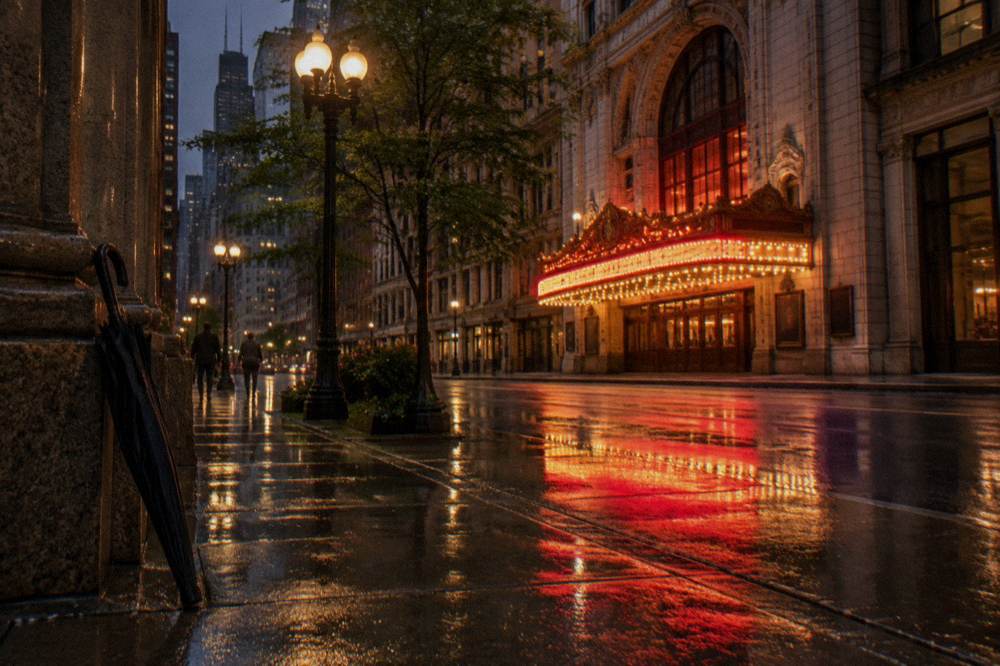
The Landmarks That Survived, And The Ones That Did Not
Of the major Capone-era landmarks, the Green Mill, the Biograph Theater, Holy Name Cathedral and the Prairie Avenue house still stand, while the St. Valentine's Day Massacre garage at 2122 N. Clark Street was demolished in 1967 and its site is today a vacant lawn behind a wrought-iron fence, with no plaque or marker of any kind. That asymmetry, some sites preserved and some erased, is the physical story a good tour narrates.
The massacre site is the starkest example. Seven men were killed there on 14 February 1929, and a reader who arrives expecting a museum finds a lawn beside an eight-story senior housing building, the Margaret Day Blake Apartments, with nothing to mark what happened. Tour guides stop at it anyway, or point it out from the bus, precisely because absence is the point: the city demolished its most notorious crime scene and moved on. The Biograph Theater makes the opposite case, an active venue with a full programming season, where the outside-the-doors shooting of John Dillinger on 22 July 1934 is folded into a working theater's public identity rather than hidden by it. Holy Name Cathedral carries the era most literally of all: bullet holes from the 1926 killing of Hymie Weiss remain visible on its bronze doors, and it remains an open, active parish.
The eating question, looped back one last time, sits inside this same pattern of survival. The restaurants that might have fed Capone are gone or renamed or reinvented, because restaurants turn over every few decades; a bar with a stage and a story, like the Green Mill, outlived them. What the modern visitor can book is the guided layer on top of the surviving geography, and that layer is genuinely strong. If the minibus suits your group, the Untouchable Mob ride is the tightest Capone-focused format listed here; if you want the crowd-tested classic, the Gangsters and Ghosts walk's 1,878 reviews make it the safest booking; and if a coach's reach appeals, the Crime and Mob bus pairs the massacre site with the North Side loop.
Common Questions About Al Capone's Chicago
Where Did Al Capone Eat In Chicago?
No primary source documents where Al Capone ate. The best-attested surviving venue tied to him is the Green Mill Cocktail Lounge in Uptown, whose Prohibition-era ties to Capone include his reputed favorite booth, and no source claims he ate there, only that he is reputed to have drunk there.
Can You Visit Al Capone's House In Chicago?
Partly. His former residence at 7244 S. Prairie Avenue still stands and its exterior is visible from the public street, but the two-flat is privately owned and not open to visitors. Tours point it out from public streets only.
Is The Green Mill Still Open?
Yes. It operates as a live jazz club at 4802 N. Broadway with hours of Monday to Thursday 4pm to 1am, Friday 4pm to 4am, Saturday 1pm to 5am, and Sunday 2pm to 1am.
Which Gangster Tour Is Best For Capone History?
The Untouchable Mob Minibus Tour, $48 per person for about 1 hour 45 minutes with a cap of 10 guests, is the most Capone-focused format, rated 4.6 across 185 reviews. The Gangsters and Ghosts walk, 4.7 across 1,878 reviews at $31 per person, is the highest-volume option and includes a stop inside the Palmer House.
Is Anything Marked At The St. Valentine's Day Massacre Site?
No. The garage at 2122 N. Clark Street was demolished in 1967, and the site is now a vacant lawn and parking area behind a wrought-iron fence beside senior housing, with no plaque, marker or memorial of any kind.