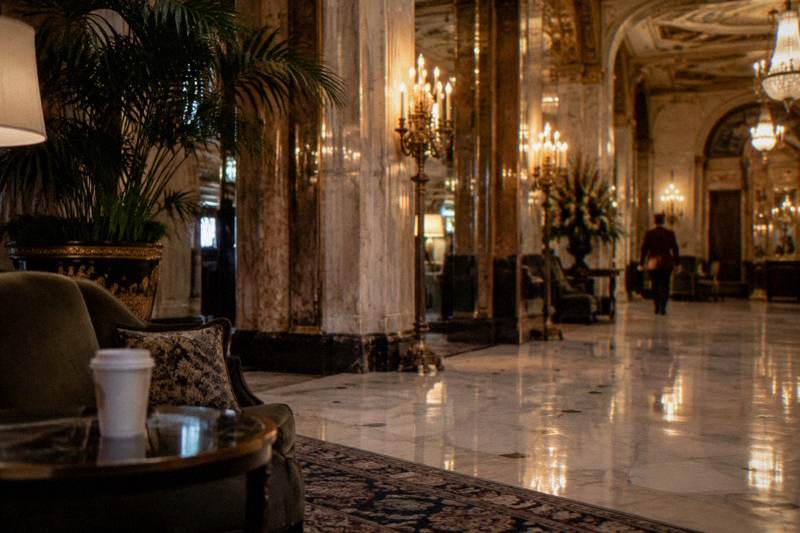
What Was Al Capone's Favorite Bar In Chicago?
The Green Mill Cocktail Lounge is the bar most often named as Al Capone's favorite in Chicago. Here is what is documented, what is legend, and what you can still visit.
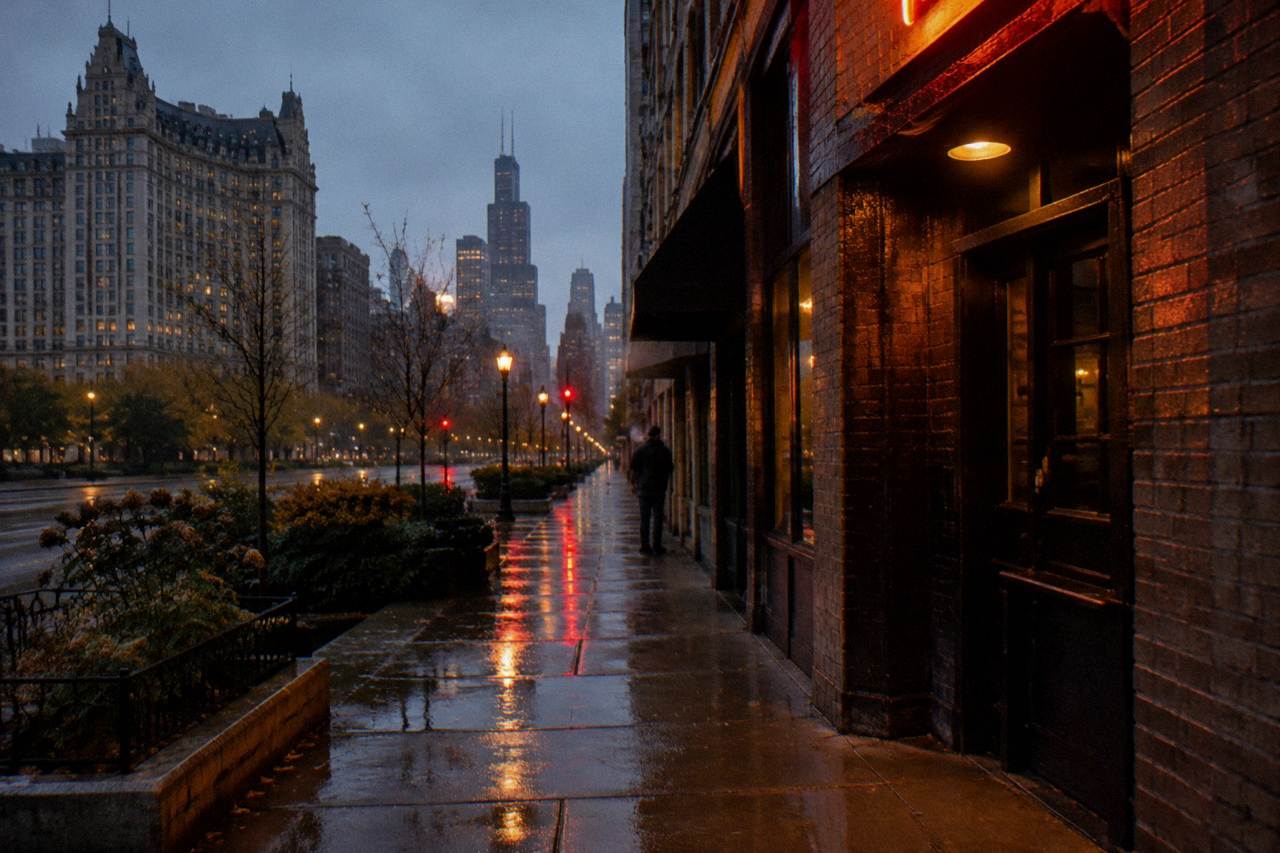
The bar most often named as Al Capone's favorite in Chicago is the Green Mill Cocktail Lounge at 4802 N. Broadway St. in Uptown, which retains Prohibition-era ties to Capone, including a booth described as his reputed favorite. The claim is a handed-down reputation rather than a documented fact, but the bar itself is real, open, and operating, one of the few Capone-associated places you can still enter and buy a drink.
That distinction, between what the record shows and what the city retells, runs through almost everything attached to Capone in Chicago. The Green Mill is the honest answer to the question because it is the answer Chicago itself gives, and because the building, the booth, and the tunnel lore all survive in some form. But no receipt, diary entry, or arrest record confirms that Capone personally ranked one bar above all others, and any tour guide or article that states it as flat fact is smoothing over a much more interesting story.
This piece separates the three layers. First, the Green Mill itself: what it is, what is said about it, and what a visitor finds there now. Second, the wider circle of Chicago drinking addresses with Prohibition reputations, from the Congress Plaza Hotel to the Drake. Third, the tours that carry this lore to paying audiences, including the costumed pub walk this site features, the Haunted Chicago Booze and Boos Ghost Walking Tour in Lincoln Park, and the Capone-focused walks downtown.
The Green Mill Cocktail Lounge, Uptown Chicago
The Green Mill Cocktail Lounge sits at 4802 N. Broadway St. in Uptown, operating today with hours of 4pm to 1am Monday through Thursday, 4pm to 4am Friday, 1pm to 5am Saturday, and 2pm to 1am Sunday. It retains Prohibition-era ties to Al Capone, including his reputed favorite booth, and it is widely treated as the bar most closely associated with him in the city.
The club predates Capone's notoriety, with roots in the years before Prohibition as a roadhouse and gardens venue, and by the 1920s it was a jazz destination whose stage hosted performers of national standing. During Prohibition the establishment was controlled by associates of Capone's organization, according to the standard accounts of the period, and the association stuck to the address long after the man himself went to prison. Today it books jazz seven nights a week and pulls a mixed crowd of neighborhood regulars, tourists who came for the lore, and musicians.
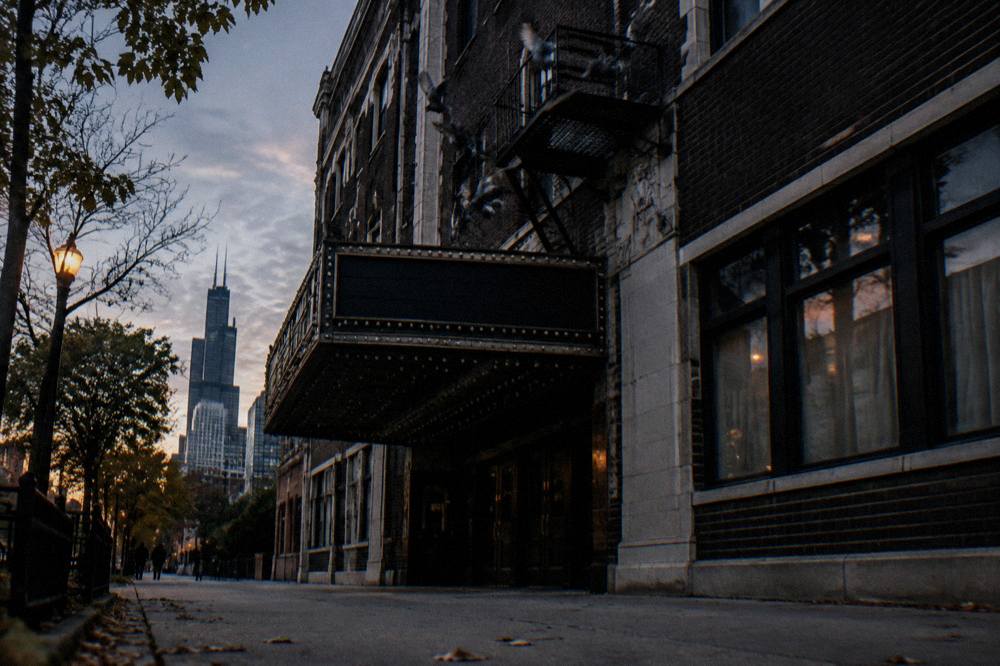
The Capone furniture is the part visitors come for. A booth along one side is described again and again as his reputed favorite seat, chosen, the story goes, because it gave a clear view of both entrances. Guides also repeat a tunnel story: that a passage connected the club to nearby buildings so that patrons, or the man himself, could slip out during raids. Treat both as legend with a long pedigree. The booth is real, the story about why he liked it is a story, and the tunnel's exact history is neighborhood lore rather than an archaeologically documented fact.
What is verifiable is the room and the calendar. The Green Mill operates with published weekly hours, it is open to the public, and no reservation scheme or mob affiliation gates the door. You can walk in, order, and sit where the legend says Capone sat. That is rarer than it sounds. Most Capone landmarks in Chicago are either demolished, private, or reduced to a vacant lot, as the site of the St. Valentine's Day Massacre at 2122 N. Clark St. now is, a fenced lawn behind senior housing with no marker of any kind.
| Day | Green Mill hours |
|---|---|
| Monday to Thursday | 4pm to 1am |
| Friday | 4pm to 4am |
| Saturday | 1pm to 5am |
| Sunday | 2pm to 1am |
The hours come from the venue's current listing and can shift for holidays, private events, or jazz sets that run long, so check the bar's own page before planning a night around it. Weekend evenings are the busiest, and the Capone booth is ordinary seating, not a roped-off exhibit, which means you may simply find someone else drinking there. The bar's operators lean into the history without pretending it is documentary, which is roughly the honest posture this whole topic deserves.
What Chicago Records Actually Say
No primary record identifies a single favorite bar of Al Capone's. What the record does show is that Capone's organization controlled many drinking and gambling addresses across Prohibition Chicago, that his residence at 7244 S. Prairie Ave. survives as private property visible from the street, and that the specific favorite-bar claim is a tradition attached mainly to the Green Mill by repetition.
The honest version of this answer starts with what a favorite bar would even mean for a man in Capone's position. By the late 1920s he was the visible head of a large criminal enterprise, and the addresses associated with him were businesses his organization touched, not hangouts in the way a regular has a hangout. The Green Mill's claim survives because the club survived, kept its name, kept its room, and kept telling the story, while speakeasies with equal or better claims closed, burned, or forgot.
The verified landmarks around the legend are easier to pin down than the drinking habits. The St. Valentine's Day Massacre killed seven men on 14 February 1929 at a garage at 2122 N. Clark St., an event that reshaped public opinion against the outfit and, eventually, drew federal attention to Capone himself. The garage was demolished in 1967 and the site is now the Margaret Day Blake Apartments, with no plaque. John Dillinger, the next decade's celebrity outlaw, was shot outside the Biograph Theater at 2433 N Lincoln Ave on 22 July 1934, a stop many gangster tours still walk to. Bullet holes from the 1926 killing of Hymie Weiss remain visible on the bronze doors of Holy Name Cathedral at 735 N. State St., which is an active parish open to the public.
None of those sites is a bar, and that is the point. The physical record of Capone's Chicago is mostly demolition and absence. A bar that still pours drinks and points at a booth is the best physical anchor the legend has, which is partly why the Green Mill gets the title by default.
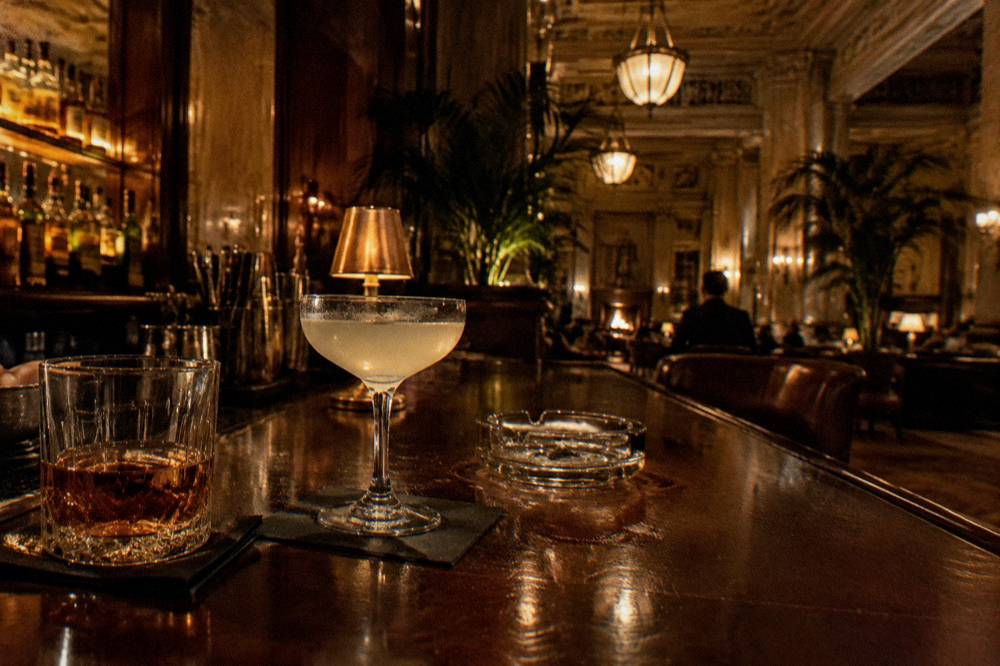
The reputation economy around Capone is also worth naming plainly. Bars, hotels, and tours all benefit from a Capone connection, real or whispered, so the incentive to state the legend as fact is strong. When a source says Capone's organization was involved with a club, that is often documentable. When a source says he personally loved the place, that is usually the story doing the work. The current listing for the Green Mill handles this reasonably, noting the Prohibition-era ties and the reputed booth without swearing to the man's preferences.
The same caution applies to his home address. Capone's former residence at 7244 S. Prairie Ave. is a privately owned two-flat, not open to visitors, though its exterior remains visible from the public street. Tours that mention it point it out from the sidewalk. Nobody should knock on the door, and no honest guide suggests otherwise. For more on the walking route past these addresses, the companion piece on Capone tour stops across Chicago maps the ones you can legally reach.
Other Chicago Bars And Hotels With Prohibition Reputation
The Green Mill has the strongest claim, but several other Chicago addresses carry Prohibition and Capone-era reputations, including the Congress Plaza Hotel, the Palmer House, and the Drake Hotel. Each of these is a hotel with reported ghost lore as much as gangster lore, and each states its history as reputation rather than established fact.
The Congress Plaza Hotel at 520 S. Michigan Ave. opened just before the 1893 World's Fair as the Auditorium Annex, and it is frequently claimed to be one of the most haunted buildings in Chicago, a reputation rather than a verifiable condition. Its bar and lobby carry the same weight of age. Guests have described a shadow woman in room 441, which is cited as the hotel's most active room, and the building's gangster-adjacent stories circulate alongside the ghost ones. The hotel is also a working meeting point: the 3-hour evening ghost bus tour listed here starts inside the bar at the Congress Plaza Hotel, $59 per person, 3.8 across 152 reviews, so the address genuinely functions as a gateway to Chicago's dark-history circuit. The full index of guides sits on Chicago Ghost Tours.
The Palmer House Hilton carries reports of phantom footsteps in its corridors and sightings of an unidentified woman in period clothing in public areas. Its gangster connection is thinner than the Green Mill's, but the hotel sits on the Loop riverfront where the outfit did business, and its name surfaces on gangster tours constantly. The Gangsters and Ghosts guided walking tour, 2 hours for $31 per person with 4.7 across 1,878 reviews, is the tour on this site that actually goes inside the Palmer House, meeting outside Hoyt's Tavern next to the Royal Sonesta and working the riverfront from there.
The Drake Hotel rounds out the set with its Lady in Red legend, a 1920s-era story attached to reported apparitions on the 10th-floor hallway and in the Palm Court. Like the others, the Drake's lore is a matter of longstanding local reports, not verified events, and its bars are elegant, expensive, and fully open to anyone buying a drink.
| Address | Reputation | Status today |
|---|---|---|
| Green Mill, 4802 N. Broadway St. | Prohibition-era Capone ties, reputed favorite booth | Open jazz club, public welcome |
| Congress Plaza Hotel, 520 S. Michigan Ave. | Among the most-claimed-haunted buildings in Chicago | Working hotel, ghost bus departure point |
| Palmer House Hilton | Phantom footsteps, woman in period dress reported | Working hotel, interior stop on a listed walking tour |
| Drake Hotel | Lady in Red legend, 1920s-era story | Working hotel, Palm Court open to patrons |
For readers building a whole evening around these addresses rather than one bar, the wider geography of gangster Chicago matters, and the piece on where Chicago gangsters actually hung out covers the loop of haunts, theaters, and massacre sites in more detail. The short version: Uptown for the Green Mill, the Loop riverfront for the hotels and the walk tours, Lincoln Park for the massacre site and the Biograph.
Which Chicago Tours Carry The Capone Bar Lore
Several bookable Chicago tours build their route around the same lore, led by the Haunted Chicago Capone walk at $35 per person, 5.0 across 446 reviews, the Gangsters and Ghosts walk at $31 per person, and the original gangster bus at $48 per person. Each covers Capone-era material differently, on foot downtown, on foot through Lincoln Park, or by vehicle across the wider city.
The Haunted Chicago: Crime, Ghosts, and Capone Walking Tour is the most direct match for a reader who arrived here via the favorite-bar question. It runs about 1 hour 30 minutes through the Loop, meeting in front of Chase Bank at State and Wacker, capped at 20 guests, and it carries the strongest rating of any tour listed here at 5.0 across 446 reviews. Reviewers report bringing children aged 6, 13 and 16, which makes it one of the more flexible listings for families, and it lists free cancellation. The walk does not enter the Green Mill, since Uptown is miles from the Loop, but it covers the downtown chapter of the same story.
For a night that actually pairs drinks with the storytelling, the Haunted Chicago Booze and Boos Ghost Walking Tour is the featured pick on this site, a costumed pub walk through Lincoln Park, $35.87 per person for 2 hours 30 minutes, 4.9 across 338 reviews, capped at 12 guests with a minimum age of 21 and a minimum of two adults to book. It meets at Glascott's Saloon. It is not a Capone tour, it is a haunted pub walk, but the audiences overlap heavily and the format, stories between stops, is the natural companion to a Green Mill evening.
The vehicle options trade intimacy for reach. The Untouchable Mob minibus tour, $48 per person for 1 hour 45 minutes, 4.6 across 185 reviews, capped at just 10 guests, meets at 600 N Clark St in River North and covers the wider geography, which matters because the Green Mill in Uptown is impractical on a walking route. The Chicago Crime and Mob Bus Tour, $49 per person, 4.6 across 3,603 reviews, is the high-volume coach version from Streeterville. On foot, the Mob Alleys and Haunts walk, $34 per person, 4.7 across 469 reviews, starts at the Congress Plaza Hotel and works the South Loop.
| Tour | Price per person | Duration | Rating and reviews |
|---|---|---|---|
| Capone and Ghosts Walk | $35 | 1 hour 30 minutes | 5.0 across 446 reviews |
| Gangsters and Ghosts Walk | $31 | 2 hours | 4.7 across 1,878 reviews |
| Booze and Boos pub walk | $35.87 | 2 hours 30 minutes | 4.9 across 338 reviews |
| Mob Alleys and Haunts Walk | $34 | 1 hour 30 minutes to 2 hours | 4.7 across 469 reviews |
| Untouchable Mob minibus | $48 | 1 hour 45 minutes | 4.6 across 185 reviews |
| Crime and Mob coach tour | $49 | 1 hour 30 minutes to 2 hours | 4.6 across 3,603 reviews |
All six listings state free cancellation on the operator's page, and every figure above is per person. Note that two further tours here, the Gangsters and Ghosts minibus at $60 per person and the Crime, Mobsters and Ghost Stories walk at $34, each carry only 3 reviews, too few for any star claim, so this site shows no star rating for them.
Can You Visit Capone's Chicago Today?
Yes, selectively. The Green Mill is open to the public, the Biograph Theater, Holy Name Cathedral, and the massacre-site fence can be reached on foot, and Capone's former house at 7244 S. Prairie Ave. is visible from the public street but privately owned. The strongest single outing is a Green Mill evening paired with a Loop gangster walk or bus tour on a separate day. If the house is what pulls at you most, our guide on whether you can visit Al Capone's Chicago home explains exactly what you will see from the sidewalk and which tours get you closer.
Plan the Green Mill as a destination rather than a stop, because Uptown is not on the downtown tour routes. The CTA reaches it easily, and an evening that starts with the early jazz set leaves time to eat in the neighborhood. If you want the gangster history told to you as well as absorbed through the room, book a walk or bus for a different evening, or the same afternoon: the 8 p.m. departure of the Gangsters and Ghosts walk is a standard evening option, and the ghost bus runs roughly 3 hours from the Congress Plaza Hotel bar.
A practical reading of the current landscape, for anyone scheduling around it:
Respect the boundaries the law and the owners set. The Capone two-flat is someone's home. The massacre site is fenced senior housing. Holy Name Cathedral is an active church, and its doors are open to visitors who behave like visitors. None of these needs trespass to deliver the history, and every guide this site lists keeps to public streets and public rooms.
For weather and timing, October is the peak of the dark-tourism calendar, and Halloween 2026 falls on Saturday 31 October, with daylight saving time ending the next day, Sunday 1 November 2026. An 8 p.m. walk that weekend gains an hour of darkness by the end of the month's clocks, which matters for atmosphere and for how late the Green Mill feels at midnight. Anyone weighing the general question first should read whether a Chicago haunted tour is worth it before picking a date.
Common Questions About Capone's Favorite Bar In Chicago
What Was Al Capone's Favorite Bar In Chicago?
The Green Mill Cocktail Lounge at 4802 N. Broadway St. in Uptown is the bar most often given that title. The club retains Prohibition-era ties to Capone, including his reputed favorite booth, but the specific favorite-bar claim is a long-standing reputation rather than a documented fact.
Is The Green Mill Still Open?
Yes. The Green Mill operates as a live jazz cocktail lounge, open Monday to Thursday 4pm to 1am, Friday 4pm to 4am, Saturday 1pm to 5am, and Sunday 2pm to 1am. Hours can shift for events, so check the venue's own page before going.
Can You Sit In Capone's Booth At The Green Mill?
Yes, in principle. The booth described as his reputed favorite is ordinary seating, not a reserved exhibit, so availability depends on the crowd. Nothing about it is roped off or ticketed.
Did Capone Really Use A Tunnel At The Green Mill?
The tunnel story is neighborhood legend repeated by guides and patrons for decades. A passage is part of the lore, but its exact history is not documented, so treat it as a story the bar tells rather than an established fact.
Which Tours Cover Capone's Chicago?
The Haunted Chicago: Crime, Ghosts, and Capone Walking Tour is the most direct fit, $35 per person for about 1 hour 30 minutes, 5.0 across 446 reviews. The Gangsters and Ghosts walk at $31 and the Untouchable Mob minibus at $48 cover the wider gangster geography on foot and by vehicle.
Can You Visit Al Capone's House In Chicago?
Only from the outside. His former residence at 7244 S. Prairie Ave. is a privately owned two-flat, closed to visitors, though the exterior is visible from the public street. Tours that include it point it out from the sidewalk.