Where Did Gangsters Hang Out In Chicago?
A neighborhood-by-neighborhood look at the real Chicago speakeasies, hotels and street corners where Prohibition-era gangsters gathered, and which tours point them out today.
The gangster era in Chicago lasted barely a decade, from Prohibition's start in 1920 to Capone's fall from power, yet the city is still mapped by it. The question readers actually ask is not usually "what happened" but "where", because the addresses survive. The hotel lobbies are still hotel lobbies. The bar that Capone favored in Uptown still pours drinks. The garage on North Clark Street is gone, but the block is not, and tour guides point at it every night. This article walks through the neighborhoods where the gangs of that era actually gathered, using verified history and current reporting, and then matches each district to the walking and bus tours that stop there today.
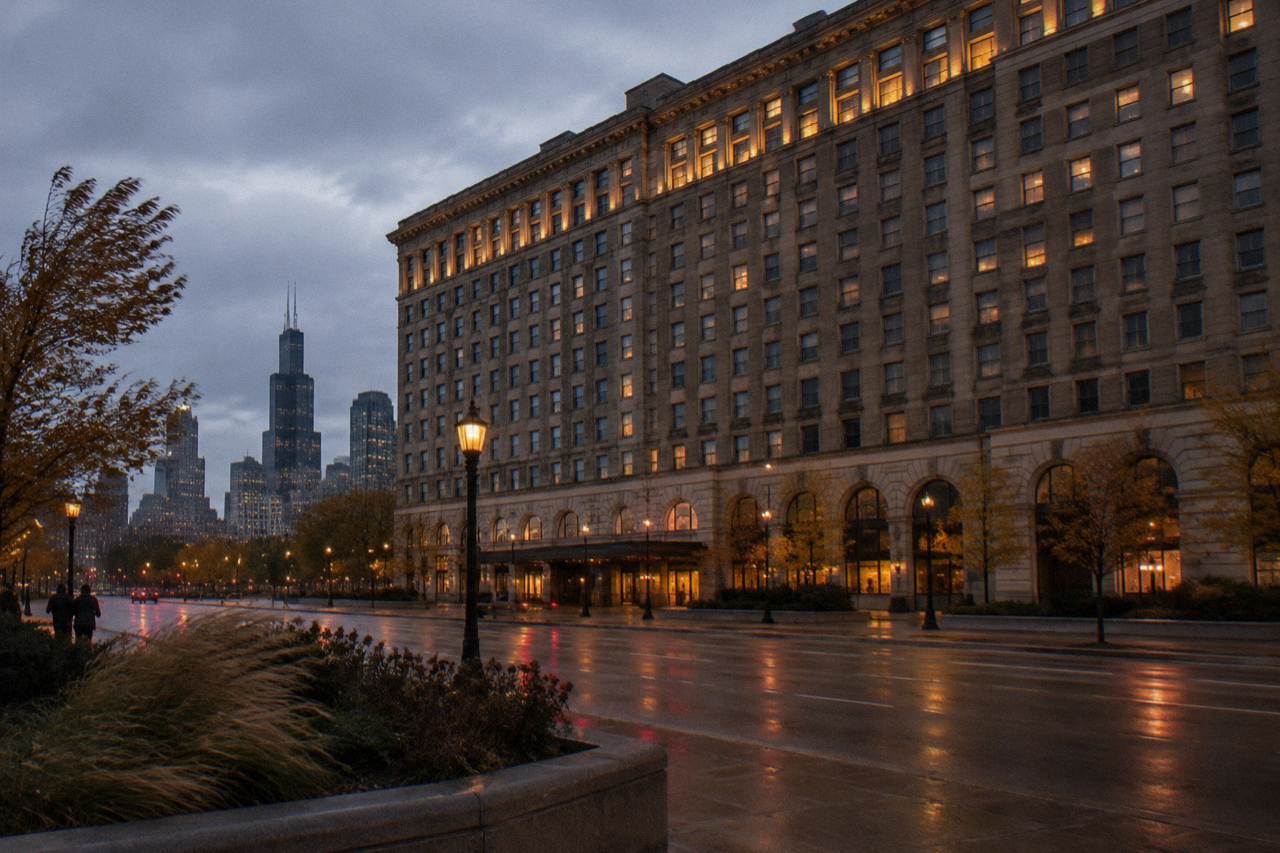
Gangsters in Prohibition-era Chicago clustered in four zones: the Loop and its riverfront hotels, the Lincoln Park and North Side turf of the rival North Side Gang, the South Loop's Congress Hotel corridor on Michigan Avenue, and outposts like the Green Mill in Uptown. The Palmer House, the Congress Plaza Hotel, the Biograph Theater block and the massacre site at 2122 N Clark St were all real anchors of that world.
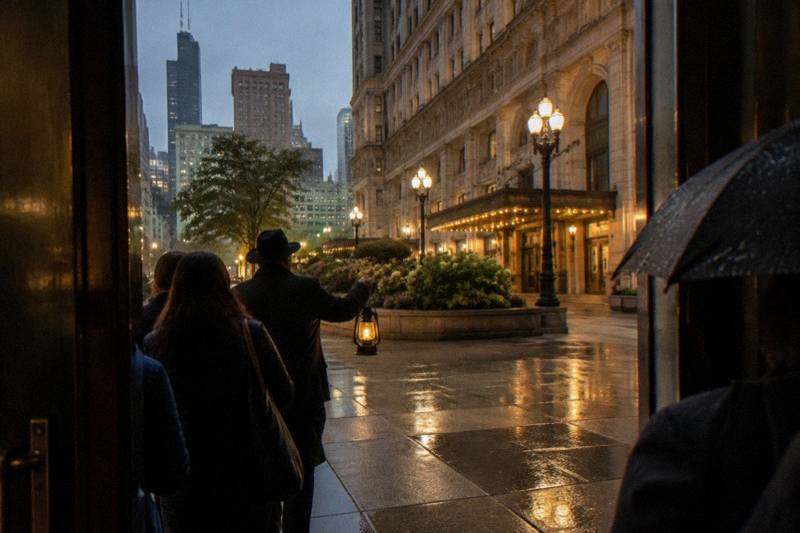
The first thing to understand is that "hang out" meant different things at different hours. Business, the business of beer running and protection money, happened in hotel lobbies and restaurant back rooms where men in suits could sit for hours without looking out of place. The Palmer House on Wabash was exactly that kind of room, a grand Loop hotel where a gangster could hold court in public and still feel untouchable. The hotel survives, and its gangster associations are part of what the Chicago Ghost Tours site covers, because the same corridors that hosted Prohibition-era wheeling and dealing now generate stories of phantom footsteps and a woman in period clothing in public areas, reports that current hotel-lore writeups continue to collect.
The Green Mill Cocktail Lounge at 4802 N Broadway is the clearest surviving example of the leisure side. Current listings show it operating with long hours, including until 4 a.m. on Fridays and 5 a.m. on Saturdays, and it still trades openly on its Prohibition-era ties to Al Capone, down to the booth reputed to have been his favorite spot. That is a reputation the venue itself leans into, not a documented seating chart, but the building's age and Uptown location are real. A gangster-era guide to the city notes that the North Side's beer wars were fought over territory exactly like this: a nightclub district at the end of the transit lines, far enough from police headquarters to make a speakeasy profitable.
Not every famous address survived. The site of the St. Valentine's Day Massacre, the garage at 2122 N Clark St where seven North Side Gang members and associates were killed on 14 February 1929, is today a vacant lawn and parking area behind a wrought-iron fence, with no plaque or marker of any kind. The garage itself was demolished in 1967 and the Margaret Day Blake Apartments, an eight-story senior housing building, now occupy part of the footprint. Guides still bring groups to the fence line, because standing on the actual block does something a photograph cannot.
If reading the addresses makes you want to stand on them, these are the three tour formats that cover gangster ground most directly.
The Loop: Hotel Lobbies, Taverns And The Riverfront
The Loop was the gangster era's office district. The Palmer House, the Congress Plaza Hotel's predecessor operations on Michigan Avenue, and the taverns along the riverfront gave the outfits grand public rooms for meetings and cheap back rooms for business, and today's Loop-based gangster tours, including the Gangsters and Ghosts walk from $31 per person, structure their routes around these surviving buildings.
The Palmer House Hilton is the flagship example. Rebuilt after the Great Chicago Fire of October 1871, it sat at the center of Loop social life through the Prohibition years. Its current paranormal reputation, footsteps in corridors and a woman in period dress, is a modern layer on top of the older gangster lore, and the way the two stories merge is itself instructive: buildings accumulate legends, and the grander the lobby, the more stories attach. That pattern repeats at the Congress Plaza Hotel, opened just before the 1893 World's Fair as the Auditorium Annex and frequently claimed to be one of the most haunted buildings in Chicago, a reputation rather than a verified fact.
The Congress matters for this article because of its location. It stands at 520 S Michigan Avenue, at the south edge of the Loop, and both the Mob Alleys and Haunts walk and the Crime, Mobsters and Ghost Stories walk meet at its front steps, using it as the gateway to the South Loop's crime geography. The ghost bus tour, the 3-hour evening operation from $59 per person, starts even closer, meeting inside the hotel's bar before rolling out to the city's haunted and criminal sites. Meeting points are not arbitrary: operators choose them because the surrounding blocks carry the story.
The riverfront deserves its own paragraph because of the Eastland. On 24 July 1915, a decade before the beer wars peaked, the SS Eastland capsized while tied to a dock on the Chicago River's south bank between Clark and LaSalle Streets, killing 844 passengers and crew. It was a transportation disaster, not a crime, but it hardens the riverfront's reputation as a place where the city's dark history is physically close, a point the Eastland Disaster Historical Society still makes through its commemorations on the Riverwalk. A polished granite plaque at the corner of Wacker Drive and LaSalle Street marks the site today. The Reid Murdoch Building at 325 N LaSalle served as a makeshift morgue afterward, a detail that fall 2026 river cruises have folded into their narration. None of this is gangster lore, but the tour industry treats the river as one continuous dark-history corridor, and the Mob Alleys walk's South Loop route brushes its edge.
For planning, here is how the Loop-anchored options compare on paper.
| Tour | Meets | Price | Duration | Rating |
|---|---|---|---|---|
| Mob Alleys and Haunts walk | Front of the Congress Plaza Hotel | $34 per person | 1 hour 30 minutes to 2 hours | 4.7 across 469 reviews |
| Gangsters and Ghosts walk | Outside Hoyt's Tavern, riverfront | $31 per person | 2 hours | 4.7 across 1,878 reviews |
| Capone and ghosts walk | State and Wacker | $35 per person | 1 hour 30 minutes | 5.0 across 446 reviews |
| Crime and Mob coach tour | 163 E Pearson St, Streeterville | $49 per person | 1 hour 30 minutes to 2 hours | 4.6 across 3,603 reviews |
The table shows the practical pattern: three of the four sit within a few blocks of the river, and the fourth starts a short ride north. A reader who wants to walk the Loop's gangster ground on foot has three distinct listings to choose from, and they are genuinely different products with different stops, a point our gangster tours comparison guide breaks down stop by stop.
Lincoln Park And The North Side: Rival Turf
Lincoln Park was North Side Gang territory, the side that fought Capone's outfit, and its key gangster addresses cluster around Clark Street: the massacre site at 2122 N Clark St, Holy Name Cathedral at 735 N State St where bullet holes from the 1926 Hymie Weiss murder remain visible on the bronze doors, and the Biograph Theater at 2433 N Lincoln Ave, where John Dillinger was shot on 22 July 1934.
The North Side story is a rivalry story. The gang built around Charles "Hymie" Weiss controlled beer running north of the river, and its war with the South Side outfit produced the shootout that scarred Holy Name Cathedral's doors, damage you can still see today at an active, open parish. Weiss was killed in October 1926 across from the cathedral, and the bronze doors carry the marks. That is one of the few gangster-era artifacts in Chicago you can inspect for free, any day the church is open, and the gangster bus tours that run Clark Street point it out.
The massacre site two miles north is the era's starkest address. Seven men died in the S-M-C Cartage garage on 14 February 1929, the event that finally turned national opinion against Capone. The Encyclopedia of Chicago's entry on the massacre records the basic facts; the physical site offers nothing, which is itself the experience tour groups describe. A fence, a lawn, an apartment tower. The contrast between the story's weight and the site's blankness is a recurring theme in guest reviews of the Dark Side ghosts-and-true-crime walk from $35 per person, which covers River North and the massacre block's neighborhood with a group cap of 20 and a 4.9 rating across 80 reviews.
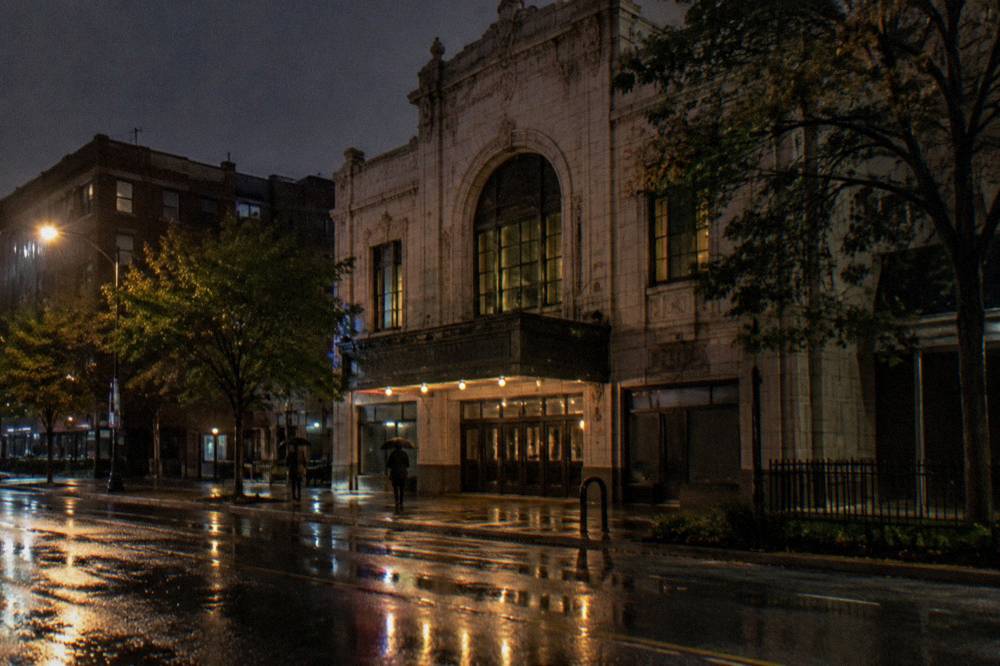
The Biograph belongs to the era's epilogue. Dillinger was shot by federal agents outside the theater on 22 July 1934, roughly a year and a half after Capone went to prison, and the Chicago History Museum's own writing on Dillinger notes how complicated his legacy remains. The building is now a working theater again: after being mostly dark since the pandemic, the Victory Gardens Biograph is hosting Porchlight Music Theatre's full 2026-27 season. That means the most famous death site in American crime history is currently a place you can buy a musical ticket for, which tells you something about how Chicago metabolizes its past.
Lincoln Park carries a second, older layer that gangster tours sometimes fold in: it sits on the grounds of the old City Cemetery, with an estimated 35,000 burials relocated and the Couch mausoleum behind the Chicago History Museum as the visible reminder. The ghost walks that start at Oz Park or Cafe Brauer, like the one-hour Embers of the Windy City walk at $26 per person, work this ground because the layering of burial ground, park, and crime site makes the neighborhood unusually dense with story material. The gangster content and the ghost content share a neighborhood, and several listings blur the line deliberately.
If the North Side is the part of this you most want to see, a bus format covers the most ground per hour.
The South Side: Prairie Avenue, Capone's Block And The Englewood Site
South Side gangster geography runs down Prairie Avenue and out to Englewood. Al Capone's former residence at 7244 S Prairie Ave remains visible from the public street but is privately owned and closed to visitors, and the site of H.H. Holmes' Murder Castle at 63rd and Wallace is now a post office building from the 1930s with no historical marker on site.
The Prairie Avenue stretch is the quieter, stranger corner of the map. In the gangster era it was a respectable residential boulevard that happened to house the city's most famous mob boss. Today, current Chicago crime-tour reporting confirms the two-flat's exterior is still viewable from the sidewalk, and the etiquette is simple: look from public ground, do not approach the door, because it is somebody's home. Readers who want the address in a fuller itinerary should see our Al Capone tour stops guide, which covers the sites tied to his years in the city.
The Prairie Avenue Ghost Hunt, a paranormal investigation from $37.50 per person that meets at Glessner House, works the same blocks after dark with equipment, and the seasonal Haunted Tours of Historic Prairie Avenue ran on 30 and 31 October 2026, which shows how actively the neighborhood's heritage groups program this material. The haunted history and the crime history draw from the same streets, just with different flashlights.
Englewood's Murder Castle site is the grimmest entry and the least rewarding in person. The building H.H. Holmes occupied was demolished, and the Englewood branch post office at 611 W 63rd Street was built on the footprint in the 1930s. Reporting from 2025 and 2026 confirms there is no formal marker. Holmes predates the gangster era by decades and was convicted of murder well before Prohibition, but tour narratives and true-crime programming keep attaching him to the broader "dark Chicago" story, and the current Serial Killer exhibition at Cinespace Chicago Film Studios, running through 24 January 2027, includes Holmes artifacts alongside more modern cases. Standing at 63rd and Wallace, you see a post office. The story lives entirely in the telling.
That gap between site and story is why guided formats earn their price on the South Side. The addresses do not explain themselves, and a guide with photographs and a route does work that a self-driven map cannot. The Mob Alleys and Haunts walk covers this territory's South Loop end with ghost stories mixed into the crime content, and its listing shows free cancellation, a 4.7 rating across 469 reviews, and a group cap of 20.
Which Chicago Tours Actually Stop At Gangster Hangouts
Of the 16 tours on this site, five are built primarily around gangster and true-crime sites: two walks, two coaches and one minibus, ranging from $34 to $60 per person. The Gangsters and Ghosts walk has the most reviews, 4.7 across 1,878 of them, while the Mob Alleys walk and the Crime and Mob coach carry 469 and 3,603 reviews respectively, so the choice comes down to walking versus riding and Loop versus citywide.
We compared the listings on the dimensions that matter for this specific question, which stops a reader can actually reach on the tour.
| Tour | Format | Gangster-ground coverage | Group size | Age notes |
|---|---|---|---|---|
| Mob Alleys and Haunts walk | Walk, South Loop | Congress Hotel corridor, South Loop alleys, ghost stories woven in | Max 20 | Infants must sit on laps |
| Crime and Mob bus tour | Coach, citywide | Streeterville pickup, citywide crime sites by bus | Not stated | Not stated |
| Gangsters and Ghosts walk | Walk, Loop riverfront | Riverfront gangster sites plus an inside stop at the Palmer House | Not stated | Children 6 and under join free |
| Gangsters and Ghosts minibus | Minibus, Loop | Bus-format gangster and ghost stops | Not stated | Infants 0 to 3 travel free on a lap |
| Untouchable Mob minibus | Minibus, River North | Small-group mob history, meets at 600 N Clark St | Max 10 | Suitable for older kids and adults |
A pattern worth noticing: the walking tours cluster where the buildings are walkable, the Loop and South Loop, while the coaches and minibuses earn their price by reaching scattered sites like the massacre block, the Biograph and the South Side in one loop. The Untouchable Mob minibus is the intimacy pick, capped at 10 people, which matters when a guide is holding up photographs at a curb. The Crime and Mob coach tour has 3,603 reviews, the largest number of any tour listed here, and its 4.6 rating has held up under that weight, which is a different kind of signal than a 5.0 from a small sample.
The overlap with ghost content is not a gimmick; it is the market. The Gangsters and Ghosts walk, the Capone and ghosts walk and the Mob Alleys walk all blend the two storylines because the same buildings generate both, and the haunted walking tours guide sorts that family of listings by neighborhood. If your interest is specifically the beer-war addresses rather than the hauntings, say so when picking: the Capone walk is the most crime-forward of the three Loop walks on foot.
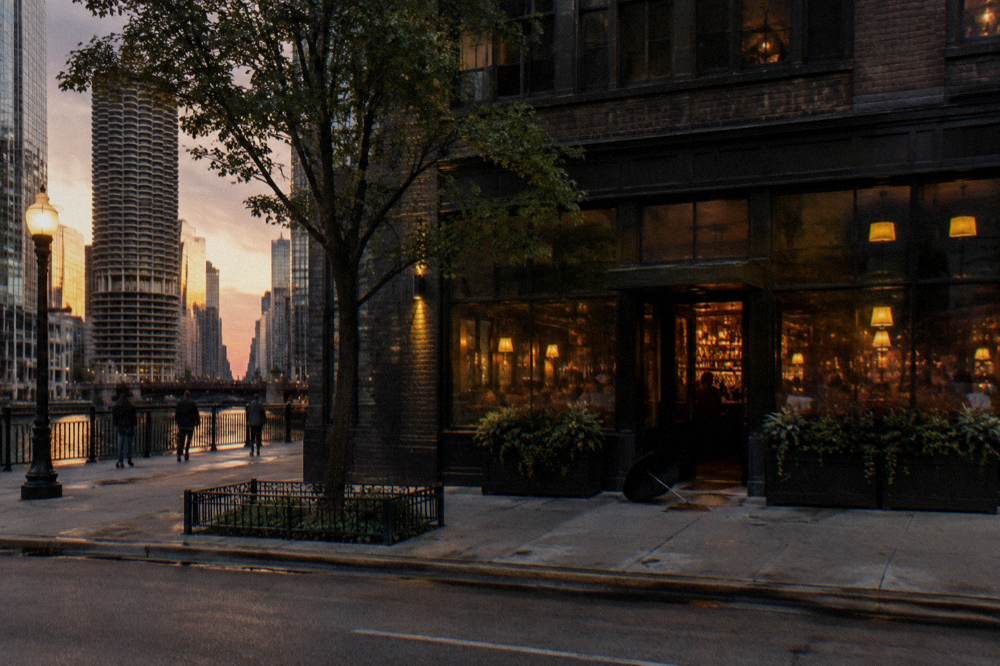
Can You Still Drink Where The Gangsters Drank?
Partly, yes. The Green Mill in Uptown is the headline: a working bar with documented Prohibition-era gangland ties, open late, no tour required. Most other true speakeasy addresses are gone, renamed or unverified, so the honest answer is one famous survivor plus a set of modern bars trading on the aesthetic, and the classic gangster-era hotel bars survive as hotel bars open to anyone walking in.
Start with the Green Mill, because it is the only entry on this list where the gangster connection and the operating bar are the same thing. Current hours run Monday to Thursday from 4 p.m., Friday to 4 a.m., Saturday from 1 p.m. to 5 a.m. and Sunday from 2 p.m., and the venue's own material embraces the Capone reputation, including the booth said to be his preferred seat. Getting there is easy: it sits steps from the Lawrence CTA station, making it one of the few gangster sites reachable by train in twenty minutes from the Loop.
Beyond it, skepticism is healthy. Speakeasies were illegal and undocumented by design, so lists of "Capone's speakeasies" circulating online are mostly folklore, and this site does not repeat them. What can be said from verified material: Capone's residence survives on Prairie Avenue, his reputed favorite bar survives in Uptown, and the meeting halls and garages of the trade are mostly demolished. For where the man actually ate and drank in the verified record, our Capone's favorite bar piece covers the Green Mill claim and its limits in detail.
The hotel bars are the practical middle path. The Palmer House and the Congress Plaza both operate bars and lounges open to non-guests, and sitting in either is the closest a visitor gets to occupying the same rooms, literally, that the era's figures used. The Congress's bar doubles as a tour meeting point for the evening ghost bus, so a visitor can legitimately end an evening where it began. For readers weighing the costs of building an evening around these stops, the haunted tour cost breakdown gives the full price ladder from $26 to $60 per person across every tour on this site.
One scheduling note worth planning around: Halloween 2026 falls on Saturday 31 October, and the seasonal gangster and ghost programming that runs through late October, from the Haunted by Our Dark Side walks on 23, 24, 30 and 31 October to the Prairie Avenue events, ends right there. Daylight saving time ends the following day, Sunday 1 November, which pulls the evening light in sharply for anyone extending a stay into early November. The year-round listings here run in every season, but the special-edition events cluster in that final October week, and the zoo's Haunted History tours, a separate ticketed program, sell on the same calendar, online only, with no tickets at the gate.
Common Questions About Gangster Hangouts In Chicago
Where Did Gangsters Hang Out In Chicago?
In the hotel lobbies and taverns of the Loop, on the North Side turf around Clark Street that the North Side Gang controlled, along Michigan Avenue near the Congress Plaza Hotel, and at leisure outposts like the Green Mill in Uptown. Several of these addresses still stand and appear on gangster and ghost tours today.
Can You Visit Al Capone's House In Chicago?
Only from the street. His former residence at 7244 S Prairie Avenue is privately owned and not open to visitors, but the exterior remains visible from the public sidewalk, and December 2025 reporting confirms tours point it out from public streets only.
Is The Green Mill Still Open?
Yes. The Green Mill Cocktail Lounge at 4802 N Broadway operates with hours including Friday until 4 a.m. and Saturday until 5 a.m., and it retains and promotes its Prohibition-era ties to Al Capone, including the booth reputed to be his favorite.
Can You Visit The St. Valentine's Day Massacre Site?
You can stand at the block. The garage at 2122 N Clark Street was demolished in 1967, and the site is now a vacant lawn and parking area behind a wrought-iron fence with no plaque or marker. Gangster tours bring groups to the fence line.
Which Tour Covers The Most Gangster Sites In Chicago?
The bus formats cover the most ground: the Crime and Mob coach tour at $49 per person and the Untouchable Mob minibus at $48 per person reach scattered sites citywide. On foot, the Gangsters and Ghosts walk at $31 per person covers Loop riverfront gangster sites, including an inside stop at the Palmer House.
Are Gangster Tours And Ghost Tours The Same Thing In Chicago?
Several listings deliberately blend the two, including the Gangsters and Ghosts walk, the Capone and ghosts walk and the Mob Alleys and Haunts walk, because the same historic buildings generate both crime history and haunting reputations. Pure crime options like the Crime and Mob coach tour skip the ghost material.