The Resurrection Mary Legend: Chicago's Archer Avenue Ghost Story
Resurrection Mary is Chicago's best-known suburban ghost story: a young woman in a white dress who is said to appear along Archer Avenue and to vanish near Resurrection Cemetery. Here is the story as it is told, what a visitor can actually see, and how the city's ghost tours handle a legend that lives well outside the Loop.
Short answer
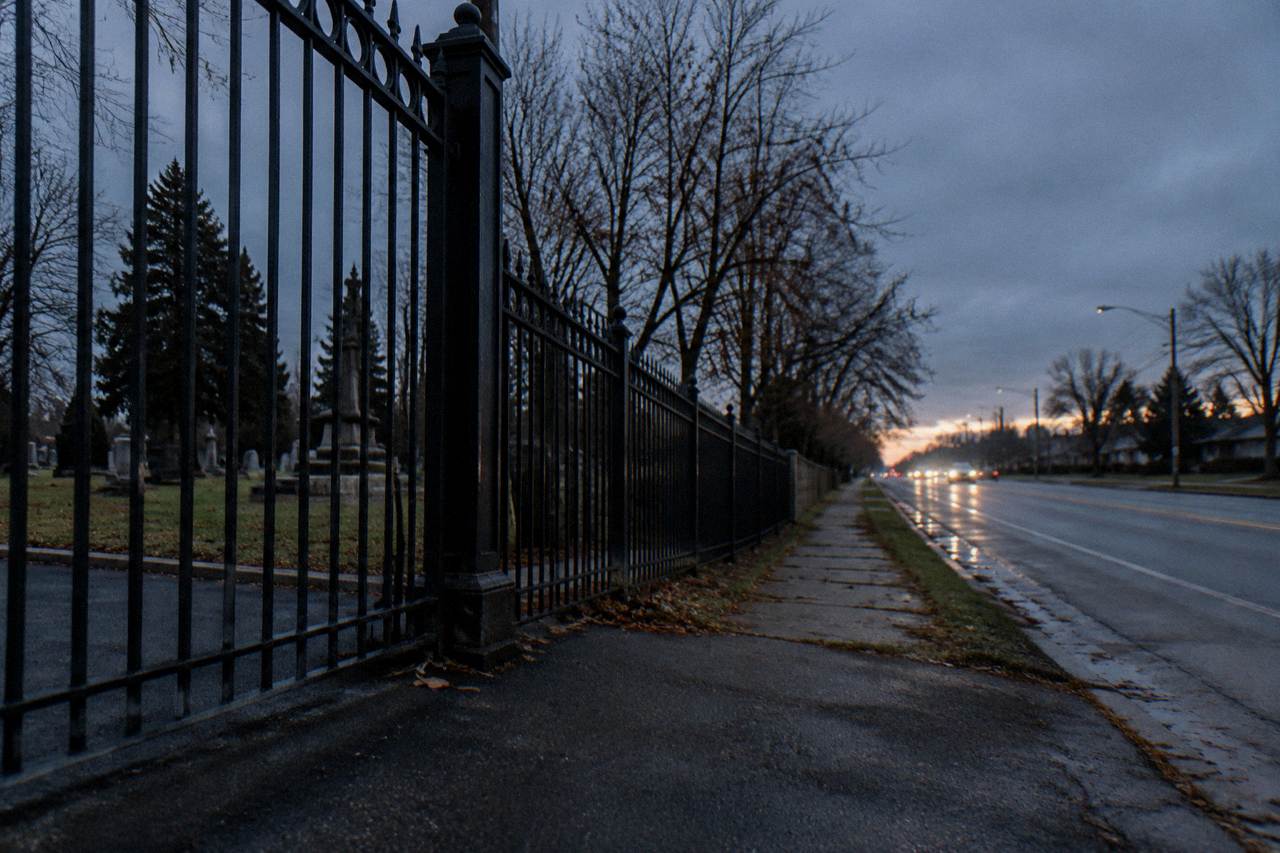
Resurrection Mary is a folk legend, not a documented person: a young woman in a white dress who, as the story goes, asks for a ride along Archer Avenue and disappears near Resurrection Cemetery in Justice, Illinois. The cemetery grounds are open daily, 8:00 AM to 7:00 PM through October 15 and 8:00 AM to 5:00 PM after. No downtown tour visits the site.
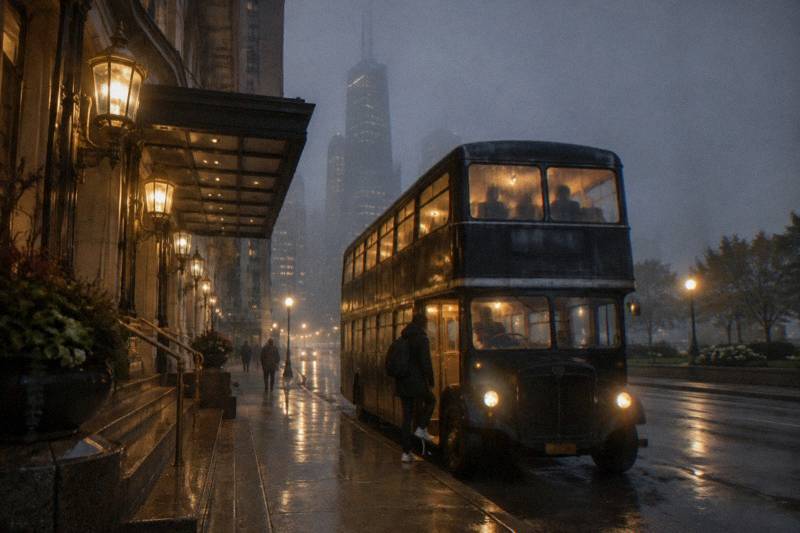
Resurrection Mary occupies a strange position in Chicago's ghost lore. The city's most famous hauntings cluster downtown: the Congress Plaza Hotel, the Palmer House, the Iroquois Theatre site on Randolph Street. Mary's territory is different. Her story plays out along Archer Avenue, the old southwest-side road that runs from the Loop toward the suburbs, and her anchor point is Resurrection Cemetery, a Catholic burial ground in Justice, Illinois, far from the theater district where most ghost walks begin.
That distance shapes everything about how the legend is experienced. A visitor can stand on a Loop corner at 8 p.m. and hear a guide tell Mary's story, and half an hour later be nowhere near Archer Avenue at all. This guide separates the two things cleanly: what the legend actually says, what a traveler can lawfully see of the real places involved, and which of the city's sixteen bookable ghost products come closest to the story. Nothing here promises a sighting. Mary is a legend, and the honest way to write about her is to say so.
Who Is Resurrection Mary, Chicago's Archer Avenue Ghost?
Resurrection Mary is a Chicago-area urban legend about a young woman, usually described as wearing a white or pale dress and dancing shoes, who is said to hitchhike along Archer Avenue, accept rides from drivers, and then vanish, most often near the gates of Resurrection Cemetery in Justice, Illinois. The story has circulated in the Chicago area for decades and has been retold in newspapers, books, and television segments. No document identifies a specific historical person as Mary, and the legend itself is the only thing that can be stated as fact.
The outline of the story is consistent across tellings, though the details shift. In the common version, a young woman spends an evening dancing at the O'Henry Ballroom, now better known as the Willowbrook Ballroom, on Archer Avenue in Willow Springs. She accepts a ride home from a young man. Somewhere along Archer Avenue she asks to stop, or simply steps out of the car, and is next seen walking toward the cemetery gates before she disappears. The driver, the story goes, later realizes she was not living.
From there the legend blooms into variants. Some tellings place the fatal accident years earlier; some say Mary appears only to men driving alone at night; some attach her to the stretch of Archer Avenue nearest the cemetery, others to the whole road. Reporters and folklorists have traced accounts back to the 1930s and later decades. The ballroom that anchors the story no longer stands, which means the single most famous "Mary site" after the cemetery is not something a visitor can see today.
What makes Mary unusual among Chicago ghost stories is how suburban she is. The Loop's haunted reputation rests on documented disasters: the Iroquois Theatre fire of 30 December 1903, which killed 602 people at 26 W Randolph St, or the SS Eastland disaster of 24 July 1915, which killed 844 passengers and crew tied to a dock on the Chicago River. Mary's story has no verified tragedy behind it. She is a road legend, and the road she belongs to is a working arterial street with traffic, diners, and houses, not a stage set.
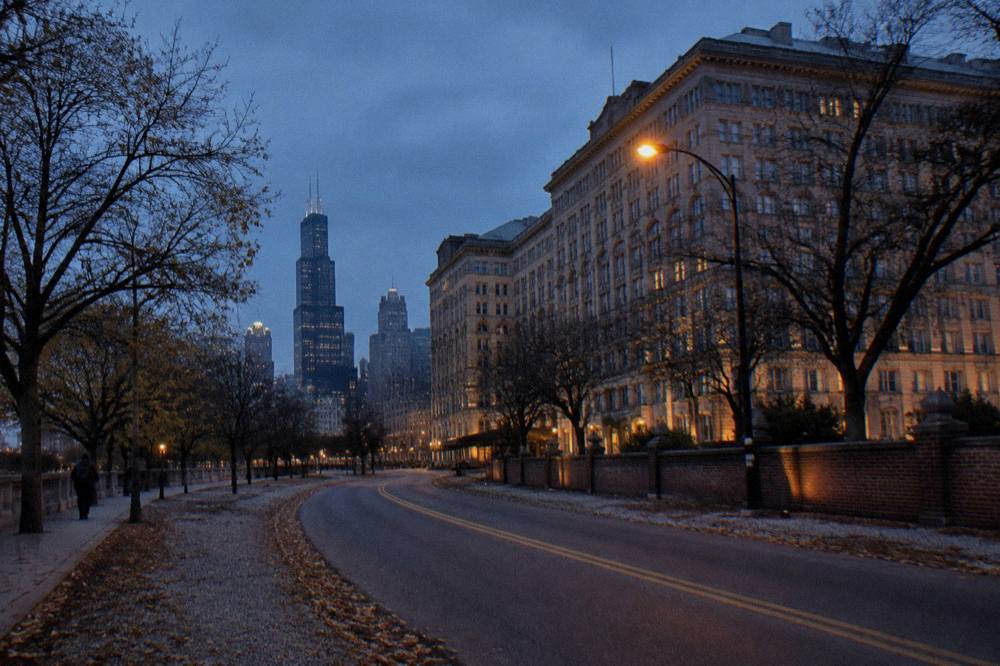
For readers deciding what to book, the useful question is not whether Mary is real but whether a guide tells the story well. Downtown ghost walks use her as a set piece. The Lincoln Park ghost walk, the Capone and ghosts walk, and the Gangsters and Ghosts walk all trade partly on Chicago's reputation for restless spirits, and Mary is part of that reputation even though none of them visits Archer Avenue. A separate question, whether any tour takes you to Mary's actual territory, has a different answer, and this guide covers it below.
Can You Visit Resurrection Cemetery, Where The Legend Lives?
Yes, Resurrection Cemetery is open to the public daily: grounds are open 8:00 AM to 7:00 PM from March 1 to October 15, and 8:00 AM to 5:00 PM from October 16 to February 28, with indoor mausoleums on shorter hours, 9:00 AM to 6:00 PM and 9:00 AM to 4:00 PM for the same seasonal windows. The cemetery is an active Catholic burial ground at 7201 Archer Road in Justice, managed by Catholic Cemeteries of Chicago, and visitors are expected to behave accordingly.
The visit rules matter more here than at a typical tourist stop. Catholic Cemeteries of Chicago prohibits picnics, alcoholic beverages, coolers, grilling, tents and canopies, lawn games, loud or live music, firearms and weapons, unlicensed vehicles, and pets roaming free on the grounds. The policy also asks visitors to refrain from filming or photographing people and any identifying names or dates on markers and monuments without contacting the office for editorial or commercial requests. A ghost-hunting expedition with cameras and equipment would violate that policy outright. This is a place of burial, not a haunted attraction.
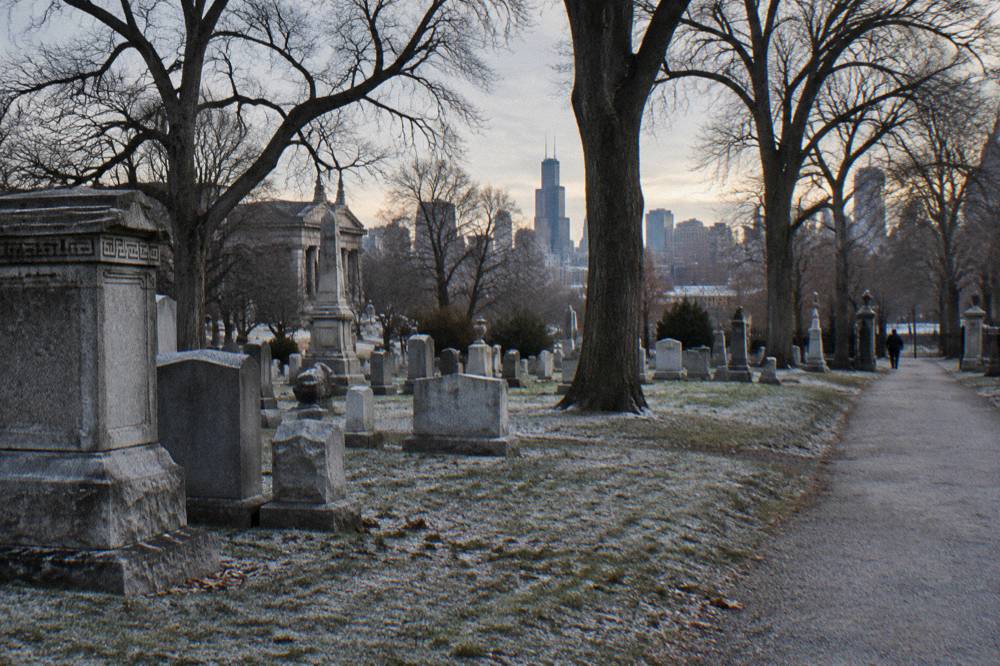
No tour listed on this site enters Resurrection Cemetery, and no honest article should imply otherwise. The visitor-friendly approach is a daytime drive along Archer Avenue with a stop at the cemetery's public gate area during open hours, respecting the rules above. The current hours are published by Catholic Cemeteries of Chicago on their Resurrection Cemetery location page, and checking them before a trip is worthwhile because seasonal windows shift in mid-October and mid-February.
Readers comparing Mary with Chicago's other famous ghost-road story should also know about Bachelor's Grove Cemetery, in Rubio Woods Forest Preserve. It sits off the same southwest corridor of old roads and has its own body of legend. The site is open to the public during regular Forest Preserve hours, sunrise to sunset, and entry outside those hours risks fines or arrest. Visitors must not stand or climb on tombstones or light candles within the cemetery, per the guidance published by the site's stewards at the Path to Bachelor's Grove. Mary lore and Bachelor's Grove lore sometimes get blended together in casual retellings; they are separate places with separate stories.
Which Tours Tell The Resurrection Mary Story In Chicago?
Downtown Chicago ghost tours tell the Mary story as narration, not as a stop: none of the sixteen tours listed here visits Archer Avenue or Resurrection Cemetery, because the cemetery sits outside the city neighborhoods where the walks and buses operate, so travelers hear the legend told downtown instead. The closest a visitor gets by booking is a guide who tells the legend well, usually on a Loop or Lincoln Park ghost walk, alongside the city's better-documented haunted history.
The distinction deserves emphasis because listings can blur it. A ghost walk in the Loop, such as the adults-only Wind and Souls walk ($34.99 per person, 4.2 across 46 reviews), covers downtown territory: the riverfront, the theater district, hotel lore. A Lincoln Park walk, such as the Embers of the Windy City ghost walk ($26 per person, 4.4 across 129 reviews, one hour), works the park's own haunted reputation, which rests on something real and verifiable: Lincoln Park was built over the old City Cemetery, and an estimated 35,000 burials were relocated, with the Couch mausoleum behind the Chicago History Museum still standing as the visible reminder. Guides use that history to set the mood before stories like Mary's.
The Gangsters and Ghosts walking tour ($31 per person, 4.7 across 1,878 reviews, two hours) has the largest number of reviews of any walking tour listed here and goes inside the Palmer House, a hotel with its own accumulated reports of phantom footsteps and a woman in period clothing in public areas. That is a different flavor of haunting than a road legend, but the storytelling tradition is the same, and guides on gangster-and-ghost walks often fold Mary into the evening's cast of Chicago spirits. Children aged 6 and under join free on that tour, per the listing.
For readers whose interest in Mary is really an interest in investigation, the honest match is a ghost hunt with equipment rather than a storytelling walk. The Lincoln Park Hauntings Ghost Investigation Tour ($40 per person, 4.9 across 47 reviews, about 2 hours 15 minutes, group max 30) hands guests actual detection equipment and works the park's cemetery history. The Prairie Avenue Ghost Hunt ($37.50 per person, two hours, no reviews yet) covers the near-south historic district. Neither one chases Mary, but both are the format that treats ghost stories as something you actively test rather than passively hear, which is arguably the right frame for a legend with no documented incident behind it.
| Tour | Format | Price per person | Duration | Rating and reviews | Mary connection |
|---|---|---|---|---|---|
| Embers of the Windy City ghost walk | Walking tour, Lincoln Park | $26 | 1 hour | 4.4 across 129 reviews | Chicago legend storytelling, park cemetery history |
| Gangsters and Ghosts walking tour | Walking tour, Loop riverfront | $31 | 2 hours | 4.7 across 1,878 reviews | Chicago spirits told alongside gangster history, Palmer House interior |
| Wind and Souls adults-only walk | Walking tour, Loop | $34.99 | 1 hour 30 minutes | 4.2 across 46 reviews | Evening Loop legend walk, adults only |
| Lincoln Park Hauntings ghost hunt | Paranormal investigation | $40 | 2 hours 15 minutes | 4.9 across 47 reviews | Equipment-based investigation format |
| Ghost bus tour (original Hauntings) | Bus tour, South Loop start | $59 | 3 hours | 3.8 across 152 reviews | Wider city coverage by vehicle |
How Do Tours Handle A Legend With No Verified Tragedy?
Good Chicago tours handle Resurrection Mary the same way honest writers do: they tell her as a legend, attribute the story to drivers and newspaper accounts, and never present her as a documented haunting, because there is no verified incident, victim, or identity behind the tale. The strongest listings lean on documented history first and reach for folklore as seasoning. This matters to a buyer, because the difference between a well-researched walk and a thin one shows in exactly this discipline.
Compare what each kind of product rests on. The Gangsters and Ghosts walk can point at the Palmer House, a real building with decades of accumulated guest reports. The Capone and ghosts walk ($35 per person, 5.0 across 446 reviews) anchors itself in documented crime history, such as the St. Valentine's Day Massacre of 14 February 1929, which killed seven at a garage at 2122 N Clark St, a site that today is a lawn behind a fence with no marker. The Lincoln Park walks rest on the City Cemetery relocation. Mary, by contrast, has no grave a guide can point to with a name on it, only a cemetery gate and a road. A guide who pretends otherwise is telling you something about the tour's standards.
The site's own reporting rule is worth passing to readers as a shopping filter. When a listing or a review claims a place "is haunted," treat it as a claim about reputation. The Congress Plaza Hotel, for example, is frequently claimed to be one of the most haunted buildings in Chicago; that is a reputation, widely repeated, not a fact anyone can verify. Room 441 is cited in guest accounts as the most active, with reports of a shadow woman described by visitors. Those accounts are real as accounts. Whether anything haunts the building is not something any tour, article, or investigation has established.
The same filter applies to equipment-based products. A ghost hunt can be a genuinely fun evening whether or not anything is present; the Lincoln Park hunt's 4.9 across 47 reviews suggests guests enjoy the format. But no tour listed here, and no article, should claim that equipment has detected a spirit, in Lincoln Park or anywhere else. Hauntings on this site are legends, reputations, and guide stories, and the best tours are upfront about that, which tends to make the storytelling better, not worse.
What Is The Archer Avenue Drive Like Today?
Archer Avenue is an ordinary, busy southwest-side arterial road, lined with homes, businesses, and forest preserve edges rather than anything spooky by design; the drive is best done in daylight as a piece of Chicago folklore geography, not as a haunting hunt.
The route has genuine historical texture. Archer Avenue is one of the area's oldest roads, a carriage route in its early life connecting Chicago with the Illinois and Michigan Canal country. The corridor accumulated a heavy concentration of cemeteries over the decades, Catholic, Jewish, and municipal, which is partly why ghost lore attached itself to this road and not, say, Western Avenue. There is nothing theatrical about it, and that is the honest experience.
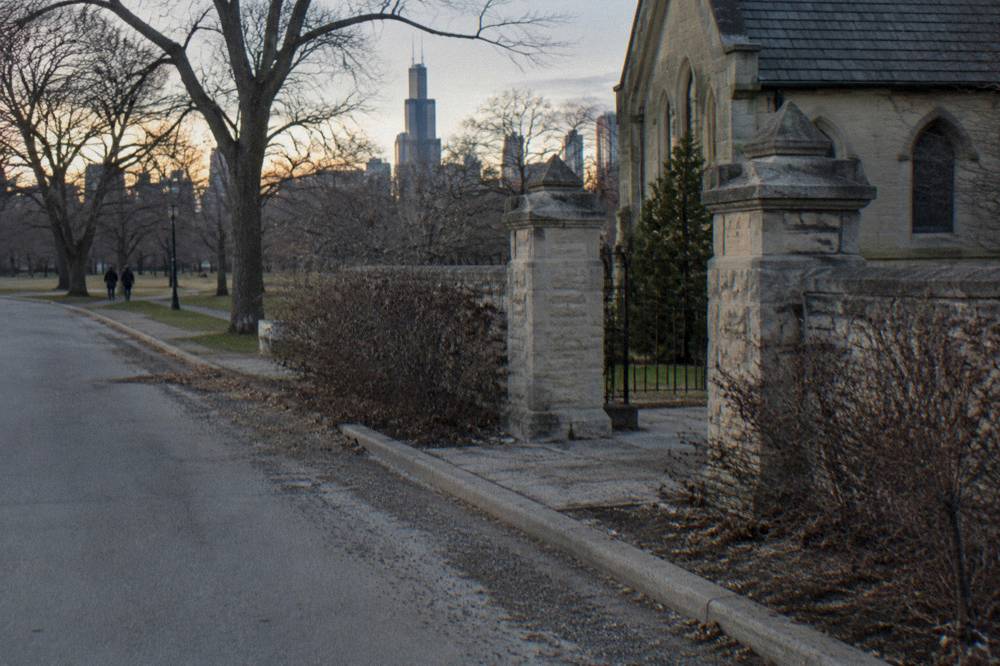
Practical advice for a self-guided Mary drive is simple. Do it in daylight, ideally on a weekday morning when cemetery visitation traffic is light. Drive the stretch of Archer Road past Resurrection Cemetery at 7201 Archer Road in Justice. Do not stop on the roadway shoulder at night, do not enter the cemetery outside its hours, and do not photograph markers with identifying names or dates without contacting the office, per Catholic Cemeteries policy. If the southwest legend corridor interests you, Rubio Woods Forest Preserve and Bachelor's Grove are a short drive further along the same general corridor, subject to the sunrise-to-sunset access rule above.
For context, this is a different kind of outing than a booked tour. A downtown ghost walk costs from $26 per person and delivers two hours of guided storytelling within walking distance of most visitor hotels. A Mary drive costs a rideshare or rental and delivers geography, atmosphere, and the satisfaction of having seen the real place. Many legend readers do both, and the two experiences do not compete.
| Site on the Mary route | Where it is | Can visitors go? | Notes |
|---|---|---|---|
| Resurrection Cemetery | 7201 Archer Road, Justice | Grounds open daily, seasonal hours | Active Catholic cemetery; photos of markers restricted by policy |
| Willowbrook Ballroom site | Archer Avenue, Willow Springs | No | The ballroom no longer stands; nothing to visit |
| Bachelor's Grove Cemetery | Rubio Woods Forest Preserve | Sunrise to sunset only | Separate legend; no candles, no climbing stones |
| Downtown Mary storytelling | Loop and Lincoln Park walks | Yes, booked tours | Legend told as narration, no Archer Avenue stop |
When Is The Best Time To Explore Mary Territory Or Book A Ghost Tour?
The best time to visit Resurrection Cemetery's public hours is a weekday morning in the October-to-April season, when grounds close at 5:00 PM and daylight visits are easiest to plan; the best time to book a Chicago ghost tour is an evening departure year-round, with October the busiest month since Halloween 2026 falls on Saturday 31 October. The two calendars point in slightly different directions, so plan them separately.
For the cemetery and the drive, daylight is a requirement of respect and, after mid-October, of the 5:00 PM closing time. Fall and winter light on the old southwest corridor is atmospheric without any rule-breaking. For tours, evening departures are standard for most Chicago ghost walks; the Gangsters and Ghosts tour, for example, runs daily year-round with departures that include an 8 p.m. slot. October is the peak: the city fills with seasonal events, from the Lincoln Park Zoo's Haunted History Tours on October Tuesdays and Wednesdays to the Haunted Tours of Historic Prairie Avenue on October 30 and 31, 2026. Seasonal events sell out well ahead, and the regular walks listed here book harder that month too.
Booking terms across these tours are traveler-friendly: every one of the sixteen tours lists free cancellation. That matters most in October, when weather and schedule churn are highest. For the seasonal events beyond these tours, such as the zoo's haunted history evenings, tickets are sold online only, with none at the gate, and they sell out quickly; the Choose Chicago Halloween tours roundup tracks the seasonal one-night options. If your Mary interest is specifically about Halloween timing, read our October planning piece, Chicago haunted tours in October, and for the budget question, what haunted tours in Chicago cost breaks down the full $26 to $60 price range.
One scheduling caution for legend hunters: the daylight saving change lands on Sunday 1 November 2026, the morning after Halloween. Sunset shifts an hour earlier that weekend, which is convenient for anyone who wants dusk atmosphere at 5 p.m. without breaking cemetery hours, and inconvenient for anyone who forgets and arrives somewhere an hour late. Plan the Mary drive for the weekend after the change and you get early darkness with full legal daylight to spare.

How Does The Mary Legend Compare With Chicago's Documented Haunted History?
Resurrection Mary is weaker on documentation but stronger on fame than almost any downtown Chicago haunting: her story has no verified tragedy behind it, while the Loop's major haunted reputations attach to documented disasters such as the Iroquois Theatre fire, which killed 602 on 30 December 1903, and the Eastland capsizing, which killed 844 on 24 July 1915. A visitor who understands that hierarchy picks better tours.
The comparison is worth making plainly. When a Loop ghost walk stops near 26 W Randolph St, the former Iroquois Theatre site, the guide is standing on the location of the worst theater fire in US history, a documented event with a documented death toll. When a riverfront walk passes the southeast corner of LaSalle and Wacker, it passes a polished granite plaque marking where the SS Eastland rolled at her dock, an event commemorated as recently as July 2026, when the Eastland Disaster Historical Society held its 111th anniversary ceremony on the Riverwalk between LaSalle and Clark, with families scattering flower petals into the river. The Eastland Disaster Historical Society preserves the victim and survivor records, and the story of the Reid Murdoch Building serving as a makeshift morgue afterward is part of the riverfront lore seasonal cruises retell.
Mary has nothing comparable. No coroner's record, no newspaper obituary that identifies her, no named victim. Her power is entirely narrative: she is a story Chicago has told itself for the better part of a century, and the telling is the experience. That is not a dismissal. Folklore is real culture, and a guide who recounts Mary well against the backdrop of the city's documented tragedies gives an honest picture of what Chicago ghost lore actually is: a mix of history, reputation, and road story, in that order of reliability.
For deeper dives, our guide to haunted places in Chicago maps the downtown sites, and the piece on who is Chicago's most famous ghost weighs Mary against the downtown contenders. For the hotels side of the legend economy, the Congress Plaza Hotel and the Palmer House both appear in haunted hotels in Chicago. And if Mary's story has sold you on the investigation format rather than the storytelling format, Chicago Ghost Tours keeps the full set of walks, buses, and ghost hunts with current prices in one place.
Should You Book A Tour Or Chase The Legend Yourself?
Most visitors should book a downtown ghost tour for the storytelling and treat the Archer Avenue drive as an optional half-day add-on: the tours deliver two to three hours of guided narration from $26 per person with free cancellation, while the drive delivers real geography but no guide, no story context on site, and strict cemetery rules. Doing only one, the tour is the better single choice.
The reasoning comes down to what Mary actually offers. Her sites are subtle: a cemetery gate, a road, a ballroom that no longer stands. Without a guide, the drive is mostly atmosphere plus whatever reading you bring with you. A tour inverts that ratio: no Archer Avenue at all, but ninety minutes to three hours of a professional storyteller situating Mary inside Chicago's wider ghost lore, usually within walking distance of your hotel. The 3-hour evening ghost bus ($59 per person, 3.8 across 152 reviews) splits the difference, covering ground on wheels, though its route stays within city haunted territory rather than the southwest suburbs.
Budget and group shape the choice too. For families, the family ghost walk ($29.99 per person, described as family-friendly, no reviews yet) and the Gangsters and Ghosts walk, where children 6 and under join free, are the flexible options, and Chicago haunted tours for kids covers age fit in detail. For adults wanting the pub-adjacent version, the costumed Haunted Chicago Booze and Boos walk ($35.87 per person, 4.9 across 338 reviews, minimum age 21, minimum two adults to book) pairs ghost stories with bar stops. For the equipment experience, the Lincoln Park ghost hunt remains the pick at $40 per person.
Whatever you book, book it before you arrive. October dates across these tours tighten considerably, and every listing's free-cancellation policy means an early reservation carries little risk: reserve the evening, and if your plans shift, cancel and rebook. The Mary drive needs no reservation at all, just daylight, a car, and respect for an active cemetery.
| Option | Cost | Time needed | Story quality | Site access |
|---|---|---|---|---|
| Downtown ghost walk | From $26 per person | 1 to 2 hours | Guided, curated | Loop or Lincoln Park haunted sites |
| Ghost bus tour | $59 per person | About 3 hours | Guided, wider route | City haunted territory by vehicle |
| Ghost hunt with equipment | $37.50 to $40 per person | 2 hours to 2 hours 15 minutes | Investigation format | Lincoln Park or Prairie Avenue |
| Self-guided Archer Avenue drive | Rideshare or rental cost | Half day | Bring your own | Cemetery gates during open hours only |
| Seasonal one-night events | Varies, online tickets only | Event length | Varies by event | Sell out early; no gate sales |
Common Questions About The Resurrection Mary Legend
Who Is Resurrection Mary?
A Chicago-area urban legend: a young woman in a white dress who, as the story goes, hitchhikes along Archer Avenue and vanishes near Resurrection Cemetery in Justice, Illinois. No historical person has been documented as Mary, and the story is told as folklore, not fact.
Can You Visit Resurrection Cemetery?
Yes, during open hours: grounds are open daily 8:00 AM to 7:00 PM from March 1 to October 15, and 8:00 AM to 5:00 PM from October 16 to February 28. It is an active Catholic burial ground with strict conduct rules, including restrictions on photographing markers and on candles, alcohol, and lawn games.
Do Any Chicago Ghost Tours Go To Archer Avenue?
No. The sixteen bookable tours all operate in city neighborhoods such as the Loop, Lincoln Park, River North, Streeterville, and Prairie Avenue. Guides on downtown walks often tell the Mary story as narration, but no tour visits the cemetery or the road.
Is Resurrection Mary Based On A Real Person?
Not verifiably. Decades of retellings, newspaper accounts, and speculation have never produced a documented identity, accident, or burial. That distinguishes Mary from downtown hauntings tied to documented disasters like the Iroquois Theatre fire of 1903 or the Eastland disaster of 1915.
What Happened To The Willowbrook Ballroom?
The ballroom, the dance hall at the center of most tellings of the story on Archer Avenue in Willow Springs, no longer stands. There is nothing at the site for a visitor to see today.
When Is The Best Time To Explore The Resurrection Mary Legend?
Visit the cemetery gates on a weekday morning during open hours, and book a downtown ghost walk for an evening departure. October is the busiest month for tours, with Halloween falling on Saturday 31 October 2026, and every tour listed here comes with free cancellation if plans change.