What Happened At Bachelor's Grove Cemetery?
The verified history, the ghost stories told as stories, and the strict access rules at Chicago's most storied abandoned cemetery, with tour options for readers who want a guide instead.
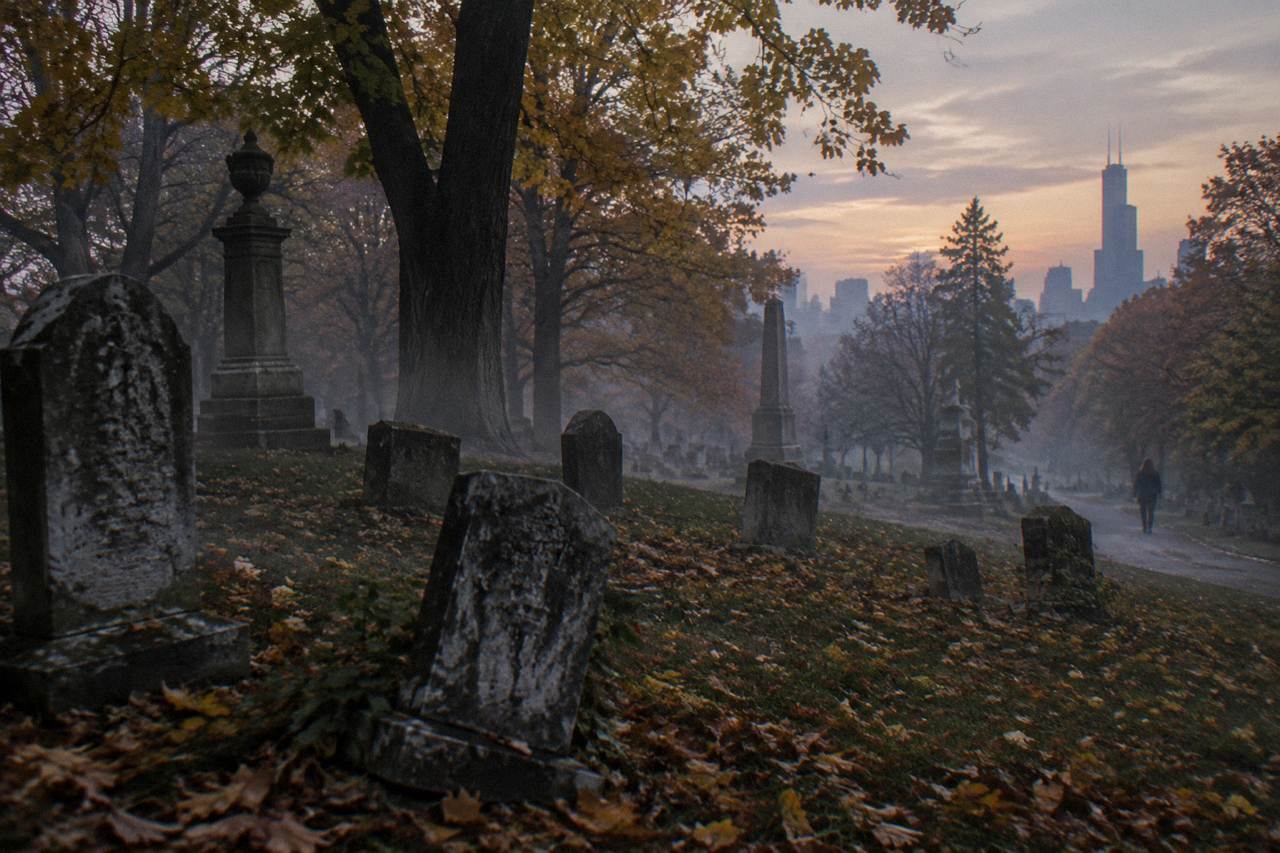
Bachelor's Grove Cemetery is a small, largely abandoned burial ground inside Rubio Woods Forest Preserve near Chicago, and its reputation for hauntings has far outgrown the physical site. The stories attached to it, including reports of a phantom farmhouse, strange lights and the famous "Madonna of Bachelor's Grove" photograph, are legends and claimed sightings, not verified events. What is verifiable is narrower: the cemetery is open to the public only during forest preserve hours, from sunrise to sunset, and entering outside those hours risks fines or arrest. Very little documented history survives about the families buried there, which is exactly why the folklore filled the gap.
That gap between fact and story is what makes Bachelor's Grove worth explaining carefully. This page separates the three things that usually get blended together online: what the record actually supports, what the ghost-hunting community claims, and what the rules allow a visitor to do today. Chicago has a deep bench of darker history that is documented, from the Eastland disaster of 1915 to the St. Valentine's Day Massacre of 1929, and the city's walking tours trade in that verified record alongside the legends. A site like Chicago Ghost Tours exists because readers keep asking which stories are real and who can tell them well.
What Happened At Bachelor's Grove Cemetery?
No single dramatic event is on the record at Bachelor's Grove Cemetery. What happened there is mostly slow abandonment: a small rural burial ground that fell out of use, suffered decades of vandalism and grave theft, and gained a national reputation for hauntings that no document from the site itself supports. The cemetery sits in Rubio Woods Forest Preserve, and its caretakers today are the forest preserve district, whose rules are the only firm authority on the place. The stories came later and grew louder as the site grew quieter.
The name itself is usually written with an apostrophe in modern retellings, though maps and older records vary between "Bachelor's Grove" and "Batchelor Grove." The burial ground served farming families in the area when it was countryside rather than suburb. As the surrounding settlement changed and newer cemeteries drew burials away, maintenance lapsed. By the late decades of the last century the site had a national profile among ghost hunters, and that attention brought its own damage: toppled markers, stolen headstones and scattered debris are the documented reality behind the "abandoned haunted cemetery" image.
It is worth being plain about what this article can and cannot claim. No specific event is documented at Bachelor's Grove: no massacre, no fire, no crime with a date and a death toll. Compare that with the documented Chicago events the file does carry, such as the Iroquois Theatre fire of 30 December 1903, which killed 602 people, or the Eastland capsizing of 24 July 1915, which killed 844 passengers and crew. Bachelor's Grove has no entry like those, because nothing of that kind happened there. Its history is neglect, and its fame is folklore.
That does not make it uninteresting. It makes it a case study in how a place becomes "haunted" in the public imagination, and why a good ghost storyteller matters as much as the site. The guides on Chicago's walking tours earn their keep by drawing that line honestly: the Lincoln Park ghost walk, the River North crime walks and the Loop gangster walks all mix documented history with legend, and the best of them tell you which is which. If your interest in Bachelor's Grove is really an interest in Chicago's haunted reputation, a guided walk is the practical way to get it.
Where Is Bachelor's Grove Cemetery And Can You Visit?
Bachelor's Grove Cemetery is inside Rubio Woods Forest Preserve, part of the Cook County forest preserve system, and it is open to the public only during regular forest preserve hours, sunrise to sunset. Entering outside those hours risks fines or arrest, according to the directions page maintained for the site. There is no nighttime access of any kind, so no legitimate ghost hunt operates inside the cemetery itself.
The preserve's stated rules are specific about conduct as well as timing. Visitors must not stand or climb on tombstones, and must not light candles within the cemetery or place them on headstones. Those rules matter here more than at a maintained cemetery because the markers are few, old and already damaged. A visit at midday, in decent weather, with hands in pockets, is the version of Bachelor's Grove that is actually available.
This is a sharp contrast with the city's large working cemeteries, which publish formal hours and welcome visitors on their own terms. Graceland Cemetery, established in 1860 on Clark Street and Irving Park Road, opens its gates daily year-round with seasonal hours, spring and summer weekdays running 8:00 AM to 6:00 PM and weekends 9:00 AM to 4:00 PM, shifting an hour earlier on weekdays in fall and winter. Resurrection Cemetery in Justice, the cemetery tied to Chicago's most famous ghost legend, opens its grounds daily 8:00 AM to 7:00 PM from March 1 to October 15 and 8:00 AM to 5:00 PM the rest of the year. The comparison is useful for planning: the famous cemeteries you can read about on our cemetery stories page are daytime places too.
| Site | Location | Public access | Stated hours |
|---|---|---|---|
| Bachelor's Grove Cemetery | Rubio Woods Forest Preserve | Open during forest preserve hours only | Sunrise to sunset; entry outside hours risks fines or arrest |
| Graceland Cemetery | Clark St and Irving Park Rd, Chicago | Gates open daily year-round | Spring/summer: weekdays 8 AM to 6 PM, weekends 9 AM to 4 PM; fall/winter weekdays 8 AM to 4 PM |
| Resurrection Cemetery | 7201 Archer Road, Justice, IL | Grounds open daily | 8 AM to 7 PM from March 1 to Oct 15; 8 AM to 5 PM Oct 16 to Feb 28 |
For readers who want the cemetery stories without the drive to the suburbs, the practical answer is a guided walk in the city itself. The Dark Side walk in River North, officially titled Chicago's Dark Side: Ghosts, Gangsters, and True Crime Tour, costs $35 per person, runs about 2 hours with a group cap of 20, and carries a 4.9 rating across 80 reviews. Its mix of ghosts and documented crime suits the Bachelor's Grove reader well: you get the legends framed as legends and the history framed as history. Full details are on the Dark Side tour page, and free cancellation is listed on the operator's page.
The Real History Behind The Legends
The documented record at Bachelor's Grove is thin by design: it was a rural community burial ground, and when the community it served faded, so did the paperwork. No verified chronicle of the site exists in the sources behind this article, so any detailed "history" you read online should be treated with caution. What is documented is the physical outcome: a small cemetery with damaged markers inside a forest preserve, protected by rules rather than restored by records.
That thinness is the engine of the folklore. Chicago's genuinely documented dark history is overwhelmingly urban and dated: John Dillinger shot outside the Biograph Theater at 2433 N Lincoln Ave on 22 July 1934; seven men killed at a garage at 2122 N Clark St on 14 February 1929 in the St. Valentine's Day Massacre; 844 dead when the Eastland rolled at her dock between Clark and LaSalle Streets in 1915. Those events have dates, addresses and histories because institutions recorded them. A farm cemetery that outlived its congregation has no such paper trail, and into that vacuum moved stories.
The vandals and souvenir hunters of the late last century did the rest. Reports of overturned and stolen headstones circulated for years, and the physical decay fed the reputation: a place that looks abandoned reads as haunted. The same pattern shows up across the city's haunted canon. The Congress Plaza Hotel is "frequently claimed to be one of the most haunted buildings in Chicago," a claim about reputation rather than evidence, and the hotel's actual history as the 1893 World's Fair era Auditorium Annex is the part that is real. Ghost stories and gangster lore share the same blur between fact and legend, and the men who truly ruled Chicago's underworld are a good place to see where the real history ends and the myth begins.
Honest storytelling about these places keeps the two registers separate, and that is precisely the skill of the guides leading the walks listed here. The Capone and ghosts walk in the Loop, for instance, carries a 5.0 rating across 446 reviews at $35 per person for roughly 90 minutes, and reviewers report bringing children aged 6, 13 and 16, which tells you the tone is storytelling, not shock. The Gangsters and Ghosts walk, which goes inside the Palmer House, runs 2 hours at $31 per person with a 4.7 across 1,878 reviews, the most of any walking tour on this site. Neither tour claims proof of the supernatural. They claim good stories, well told, on real streets.
The Ghost Stories And Why They Spread
The legends attached to Bachelor's Grove include reported phantom lights, a vanished farmhouse, a two-headed monk story in some retellings, and a photograph known as the "Madonna of Bachelor's Grove," an image of a seated woman that skeptics and believers have argued over ever since it was taken. None of these is a verified event. All are claims and stories, repeated until they became the site's identity. This article reports them as legends, because that is what they are.
The most famous artifact of the folklore is that photograph, showing a translucent seated figure among the markers, taken by a visitor decades ago and disputed ever since. It has been examined, disputed and reprinted for years, and it remains exactly what it was on the day it was made: an unverified picture of an unexplained shape. Ghost enthusiasts cite it as one of the more compelling cemetery photographs ever taken; skeptics point to long exposures and double images. Neither side has closed the case, and a site that values honesty should say so.
Around the photograph sits a constellation of smaller stories: orbs, mists, a ghost car on the adjacent road, the sensation of being watched. These are the standard furniture of haunted-place folklore, and they are told about Bachelor's Grove with unusual intensity because the site photographs so evocatively. An overgrown clearing in dense woods at golden hour looks haunted by definition. The stories spread because the images spread, and the images spread because the place is genuinely photogenic in a melancholy way.
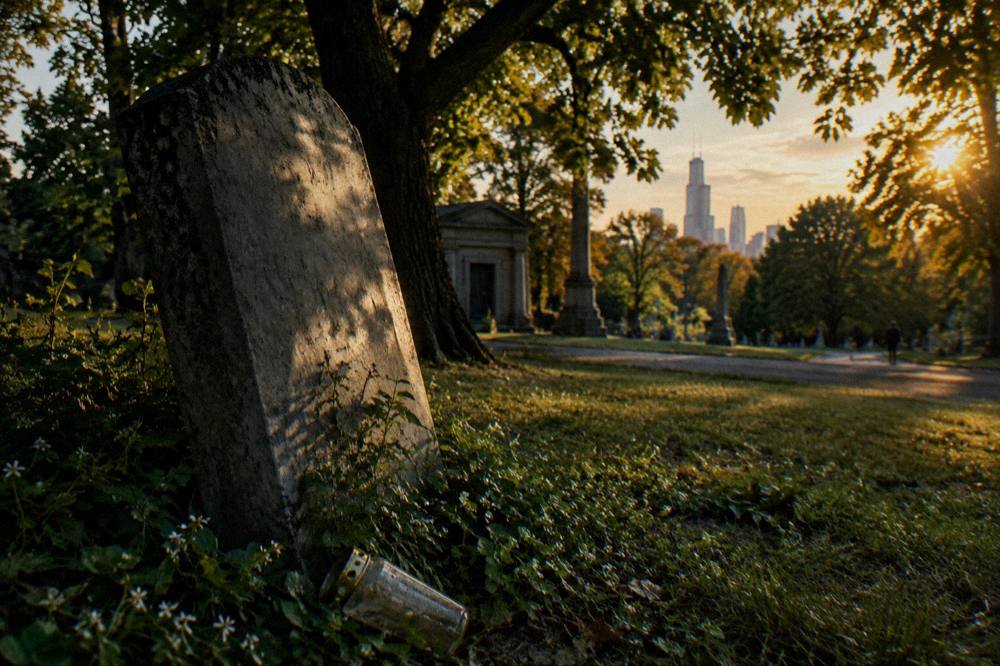
Chicago's better known ghost legend, Resurrection Mary, follows the same pattern at a much larger scale: a story about a young woman in white seen along Archer Avenue near Resurrection Cemetery, told for generations and never resolved into a documented person (see Age Limits on Ghost Tours). Our Resurrection Mary legend explained piece covers it in detail, and the parallel with Bachelor's Grove is exact. Both legends attach to real cemeteries, both are unfalsifiable, and both draw visitors who want to stand where the story is set. The difference is access: Resurrection Cemetery is a large active ground with posted hours, while Bachelor's Grove is a protected ruin with sunrise to sunset access and a strict conduct code.
Readers who want the storytelling live, rather than on a page, are the audience for the city's guided walks. The Lincoln Park ghost walk, officially Embers of the Windy City, costs $26 per person for about an hour, holds a 4.4 across 129 reviews, and caps groups at 15. Lincoln Park itself carries one of the site's most concrete haunted-history facts: an estimated 35,000 burials from the old City Cemetery were relocated as the park was built, with the Couch mausoleum behind the Chicago History Museum as the visible reminder. That is the register a good guide works in, legend and ledger side by side.
How To Visit Bachelor's Grove Respectfully
Visit in daylight only, during forest preserve hours from sunrise to sunset, and treat the markers as protected artifacts: no standing or climbing on tombstones and no candles inside the cemetery or on headstones, per the directions page for the site. Entry outside those hours risks fines or arrest, a rule that exists because decades of trespass and vandalism nearly destroyed the place. Respectful daytime photography is the activity the site can actually support.
The rule against candles is worth pausing on, because it is aimed directly at ghost-hunting culture. Candlelit vigils and midnight séances are part of the lore, and they are also the behavior most likely to damage what little is left. The same instinct shows up in the policies of the Catholic Cemeteries of Chicago system, which prohibits picnics, alcohol, grilling, lawn games and loud music on its grounds, and asks visitors not to film or photograph people or identifying names and dates on markers without contacting the office for editorial requests. Cemeteries are working memorial grounds first and sightseeing stops second.
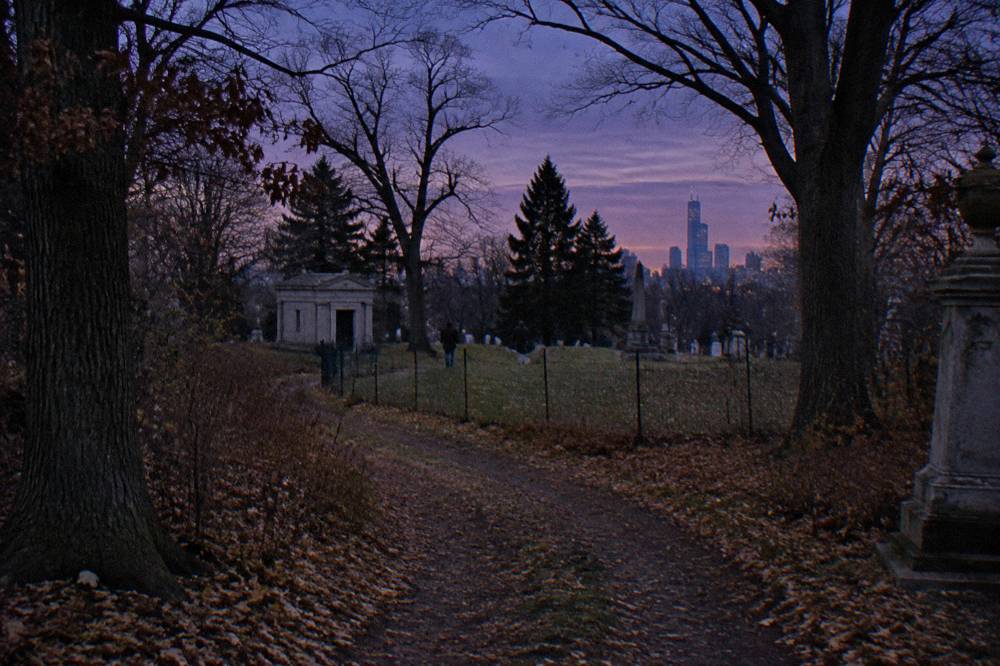
For planning, treat a Bachelor's Grove trip as a short suburban excursion rather than an evening event. Daylight, dry ground, and a modest expectation of seeing a quiet, damaged, historically thin site will serve you better than a flashlight and a hope. Readers who want an evening of haunted Chicago can get it lawfully in the city: the adults-only Loop ghost walk, Wind and Souls, runs 90 minutes at $34.99 per person with a 4.2 across 46 reviews, and the costumed pub walk in Lincoln Park, rated 4.9 across 338 reviews at $35.87 per person, mixes ghost stories with bar stops for those aged 21 and over. The ghost hunts listed here, including the Lincoln Park investigation at $40 per person with a 4.9 across 47 reviews, put equipment in your hands legally and after dark, which is more than Bachelor's Grove can offer.
| Experience | Format | Price per person | Duration | Evening option |
|---|---|---|---|---|
| Bachelor's Grove visit | Self-guided, daylight only | No tour fee stated in sources | Set by preserve hours | Not permitted |
| Lincoln Park ghost hunt | Guided investigation with equipment | $40 per person | About 2 hours 15 minutes | Yes, after dark |
| Adults-only Loop ghost walk | Guided walk | $34.99 per person | About 1 hour 30 minutes | Yes |
| Costumed haunted pub walk | Guided walk with bar stops | $35.87 per person | About 2 hours 30 minutes | Yes, ages 21+ |
The wider cemetery scene around Chicago rewards the same respectful planning. Graceland's gates are open daily, and its 121 acres hold some of the city's most significant monuments, though its own famous ghost legend is unverified and not stated as fact here. Our most haunted cemetery in Chicago comparison walks through the candidates and, like this page, keeps legend and record separate.
Seeing Chicago's Darker Stories With A Guide Instead
If Bachelor's Grove is off limits at night and thin on verified history, the guided tours of Chicago are the practical alternative: 16 live walks, buses and ghost hunts priced from $26 to $60 per person across the Loop, Lincoln Park, River North, Streeterville and Prairie Avenue. They deliver the legends with the documented history attached, in the evening, legally, and with a guide who can tell you which parts are story.
The pick for this article's reader is the one named above: the Dark Side walk through River North, a small-group ghosts and true crime walk at $35 per person, about 2 hours, capped at 20, rated 4.9 across 80 reviews, with free cancellation listed. Its material sits closest to the Bachelor's Grove mood, documented crime and haunted reputation in one route. Bookings and current dates are on the operator's live listing, and Check availability shows the schedule without any commitment.
Different readers will want different formats, and the tours listed here cover most of them. The Gangsters and Ghosts walk is the volume leader, 4.7 across 1,878 reviews at $31 per person for 2 hours including a stop inside the Palmer House, where reports of phantom footsteps and a woman in period clothing circulate as reputation rather than fact. The original ghost bus tour covers more ground in 3 hours from the Congress Plaza Hotel at $59 per person, rated 3.8 across 152 reviews, with children welcome when accompanied by an adult. At the other end of the scale, the family ghost walk from Cafe Brauer in Lincoln Park costs $29.99 per person for 1.5 hours and is described as family-friendly, though it has no reviews yet.
Seasonality matters when you choose. Halloween 2026 falls on Saturday 31 October, and daylight saving time ends the very next day, Sunday 1 November, so the final October weekend packs the year's biggest demand into the year's last long evening. Special October events across the city sell out in advance, including the zoo's haunted history tours, which offer no tickets at the gate. The walks listed here run year-round in the main, but late October dates are the ones to book early, and every listing shows free cancellation, so booking ahead costs little in flexibility.
| Tour | Neighborhood | Price per person | Duration | Rating and reviews |
|---|---|---|---|---|
| Chicago's Dark Side walk | River North | $35 per person | About 2 hours | 4.9 across 80 reviews |
| Embers of the Windy City walk | Lincoln Park | $26 per person | About 1 hour | 4.4 across 129 reviews |
| Gangsters and Ghosts walk | Loop riverfront | $31 per person | 2 hours | 4.7 across 1,878 reviews |
| Ghost bus tour | South Loop start | $59 per person | About 3 hours | 3.8 across 152 reviews |
Common Questions About Bachelor's Grove Cemetery
What Happened At Bachelor's Grove Cemetery?
No single documented event. The site was a small rural burial ground that fell into abandonment and suffered vandalism, and it became famous for hauntings through legends and unverified photographs rather than recorded history. The firm facts are its location in Rubio Woods Forest Preserve and its sunrise to sunset access rules.
Can You Visit Bachelor's Grove Cemetery At Night?
No. The site is open to the public only during regular forest preserve hours, sunrise to sunset, and entry outside those hours risks fines or arrest. There is no legal nighttime ghost hunt at the cemetery.
Is The "Madonna Of Bachelor's Grove" Photograph Proof Of A Ghost?
It is an unverified photograph showing a translucent seated figure among the headstones. It has been disputed for years and proves nothing either way. It is the site's most famous artifact of folklore, not a verified event.
What Are The Rules At Bachelor's Grove Cemetery?
Visitors must not stand or climb on tombstones and must not light candles in the cemetery or place them on headstones, per the directions page maintained for the site. Daytime visits during forest preserve hours are the permitted use.
Are There Guided Tours Of Bachelor's Grove Cemetery?
No tour listed here operates inside the cemetery, given its daylight-only access. Readers who want haunted Chicago with a guide can choose from 16 live walks, buses and ghost hunts from $26 to $60 per person, including the Dark Side walk in River North at $35 per person.
What Other Haunted Cemeteries Can You Visit Near Chicago?
Graceland Cemetery in Chicago opens daily year-round with seasonal hours, and Resurrection Cemetery in Justice opens its grounds daily with seasonal hours as well. Both are working cemeteries with conduct rules, and their ghost legends are reputations, not verified events.