Who Was The Most Powerful Gangster In Chicago?
Al Capone held Chicago's underworld through the Prohibition years, but Torrio, Weiss and Moran shaped the city too. Here is the power ranking, the verified history, and the tours that show it.
Al Capone was the most powerful gangster in Chicago, and by most measures the most powerful organized crime figure the United States has produced. He came to the city to work for Johnny Torrio, took full control of the bootlegging empire when Torrio retired, and commanded an organization that dominated the Loop, the South Side and much of the suburbs, while his rivals were killed, jailed or pushed out one by one. No other Chicago gangster ever matched his reach. If you want to see the neighborhoods where Capone built his empire, our guide to Chicago's true crime tours walks you through the best options.
The case for Capone rests on scale and duration. He ran Chicago's underworld through the heart of Prohibition, survived a gang war that eliminated most of his serious competitors, and became a national celebrity in the process, a fame that has outlived him by nearly a century. His face, his hat, his scar, all of it is recognizable in a way no other gangster's is, anywhere in the country. His rivals were formidable in their own right, and one of them, Johnny Torrio, literally handed him the organization he would turn into an empire.
But power in Prohibition Chicago was never a settled thing. Through the 1920s at least four men held a genuine claim to the title at one point or another, and the answer to the question depends partly on when you ask it. In the early years of Prohibition the most powerful gangster in the city was arguably Torrio, not Capone, since Capone was still a lieutenant. During the worst stretches of the beer wars, the North Side leadership commanded resources that came close to matching the South Side outfit. By 1929 the question had been answered with machine guns on the North Side, as the St. Valentine's Day Massacre of 14 February 1929 killed seven North Side Gang members and associates at a garage at 2122 N Clark St.
That morning in Lincoln Park is the hinge of the whole story, and it is worth understanding why. Seven men lined up against a garage wall, shooters dressed as police officers, and a rival organization that never recovered. Capone was out of the state at the time and was never charged with the crime, but the effect on the balance of power in the city was total. After that, nobody in Chicago had the strength to contest his outfit's position.
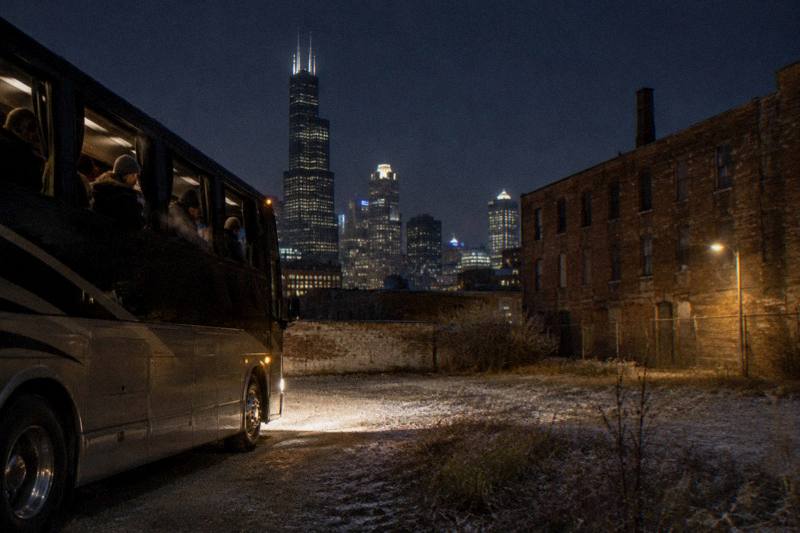
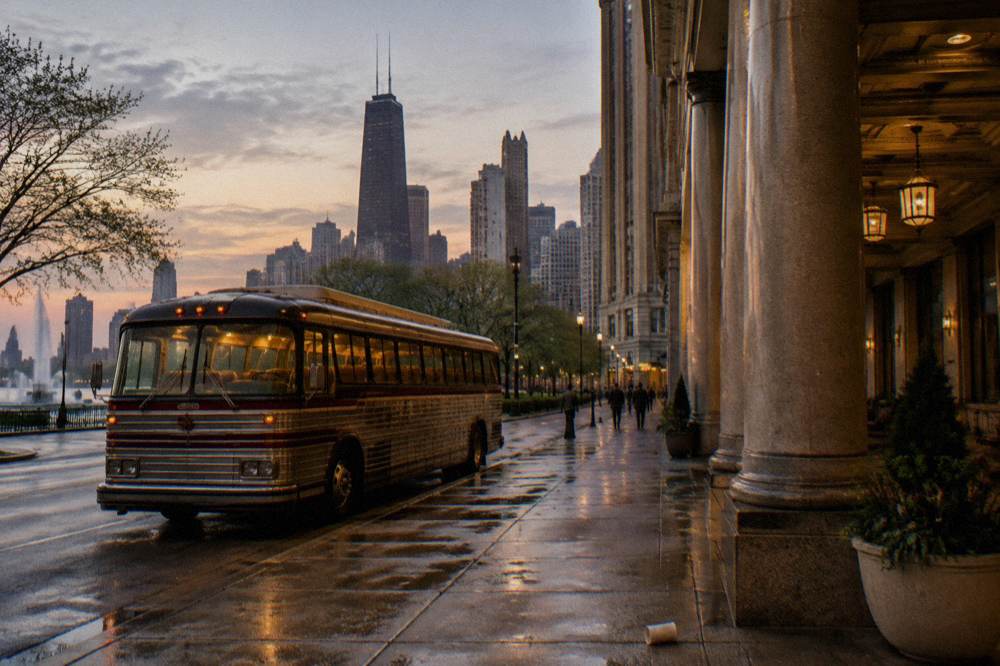
Visitors who want to see where this history happened have real options, and the geography matters more than most people expect. The gangster era's sites are scattered from the South Loop to Uptown, far more ground than a visitor can comfortably walk in an evening. The bus tours cover that wide geography, the walking tours go deeper on the Loop riverfront where the two sides traded shootings, and the evening departures add atmosphere that suits the material. The two coach tours below are a good starting spread: a night coach tour and a daytime crime and mob coach tour.
How Al Capone Built Power In Chicago
Capone arrived in Chicago to work for Johnny Torrio, who was already running a South Side beer and gambling empire built on Prohibition profits. When Torrio was shot, prosecuted, and finally decided to retire, he handed the whole operation to his young lieutenant. Capone then spent years consolidating it, absorbing rival territories and fighting the North Side Gang, until by 1929 he faced no organized challenger anywhere in the city. Plenty of the hidden saloons from that era are still pouring drinks today, and our guide to the best surviving Prohibition speakeasy in Chicago picks which one is worth your night.
Torrio is the underrated figure in this story, and historians of the era consistently credit him as the architect. He built the structure Capone inherited: the political protection, the brewery network, the quiet division of the city into territories with an uneasy peace between the North and South Sides. That peace held as long as Torrio ran things, and part of his genius was understanding that violence was bad for the beer business. Capone's contribution was operational and theatrical in equal measure. He expanded what Torrio built, publicized himself shamelessly, and understood earlier than his rivals that visibility could be a kind of armor, at least for a while.
The handover between the two men is one of the strangest moments in American crime history. Torrio, wounded in an assassination attempt and facing prison, chose to walk away while he was still alive to enjoy his money, and he did it by simply giving the largest criminal enterprise in Chicago to his second in command. There was no vote, no war of succession, no fracture. That the transition went so smoothly tells you how solid Torrio's structure was, and how completely Capone already controlled the day to day operations. With the whole operation now in his hands, Capone became a regular at tables across the city, and a look at where Al Capone actually ate in Chicago separates the verified spots from the legends.
The fall came from the one direction he never defended well. Federal prosecutors charged him with tax evasion rather than any crime of violence, a novel legal strategy at the time, and he was sentenced to a long federal term, serving most of it at Atlanta and then Alcatraz. He was released late in the 1930s with his health broken, and he died at his Florida home, never having resumed control of the organization he built. No successor ever matched him, which is itself the strongest evidence for the title: the empire carried on, but the man was never replaceable.
His physical footprint survives in scattered places around the city. The exterior of his former residence at 7244 S. Prairie Ave. remains visible from the public street, though the privately owned two-flat is not open to visitors, and tour operators point it out from public streets only. Farther north, the Green Mill Cocktail Lounge at 4802 N. Broadway retains its Prohibition-era ties to Capone, including his reputed favorite booth, and operates with hours of Mon to Thu 4pm to 1am, Fri 4pm to 4am, Sat 1pm to 5am, and Sun 2pm to 1am, per the venue's current listing. The bus tours that cover this geography are the practical way to see it, since the sites stretch from the South Loop to Uptown and no walker can reasonably cover them in one outing.
| Gangster figure | Period of peak power in Chicago | Base territory | How it ended |
|---|---|---|---|
| Johnny Torrio | Early Prohibition years to the mid-1920s | South Side | Shot, prosecuted, retired and handed control to Capone |
| Al Capone | Mid-1920s to his federal conviction | South Side, citywide reach | Federal tax evasion conviction and long prison sentence |
| Hymie Weiss | After O'Banion's murder to 1926 | North Side | Shot dead near Holy Name Cathedral, 1926 |
| George "Bugs" Moran | 1926 to 1929 | North Side | Survived the 1929 massacre, power broken |
Want the full driving version of this story, with the sites strung together after dark? The Night Crimes coach tour runs the era's landmarks in the evening, and there's a cancellation window if your plans shift.
Capone's Rivals: The Men Who Almost Matched Him
Johnny Torrio, Dean O'Banion, Hymie Weiss and George "Bugs" Moran each held real power on the North Side, and for stretches of the mid-1920s the North Siders were close to Capone's equals in manpower and revenue. O'Banion's murder started the war, Weiss was killed in 1926, and Moran lost his organization in 1929. Only Torrio lived long in comfort, because he chose retirement over the fight.
Dean O'Banion deserves more attention than he usually gets. He controlled the North Side's bootlegging through the early years of Prohibition and ran a flower shop as a legitimate front, the famous Schofield's on North State Street, which handled arrangements for gangland funerals on both sides of the war. His fatal mistake was double-crossing Torrio's outfit in a brewery deal, and his murder turned a tense coexistence into an open war that consumed the rest of the decade. The men who inherited his gang, Weiss and Moran, pursued that war with a persistence that nearly killed Capone's operation, and at one point came close to killing Capone himself.
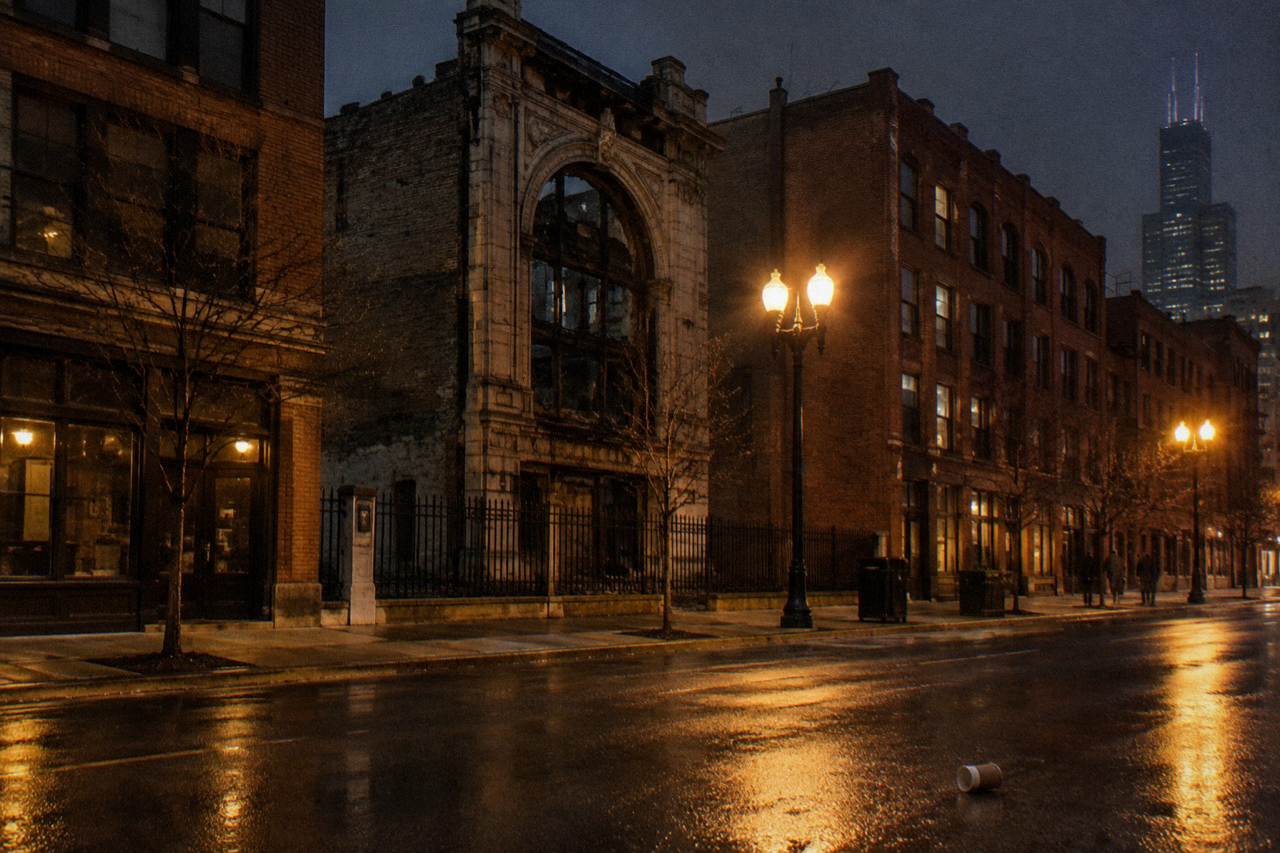
Hymie Weiss was, by contemporary accounts, the one rival Capone genuinely feared, a planner rather than a brawler, and the only North Sider with the discipline to run a comparable empire. He was gunned down in October 1926 across from Holy Name Cathedral, and bullet holes from that attack remain visible on the cathedral's bronze doors today. The cathedral is an active parish, open to the public, and it is one of the few gangster-era sites where the physical evidence of the era is still plainly there to see, no plaque hunting required. Standing on State Street and looking at those dents in the bronze, you are looking at the actual residue of the beer war, not a reconstruction.
For travelers, this rivalry is the backbone of the Loop and River North walking tours, because the territory the two sides fought over sits within a compact walkable core. The riverfront where Torrio's men operated, the cathedral block, the hotel lobbies where deals were struck, all of it sits within a mile or so of the Chicago River. The 90-minute Capone and ghosts walk covers exactly this ground in the Loop, meeting at State and Wacker, and it is one of the strongest reviewed products in the city's whole haunted and gangster category, with 5.0 across 446 reviews. Reviewers report bringing children aged 6, 13 and 16, which tells you the register: crime history told as storytelling, not gore.
Moran is the tragic footnote of the group. He survived the massacre because he was late that morning, arriving to see what looked like a police raid and walking past. He spent the rest of his life in and out of prison, a diminished figure in a city that had moved on. The organization he inherited from O'Banion and Weiss never reassembled. That asymmetry, one boss retiring rich, one dying at the height of his powers, one spending decades as a footnote, is the real shape of power in Prohibition Chicago.
Where Capone's Chicago Still Stands Today
The most tangible sites are the St. Valentine's Day Massacre block at 2122 N Clark St, now a lawn behind a wrought-iron fence with no marker of any kind, the Biograph Theater at 2433 N Lincoln Ave where John Dillinger was shot on 22 July 1934, and Holy Name Cathedral's scarred bronze doors. The Green Mill in Uptown and Capone's house on South Prairie Avenue extend the map farther out.
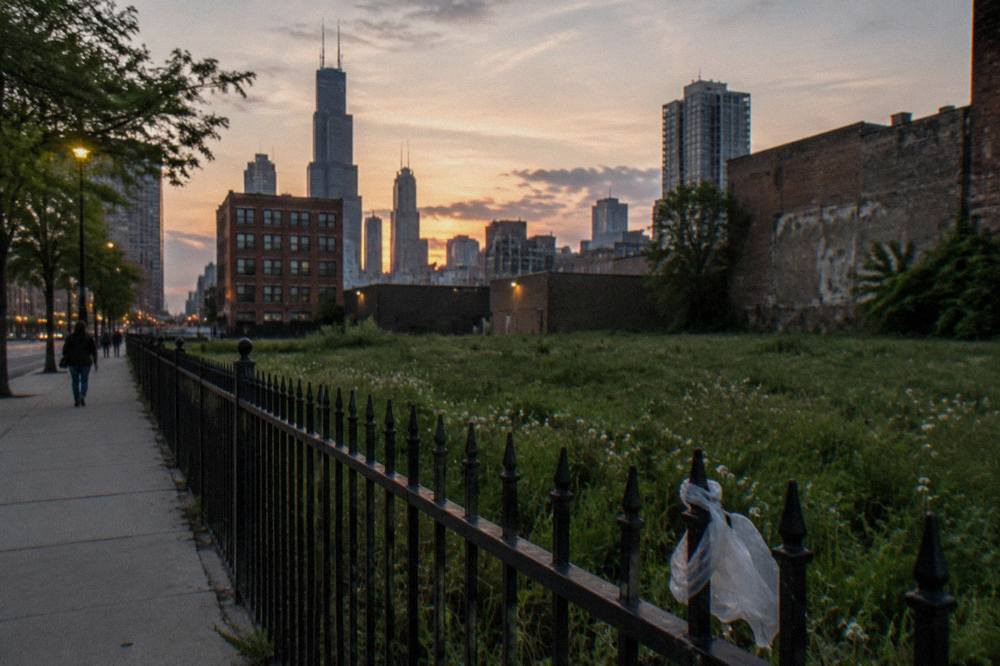
There is a strange honesty in how little Chicago has memorialized this history. The massacre site is a vacant lawn and parking area behind a wrought-iron fence for the Margaret Day Blake Apartments senior housing, the building that replaced the S-M-C Cartage Company garage following demolition in 1967. No plaque, no marker, no memorial of any kind stands there. You would walk past it without a guide, which is precisely why guided tours exist: the story lives in the telling, and the telling needs someone who knows which unremarkable patch of grass matters.
The Biograph is the exception, a still-operating theater with its own theatrical afterlife. It had been mostly dark since the pandemic, but Porchlight Music Theatre is now staging its full season there, including a fall revival of Little Shop of Horrors, so the building where Dillinger died is once again selling tickets to shows. The Palmer House, meanwhile, has its own reputation: reports of phantom footsteps in corridors and sightings of an unidentified woman in period clothing in public areas, the kind of hotel lore that keeps it a stop on the ghost walks. The gangster and paranormal threads in Chicago are genuinely intertwined, and Chicago Ghost Tours covers both sides of that map.
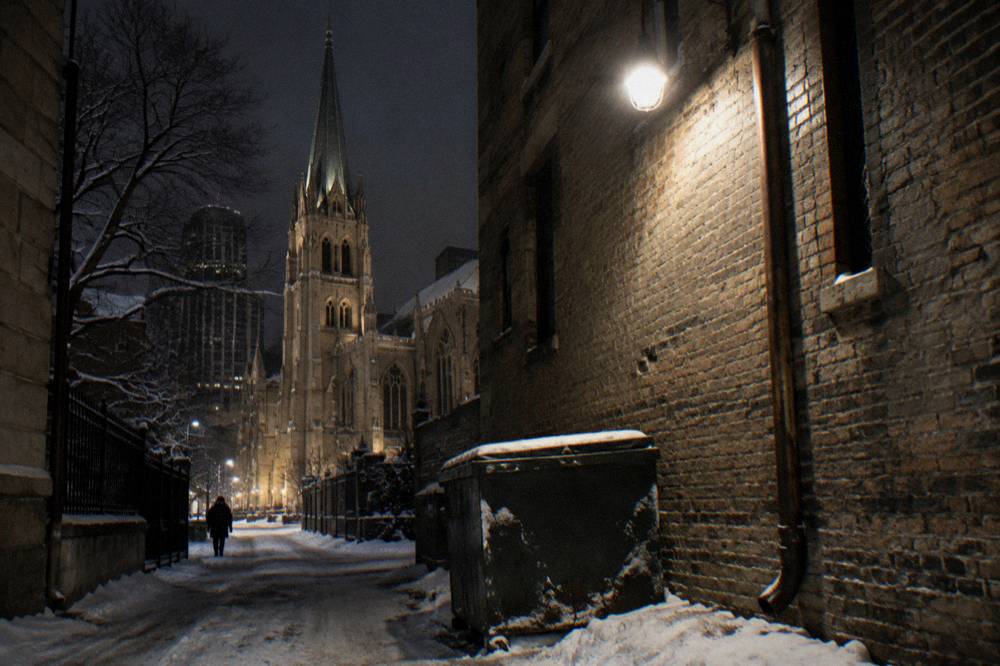
A short walk north from the river puts you at Holy Name Cathedral, and the bronze doors reward a close look. The pockmarks from the Weiss attack are small, easy to miss, and permanent. This is the version of the history that walking tours deliver best: not a view from a bus window but a detail you have to stand close to see.
| Landmark | Address | Connection | Visible today |
|---|---|---|---|
| Massacre site | 2122 N Clark St | Seven killed, 14 Feb 1929 | Vacant lawn behind iron fence, no marker |
| Biograph Theater | 2433 N Lincoln Ave | Dillinger shot outside, 22 July 1934 | Active theater, hosting productions |
| Holy Name Cathedral | 735 N State St | 1926 Weiss attack | Bullet holes on bronze doors |
| Green Mill | 4802 N Broadway | Capone's reputed hangout | Operating bar, his reputed booth noted |
| Capone residence | 7244 S Prairie Ave | Capone family home | Exterior visible from street only |
Planning your own route? Our guide to Capone tour stops in Chicago breaks the geography down neighborhood by neighborhood, and the piece on where gangsters hung out in Chicago maps the bars and clubs of the era.
How The 1929 Massacre Settled The Question
The St. Valentine's Day Massacre on 14 February 1929 killed seven North Side Gang members and associates at a garage at 2122 N Clark St, and it broke George Moran's organization beyond recovery. Capone was in Florida at the time and was never charged, but the outcome left him without a rival of any consequence. Power in Chicago's underworld consolidated around his outfit from that point until his federal conviction.
The massacre also did something else: it horrified the country. Seven men shot against a garage wall by figures dressed as police officers made national headlines and turned public opinion, and federal pressure, firmly against Capone. Many historians treat that year as the high-water mark and the beginning of the end at once. He had won the war and lost the peace. The outrage over the massacre helped build the political will that eventually sent federal prosecutors after his books rather than his gunmen, and that is the thread that actually brought him down.
There is a lesson in that sequence worth pausing on. The violence that made Capone untouchable in Chicago is what made him touchable to the federal government. Local corruption could not be beaten, but a paper trail could, and the empire's own bookkeeping became the case against him. Tours that cover the era tend to end on this note, and it lands well on the street where it happened.
Which Chicago Tour Best Shows The Gangster Era
The coach tours win on geography, since the era's sites stretch from Streeterville to Uptown, and the walking tours win on texture and detail inside the Loop core. The Crime and Mob bus tour covers the widest sweep at 1 hour 30 minutes to 2 hours, while the Gangsters and Ghosts walk pairs crime history with hotel interiors. All three formats run in the $31 to $60 per person range.
The honest comparison is between format, not quality. A bus gets you to the places a walker never reaches: Prairie Avenue, the massacre block, the outer North Side. A walk gets you inside buildings, above all the Palmer House, which the Gangsters and Ghosts walk enters, and gives a guide time to tell the Torrio and Weiss stories properly. The two-hour version meets outside Hoyt's Tavern next to the Royal Sonesta, runs daily year-round with departures listed at 11 a.m., 1 p.m., 4 p.m. and 8 p.m., and children aged 6 and under join free. Both listings note free cancellation, and the operator's listing carries the current accessibility details.
| Tour | Format | Duration | Price per person | Rating and reviews |
|---|---|---|---|---|
| Night Crimes bus tour | Evening coach | 2 to 2.5 hours | $55 | 4.8 across 521 reviews |
| Crime and Mob bus tour | Daytime coach | 1.5 to 2 hours | $49 | 4.6 across 3,603 reviews |
| Gangsters and Ghosts walk | Walking tour | 2 hours | $31 | 4.7 across 1,878 reviews |
| Capone and ghosts walk | Walking tour | 1.5 hours | $35 | 5.0 across 446 reviews |
The daytime Crime and Mob coach tour is the volume leader of the group, with 4.6 across 3,603 reviews, and it suits travelers who want the sweep of the story in a shorter window. The pickup point outside 163 E Pearson St in Streeterville puts it within walking distance of the Magnificent Mile hotels, which makes it an easy add-on to a downtown day. Evening departures, meanwhile, are standard for most Chicago ghost and crime walks, so check the live listing for the date you want.
One planning note that comes up in reader mail: October. Halloween 2026 falls on Saturday 31 October, and daylight saving time ends the very next day, Sunday 1 November, which makes the final October weekend unusually dark by early evening, ideal for a night crimes tour, and unusually busy. If that weekend is your target, booking ahead is the safe move.
For readers weighing the value question, our breakdown of how much Chicago haunted tours cost covers the full price ladder, and the comparison of Chicago gangster tours puts the bus and walk options side by side.
Common Questions About Chicago's Most Powerful Gangster
Who Was The Most Powerful Gangster In Chicago?
Al Capone. He controlled Chicago's underworld through Prohibition until his federal tax evasion conviction, inheriting Johnny Torrio's empire and eliminating or outlasting every serious rival, including the North Side Gang leadership after the 1929 massacre.
Was Al Capone Actually The Boss, Or Did He Answer To Someone Else?
Capone answered to Johnny Torrio through the early Prohibition years, until Torrio retired after being shot and prosecuted and handed him the organization outright. From that point Capone was the boss in fact, and no Chicago figure held comparable power again during Prohibition.
Who Were Capone's Main Rivals?
Dean O'Banion until his murder, then Hymie Weiss until October 1926, then George "Bugs" Moran until the St. Valentine's Day Massacre of 14 February 1929, which killed seven of Moran's men and associates at 2122 N Clark St and broke the North Side Gang.
Can You Still See Gangster-Era Sites In Chicago?
Yes. Bullet holes from the 1926 Hymie Weiss attack remain on Holy Name Cathedral's bronze doors, the Green Mill bar retains its Prohibition-era ties, the Biograph Theater operates as a performance venue, and Capone's former house on South Prairie Avenue is visible from the public street. The massacre site is an unmarked lawn.
Which Tour Covers This History Best?
Coach tours cover the widest geography, from the Streeterville pickup points to the outer neighborhoods, while Loop walking tours add interior stops like the Palmer House. Prices run $26 to $60 per person across the tours listed here, and every listing shows free cancellation.