What Is The Most Haunted Spot In Chicago?
A ranked look at Chicago's most reported haunted spots, from the Congress Plaza Hotel's reputation to Lincoln Park's buried past, and which tours actually stop at each one.
Ask ten Chicagoans to name the most haunted spot in the city and you will collect ten different answers, each defended with a story about a cousin, a night auditor, or a shadow in a hallway. Chicago has earned the argument. The city carries the Eastland disaster of 1915, the Iroquois Theatre fire of 1903, the St. Valentine's Day Massacre of 1929, and the memory of a lakefront park that was, for decades, a municipal cemetery. That pile of documented tragedy is the raw material legends grow from, and it explains why ghost stories here feel less like campfire invention and more like civic memory with the lights turned off.
This article ranks the most reported haunted spots in Chicago, explains the history underneath each reputation, and, because a reputation you cannot visit is just a rumor, names the bookable tours that actually stop there. Sixteen live walks, buses, and ghost hunts operate across the city, from $26 to $60 per person, so for nearly every spot on this list there is a guide who will stand beside you on the sidewalk and tell the story where it happened. If you want the short version of the ranking, the first section below gives it.
By the weight of reported activity, name recognition, and tour coverage, the Congress Plaza Hotel on South Michigan Avenue is the most haunted spot in Chicago, a reputation the 1893-era building has held for decades, with room 441 the most cited room. Lincoln Park ranks second on the strength of its buried past, an estimated 35,000 burials from the old City Cemetery, followed by the Chicago River's Eastland disaster site, Graceland Cemetery, and the Biograph Theater block. If you'd rather see these sites without paying for a tour, the free haunted spots in Chicago you can walk past guide covers the locations that cost nothing to visit.
That ranking deserves unpacking, because "most haunted" is not a measurable title. Nobody keeps a registry of apparitions. What can be ranked is the combination of how often a place is named in guest reports, how deep the documented history runs beneath the legend, and how many commercial tours treat the site as a headline stop rather than a drive-by mention. On all three measures the Congress Plaza wins, or at least dominates the conversation.
The hotel opened just before the 1893 World's Fair as the Auditorium Annex, and it is frequently claimed to be one of the most haunted buildings in Chicago, a phrase worth reading carefully: it is a claim, repeated so often it has become the building's public identity. Guests describe a shadow woman standing over beds in room 441, and the story has traveled far enough that the room's number now does half the storytelling on its own. The original Ghost Bus Tour leans on this, meeting inside the hotel's bar and building its route outward from South Michigan Avenue.
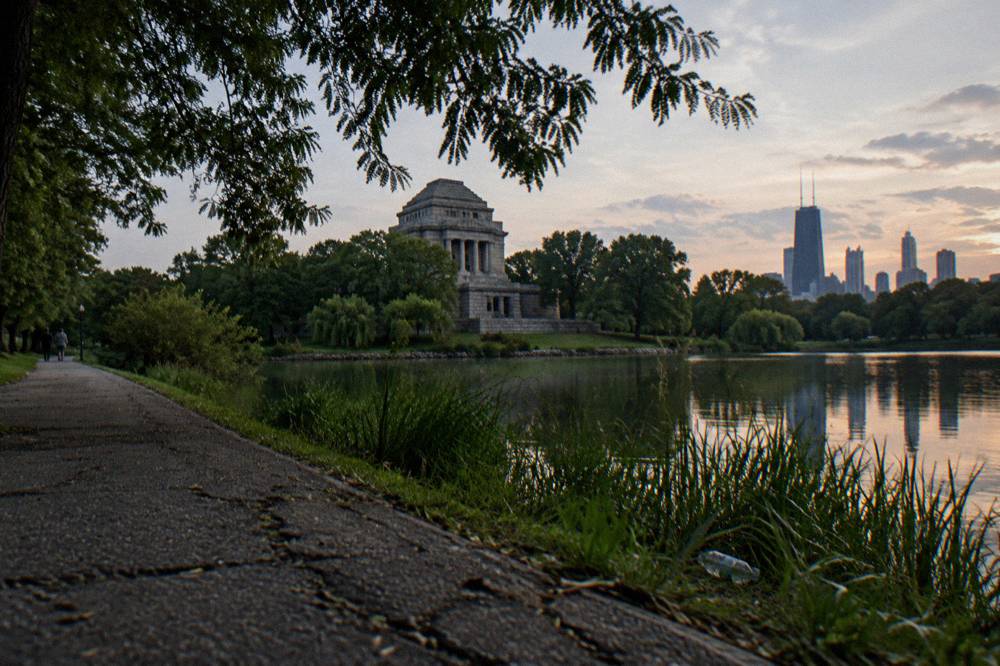
Lincoln Park takes the second slot for a reason that is stranger than any hotel corridor: the park was a cemetery first. The old City Cemetery's burials, an estimated 35,000 of them, were relocated as the park took shape, and the Couch mausoleum still stands behind the Chicago History Museum as the visible reminder. When a ghost walk in Lincoln Park talks about restless ground, it is talking about documented history with a documented body count underneath the jogging paths.
If you want to visit the two leading spots in one evening, there is a clean pairing: a Loop walk or bus that includes the Congress Plaza, then a Lincoln Park investigation that puts equipment in your hands over the old cemetery ground.
How Chicago's Most Haunted Spots Were Ranked
The ranking weighs three things: the volume and persistence of reported activity, the documented history beneath the legend, and whether a currently bookable Chicago tour treats the spot as a stop. A place with a strong story but no tour coverage ranks lower, because an unvisited legend stays a rumor rather than a destination.
Reported activity means exactly that: reports. Guest accounts, staff stories handed down, and the repeated secondhand tellings that turn a room number into local shorthand. None of it is proof of anything, and this site does not promise a ghost or a sighting. What the reports measure is cultural weight, how much of a claim a place has on the city's imagination.
Documented history is the part Chicago never lacks. The verified record here is grim enough without embellishment: the SS Eastland capsized on 24 July 1915 tied to a dock between Clark and LaSalle Streets, killing 844 passengers and crew. The Iroquois Theatre fire of 30 December 1903 killed 602 people at 26 W Randolph Street, the worst theater fire in US history. The St. Valentine's Day Massacre killed seven men at a garage at 2122 N Clark Street on 14 February 1929. These are facts from the historical record, and they anchor the reputations built on top of them.
Tour coverage is the tiebreaker because it is the part you can act on. A spot no route reaches is a spot you can only read about. The table below shows the scoring inputs for the top five.
| Rank | Spot | The documented history | The reported legend | Tour coverage |
|---|---|---|---|---|
| 1 | Congress Plaza Hotel, Loop | Opened for the 1893 World's Fair era as the Auditorium Annex | Shadow woman in room 441; called one of Chicago's most haunted buildings | Ghost bus meets inside the hotel; multiple Loop walks pass it |
| 2 | Lincoln Park | Old City Cemetery ground; an estimated 35,000 burials relocated; Couch mausoleum remains | Restless ground stories; the park's ghost walk and ghost hunt both trade on it | Lincoln Park ghost walk, ghost hunt, pub walk, family walk |
| 3 | Chicago River, Clark to LaSalle | Eastland disaster, 24 July 1915, 844 dead | Riverwalk apparition stories told on river tours | Ghost bus; seasonal river cruises pass the site |
| 4 | Graceland Cemetery, North Side | Established 1860, 121 acres at Clark and Irving Park | Famous resident legends, details of which are not verified | Open on seasonal hours; not a stop on the tours listed here |
| 5 | Biograph Theater block, Lincoln Park | John Dillinger shot outside 2433 N Lincoln Ave, 22 July 1934 | Alley and theater stories on gangster-ghost routes | Gangster and ghost walks in the Loop riverfront area |
One honest footnote on the ranking: Graceland's legends are famously specific, but the details behind its best-known monument legend are unverified, so this site does not repeat them as fact. The cemetery earns its slot on history and atmosphere alone.
The Congress Plaza Hotel, Chicago's Loudest Haunted Reputation
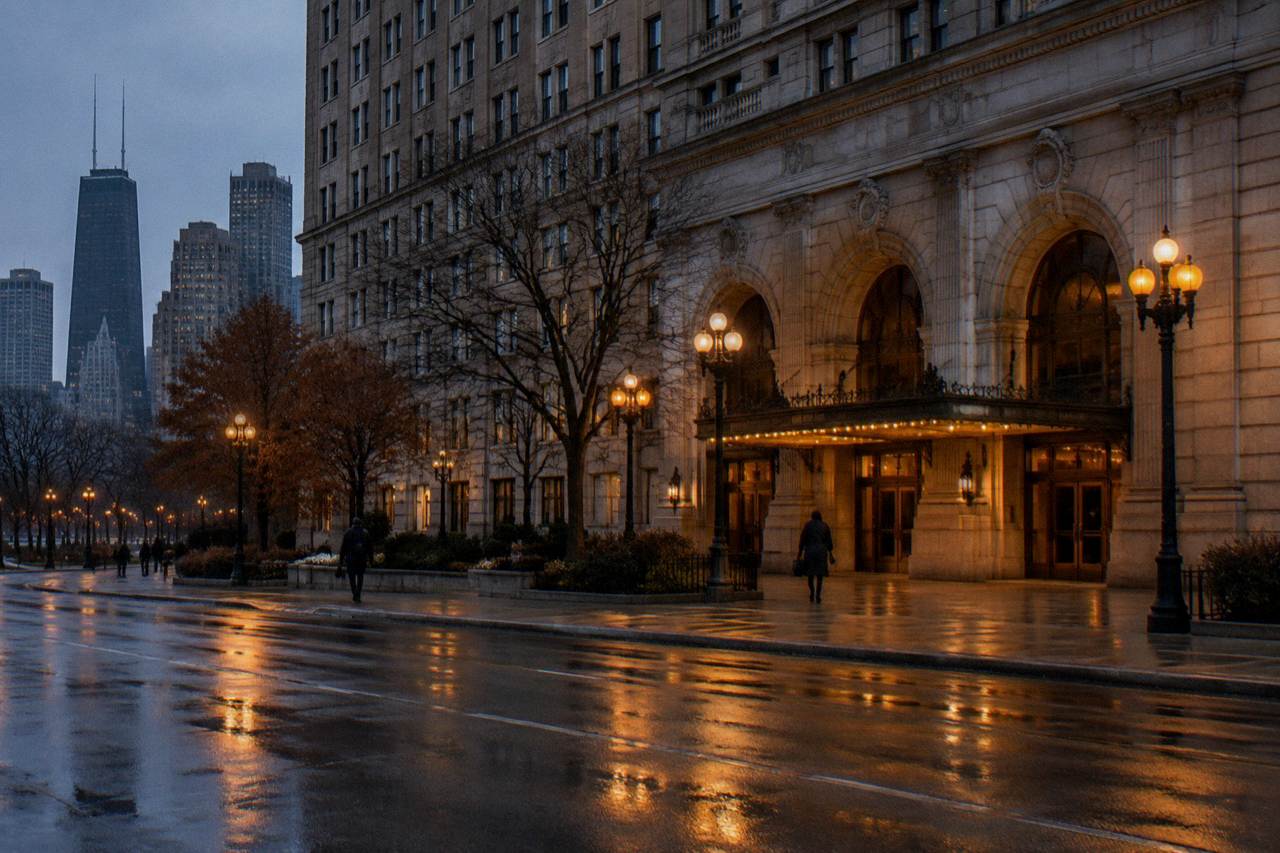
The Congress Plaza Hotel at 520 South Michigan Avenue is the spot most often named when Chicagoans are asked about hauntings, a reputation built on decades of guest reports rather than any single verified event, with room 441 the most cited room. It is also the most tour-accessible haunted address in the city: one ghost bus route meets inside the hotel's own bar.
The building's history is respectable and verifiable. It opened just before the 1893 World's Fair as the Auditorium Annex, an overflow property for the fair's flood of visitors, and grew into the massive Michigan Avenue hotel standing today. Its haunted reputation is what Wikipedia's editors carefully call a frequent claim: "frequently claimed to be one of the most haunted buildings in Chicago." That phrasing is correct, and it is also the whole point. A reputation repeated for decades across guest accounts, staff lore, and television segments becomes a kind of fact about the building, even when no single apparition ever is.
The room 441 story is the sharpest edge of that reputation. Guests have described seeing a shadow woman standing over their bed, an account repeated often enough in 2026 sources that the room number has become shorthand. Whether anyone has ever actually seen anything is not a question this site can answer, and no tour should answer it either. What the story does is concentrate the hotel's whole reputation into one bookable-sounding detail, which is exactly the kind of thing legends do.
Access is where the Congress Plaza beats every rival on this list. The Original Ghost Bus Tour, a 3-hour evening route from $59 per person, meets inside the bar at the Congress Plaza Hotel, rated 3.8 across 152 reviews, so the city's most famous haunted address is literally the check-in point. Walking routes that start from the Loop cover the hotel's exterior on their way down South Michigan Avenue, and the Mob Alleys walk from the Congress Plaza Hotel's front steps runs $34 per person at 4.7 across 469 reviews. The Crime, Mobsters and Ghost Stories walk uses the same meeting point.
If the Congress Plaza is your must-see spot, book a route that starts there rather than one that passes it. Standing in the lobby bar before a 3-hour bus route is a different experience from hearing about the building through a bus window.
Lincoln Park And The Buried Ground Beneath It
Lincoln Park ranks second because its haunting is anchored in hard history: the land was Chicago's City Cemetery, an estimated 35,000 burials were relocated as the park was built, and the Couch mausoleum still stands behind the Chicago History Museum as visible proof. More bookable ghost tours operate here than anywhere else in the city.
The cemetery-to-park conversion is one of the strangest facts in Chicago's civic history, and it is fully documented. As the city grew northward, the municipal cemetery grounds were converted to parkland and the burials moved, an effort whose scale, an estimated 35,000 relocations, leaves room for the obvious question every ghost guide asks: were they all really moved? The mausoleum behind the Chicago History Museum is the one structure that stayed, a stone reminder that the jogging paths and zoo lawns sit on top of what was, for a generation, the city's main burial ground.
That history explains Lincoln Park's density of ghost products. The 1-hour Embers of the Windy City walk starts at the Tin Man statue in Oz Park and runs $26 per person, rated 4.4 across 129 reviews, the cheapest entry point among these tours. The 2-hour 30-minute Booze and Boos pub walk starts at Glascott's Saloon at $35.87 per person, rated 4.9 across 338 reviews, one of the strongest ratings in the city. A family-friendly walk starts opposite Cafe Brauer at $29.99 per person, and it has no reviews yet, so judge it on format rather than stars.
The deepest-dive option is the equipment-led investigation. The Lincoln Park Hauntings Ghost Investigation Tour meets at the Chicago History Museum's Clark Street doors, the building beside the old cemetery ground, and runs about 2 hours 15 minutes for $40 per person, rated 4.9 across 47 reviews with a group max of 30. Instead of only hearing stories, participants use investigation equipment on the park's paths. For a spot-seeker whose chosen ground is Lincoln Park, that is the tour built specifically around it.
For a broader look at what the neighborhood offers after dark, the haunted walking tour comparison covers every route in detail, and the question of whether the city's supernatural side is real gets a longer treatment in is Chicago haunted. Many of the same neighborhoods that draw ghost hunters also hide a criminal past, and the guide to where Prohibition-era gangsters actually hung out pinpoints the speakeasies and street corners still standing today.
The Chicago River And The Eastland Disaster Site
The stretch of the Chicago River between Clark and LaSalle Streets ranks third: on 24 July 1915 the SS Eastland capsized at her dock there, killing 844 passengers and crew, the largest loss of life in the city's history. River tours now narrate the site, and a granite plaque on the south bank at LaSalle and Wacker marks it.
The Eastland is the disaster Chicago's ghost economy circles most carefully, because the facts are heavy enough that embellishment feels obscene. The excursion steamer, loaded with Western Electric employees and their families for a company picnic, rolled over at her dock on a summer Saturday morning. The verified count is 844 dead. The Reid Murdoch Building at 325 North LaSalle served as a makeshift morgue afterward, a detail the seasonal Creepy Cruise river tour points out as it passes. The dead deserve the factual register, and the tours that stop here mostly use it.
The memorial infrastructure is modest but findable. A polished granite plaque stands on the south bank of the river at the southeast corner of LaSalle Street and Wacker Drive, and the Eastland Disaster Historical Society, founded in 1998 by descendants of a survivor, held its 111th anniversary commemoration on the Riverwalk between LaSalle and Clark in July 2026, with families scattering flower petals into the water. If you visit the site independently, that plaque is the landmark to aim for.
Tour coverage of the river's dark history comes in two forms. The ghost bus route passes the riverfront as it moves between South Loop and North Side stops, and seasonal river cruises narrate the Eastland site directly from the water, with one operator running a 90-minute haunted cruise on Fridays, Saturdays, and select weekdays across a March-to-November season. The river's haunting is the kind you look at rather than walk through, which is why it ranks below the two walkable spots.
There is also a theater companion to this history inland. The Iroquois Theatre fire of 1903 killed 602 people at 26 West Randolph Street, and Loop walks that mention Death Alley as a stop point to the alley's reputation without this site asserting any unverified history about it. The listing mentions the stop; the alley tells its own story.
Graceland Cemetery And The North Side's Famous Dead
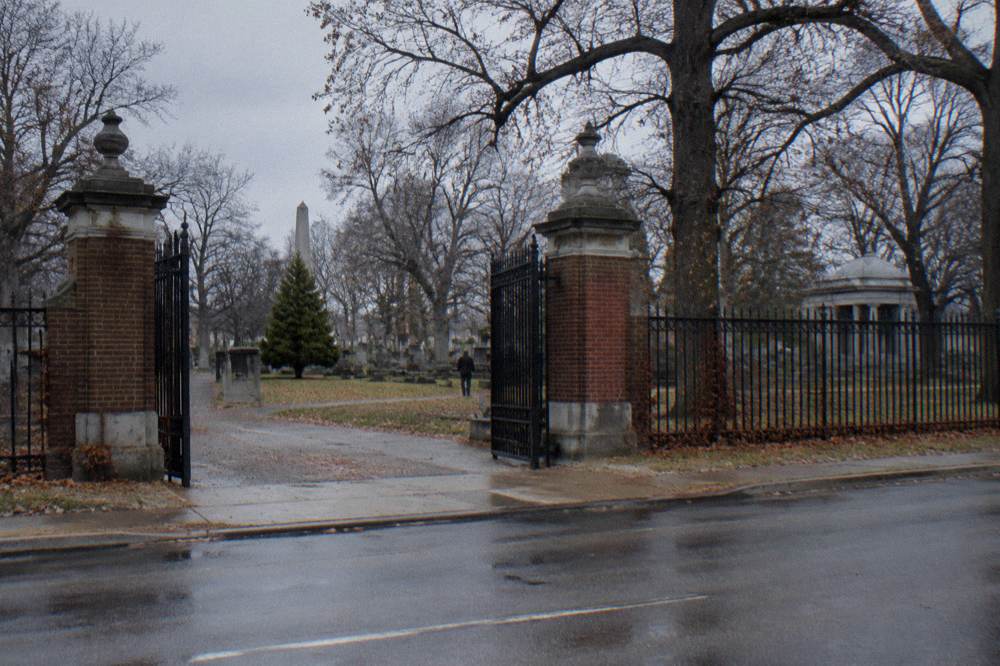
Graceland Cemetery ranks fourth: established in 1860, its 121 acres at Clark Street and Irving Park Road hold the graves of Chicago's famous dead, and its legends are best known but least verifiable, since the specific monument legend most often repeated could not be verified. Its gates are open daily year-round, with seasonal hours.
Graceland is where Chicago's ghost stories meet Chicago's architecture tours, and the architecture usually wins. The cemetery's grounds are a who's-who of the city's history, and its gates are open daily year-round: spring and summer hours run 8:00 AM to 6:00 PM on weekdays and 9:00 AM to 4:00 PM on weekends, with winter weekdays closing at 4:00 PM, per the cemetery's own hours page. Photography for personal use is generally permitted with respect for the grounds.
The famous monument legend here, the one every local seems half-remember, is unverified, and this site does not repeat its details as fact. What carries Graceland is the accumulation: a century and a half of the city's most powerful dead on 121 deliberately landscaped acres, which produces exactly the atmosphere ghost seekers are shopping for, without anyone needing to invent a story. Guided walks at the cemetery itself are offered seasonally by outside partners, typically April through October, so check schedules if you want a docent rather than a solo wander.
None of the tours listed here stop at Graceland, which is precisely why it ranks fourth rather than third. Its reputation is strong, its access is excellent, but it sits outside the bookable ghost economy. The self-reliant spot-seeker can pair it with the Lincoln Park tours a couple of miles south for a full north-side dark day, and the most haunted cemetery question, including Bachelor's Grove and Resurrection, gets its own full treatment in the cemetery guide.
For readers weighing a cemetery visit against a guided route, the honest summary is this: cemeteries give you ground and silence, tours give you story and route. The best Chicago haunted evening usually combines one of each.
Which Chicago Tours Stop At Each Reported Spot
Matching the spot to the tour is the practical half of this question: the Congress Plaza is covered by the ghost bus and the South Loop walks that meet there, Lincoln Park by four separate walking products plus the equipment-led ghost hunt, the river by bus and seasonal cruise, and the gangster-landmark spots by the Loop gangster walks. Prices run from $26 to $60 per person across these tours.
The table below pairs each ranked spot with the tours listed here that serve it, with price, duration, and rating exactly as listed. Note that the family walk and the Prairie Avenue hunt have no reviews yet, and two walks have too few reviews for a star claim, which is stated plainly rather than papered over.
| Tour | Format and area | Duration | Price | Rating |
|---|---|---|---|---|
| Original Ghost Bus Tour | Bus, meets inside the Congress Plaza Hotel bar | 3 hours | $59 per person | 3.8 across 152 reviews |
| Mob Alleys and Haunts Walk | Walk, meets at the Congress Plaza Hotel | 1.5 to 2 hours | $34 per person | 4.7 across 469 reviews |
| Lincoln Park Hauntings Ghost Hunt | Investigation with equipment, meets at the Chicago History Museum | 2 hours 15 minutes | $40 per person | 4.9 across 47 reviews |
| Embers of the Windy City Ghost Walk | Walk, meets at the Tin Man statue in Oz Park | 1 hour | $26 per person | 4.4 across 129 reviews |
| Haunted Chicago Booze and Boos | Costumed pub walk, meets at Glascott's Saloon | 2 hours 30 minutes | $35.87 per person | 4.9 across 338 reviews |
| Gangsters and Ghosts Walking Tour | Walk including the Palmer House interior, Loop riverfront | 2 hours | $31 per person | 4.7 across 1,878 reviews |
| Family Ghost Walk | Walk, meets opposite Cafe Brauer | 1.5 hours | $29.99 per person | No reviews yet |
| Prairie Avenue Ghost Hunt | Investigation, meets at Glessner House | 2 hours | $37.50 per person | No reviews yet |
Two pairings deserve special mention because they match spot to format exactly. The ghost bus is the only product that makes the Congress Plaza its home base, meeting inside the hotel bar before a 3-hour route, so Congress Plaza seekers should start there. And the Lincoln Park ghost hunt is the only product that treats the old cemetery ground as its subject rather than its scenery, which is why it earns the featured slot in this article's trio.
The Gangsters and Ghosts walking tour deserves its own note for scale: its 1,878 reviews are the most of any walking tour listed here, and it carries a 4.7 rating. The route includes the interior of the Palmer House, itself the subject of reported phantom footsteps and a woman in period clothing in public areas. Children aged 6 and under join free. It is the best all-round bet for a first-time visitor who wants hotel haunts, gangster landmarks, and riverfront darkness in one 2-hour walk.
Runner-Up Haunted Spots Across Chicago
Below the top five sit a cluster of strong single-story spots: the Biograph Theater where Dillinger was shot, Holy Name Cathedral with visible bullet damage from 1926, the Palmer House and the Drake with their reported guests in period dress, and the Prairie Avenue district where a second ghost hunt operates from Glessner House. None has the full package of report volume plus history plus tour coverage.
The gangster-landmark layer of Chicago's haunting economy is the most concrete, because you can put a hand on it. Bullet holes from the 1926 gangland murder of Hymie Weiss remain visible on the bronze doors of Holy Name Cathedral at 735 North State Street, and the cathedral is an active parish open to the public. The Biograph Theater at 2433 North Lincoln Avenue, outside which John Dillinger was shot on 22 July 1934, still operates as a theater. The St. Valentine's Day Massacre site at 2122 North Clark Street is today a fenced lawn behind senior housing, with no marker of any kind, which surprises visitors expecting a plaque; the story lives in the telling, not the ground.
The hotel layer adds two more names to the list of reported haunts. The Palmer House has accumulated reports of phantom footsteps and an unidentified woman in period clothing, reports current enough to appear in 2026 sources. The Drake Hotel carries a longstanding local legend of a "Lady in Red" on the 10th-floor hallway and in the Palm Court, linked to a 1920s-era story. Both are Loop or Near North stops or near-stops for the walking routes, and the haunted hotels guide covers them at length.
Prairie Avenue is the quiet overachiever. The historic South Side district, once the street of Chicago's industrial barons, hosts a 2-hour ghost hunt from Glessner House at $37.50 per person, no reviews yet, and the seasonal Haunted Tours of Historic Prairie Avenue ran on October 30 and 31 in the 2026 season. For a spot-seeker who has done Lincoln Park, Prairie Avenue is the next ground to investigate, and the Al Capone stops guide covers the neighborhood's gangster geography, including the fact that Capone's former Prairie Avenue residence is private property, viewable only from the public street (see Where Capone Ate).
One seasonal note worth planning around: the whole city leans into this economy in October. Beyond the tours listed here, one-night events like a Streeterville haunted-history evening and Hull-House ghost tours ran on limited 2026 dates, and the zoo's Haunted History Tours sold out with no gate sales. If your trip includes the Halloween weekend, book the standing tours early; the question of advance booking has its own full answer elsewhere on this site.
Chicago rewards the spot-seeker precisely because its legends sit on documented ground. The Congress Plaza's reputation may be a claim rather than a fact, but the hotel is real, old, and open for a drink before your bus. Lincoln Park's ghosts may be stories, but the 35,000 burials were real, and the mausoleum still stands. Pick the spot whose history pulls at you, then pick the route that stops there, and the ranking takes care of itself.
For a deeper map of the city's reported hauntings beyond these five, the haunted places guide and the question of Chicago's most famous ghost both continue the trail, and this site's Chicago Ghost Tours coverage compares every route.
Common Questions About Chicago's Most Haunted Spot
What Is The Most Haunted Spot In Chicago?
By reported activity, name recognition, and tour coverage, the Congress Plaza Hotel on South Michigan Avenue is the most cited haunted spot in Chicago, with room 441 the most famous room. Lincoln Park ranks second on its buried cemetery history, followed by the Chicago River's Eastland site, Graceland Cemetery, and the Biograph Theater block.
Can You Go Inside The Congress Plaza Hotel?
Yes, the Congress Plaza is an operating hotel and its bar is a public meeting point: the Original Ghost Bus Tour meets inside the bar before its 3-hour route. Treat the building as a hotel with guests, not an attraction, and a drink in the bar is the low-commitment way to stand inside the reputation.
Which Tour Covers The Most Haunted Spots At Once?
The Original Ghost Bus Tour covers the most ground in one booking, meeting inside the Congress Plaza and running 3 hours across city sites for $59 per person, rated 3.8 across 152 reviews. On foot, the Gangsters and Ghosts walking tour packs hotel interior, gangster landmarks, and riverfront into 2 hours at $31 per person, 4.7 across 1,878 reviews.
Is Lincoln Park Really Built On A Cemetery?
Yes, this part is documented history, not legend. The land was Chicago's City Cemetery, an estimated 35,000 burials were relocated as the park was built, and the Couch mausoleum still stands behind the Chicago History Museum. What any of that means for ghosts is a story; the burials themselves are record.
Can You Visit Graceland Cemetery On Your Own?
Yes. Graceland's gates are open daily year-round with seasonal hours: roughly 8:00 AM to 6:00 PM on weekdays and 9:00 AM to 4:00 PM on weekends in the warmer months, with earlier winter closing, per the cemetery's own hours page. None of the tours listed here stops there, so it is a self-guided visit.
Are Any Of These Hauntings Proven?
No, and no honest tour or site will claim otherwise. What is documented is the history: the Eastland's 844 dead, the Iroquois fire's 602, the massacre's seven, the park's 35,000 relocated burials. The hauntings are reputations and reported experiences built on that record, which is exactly what a good ghost tour narrates.